When Marvel has a story that needs to look permanent — a death, a schism, a book people will still be talking about in ten years — they hand it to an artist who draws like the images are meant to be reprinted forever. For most of the last two decades that artist has been Steve McNiven.
His shelf is short, and almost every book on it is a landmark rather than a run.
How to recognise a McNiven page
Classical construction. Solid anatomy, clear staging, figures that stand on the ground and occupy real space. There is nothing experimental about his layouts, and that is the point: the drawing carries the weight, not the design.
Rendering that keeps going. Faces are modelled with fine hatching, fabric has creases that follow the body, and the level of finish barely drops between a splash page and a talking scene.
Landscape as a character. His Old Man Logan pages treat the American desert with the seriousness a western film would. That is unusual in superhero comics, where backgrounds are usually a cost to be minimised.
Restraint in the acting. His characters underplay. Grief is a face doing very little, which makes the loud moments land harder when they come.
The essential book
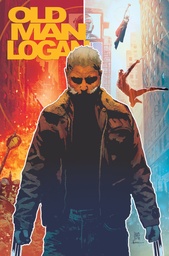
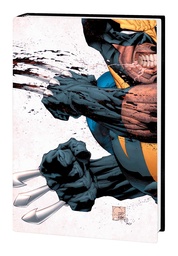
Wolverine: Old Man Logan Omnibus at 944 pages is the one to own.
It is a western in a superhero world, and it works because McNiven draws it as a western: dust, distance, weathered faces, and violence that is shocking because it has been withheld for so long. The writing is covered in the Mark Millar guide, and it is fair to say the drawing is what elevated the concept into the most imitated Marvel story of its decade.
The Wolverine shelf
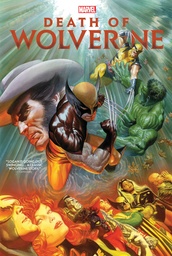
Death of Wolverine Omnibus at 1,232 pages is the other landmark: a deliberately quiet, slow story about a man running out of time, drawn with an amount of care that the premise could easily not have received.
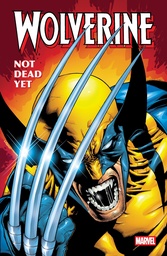
Wolverine: Not Dead Yet Omnibus at 1,392 pages gathers a wider stretch of the character's material, with several hands involved.
The rest
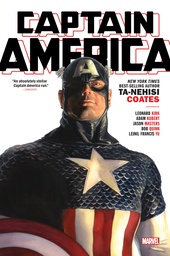
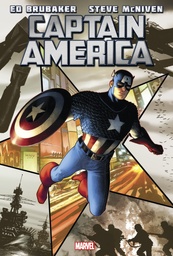
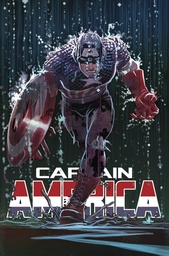
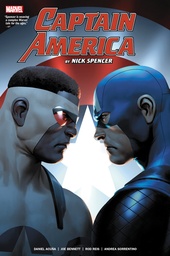
Captain America by Nick Spencer Omnibus Vol. 2 carries his work on the run described in the Nick Spencer guide, where the classical, heroic drawing does specific work: the story depends on Captain America looking exactly as reassuring as he always has.
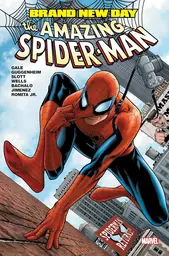
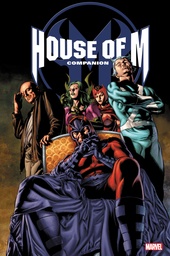
Spider-Man: Brand New Day Omnibus Vol. 1 at 1,280 pages and House of M Omnibus Companion at 792 pages are the shared-credit books on the shelf, where he is one artist among several.
The shelf itself lives on the Steve McNiven page, ordered so that what can be bought comes first. The rest of the Marvel shelf sits on the Marvel omnibus page.
Where to start
One recommendation: Wolverine: Old Man Logan Omnibus. It needs nothing from you, it is a complete story, and it is the best-drawn thing on the shelf by a clear margin.
If you want to see the restraint rather than the spectacle, Death of Wolverine is the quieter and in some ways more impressive piece of drawing.
Who should skip this shelf
He is a traditionalist, and if you want formal invention you will find his pages conservative: no broken panels, no experiments, nothing that draws attention to the construction. His output is also slow, which is why the shelf is short and dominated by event books rather than long runs. Anyone who collects by following an artist through a sustained monthly run will find very little here to follow.



Comments
No comments yet. Be the first to share your thoughts.