Deadpool exists as a mainstream character because of a run that almost nobody bought at the time. Joe Kelly took a mercenary invented as a supporting villain and gave him a personality, a supporting cast and a reason to be sad, and every version since — including the films — is working from that.
His shelf is short and two of the books on it are considerably better than their reputations.
What defines his writing
Jokes that hide a wound. His comedy is a coping mechanism for the character telling it. That is the entire Deadpool method: the funnier the page, the worse the thing being avoided.
Structure inside chaos. The books read as loose and improvised and are not. Subplots pay off, supporting characters have arcs, and the endings are planned.
Single issues built as complete objects. He is very good at the one-off: an issue that works alone and hits harder than the arc around it.
Willingness to be sincere without warning. He drops the register mid-book, which is exactly why the sincere moments land.
The Deadpool run
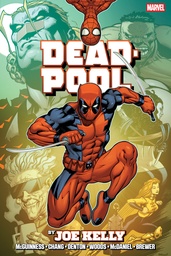
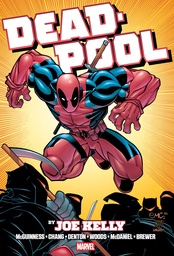
Deadpool by Joe Kelly Omnibus is the book that matters.
What he built is a man who is unbearable to everyone including himself, surrounded by people who stay anyway: a blind elderly woman he lives with, an ex-mercenary handler, a therapist he does not listen to. The comedy is relentless and the book underneath it is about someone who genuinely cannot be helped.
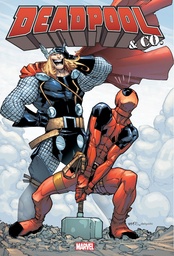
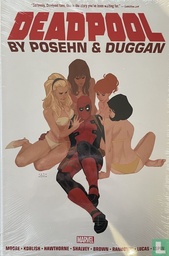
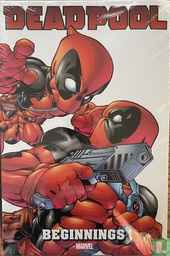
The character's origins are covered in our Fabian Nicieza guide, which also explains which volume contains what — the Deadpool shelf has several similarly named books covering different periods, and it is the easiest shelf in the catalogue to buy wrong.
The Spider-Man work
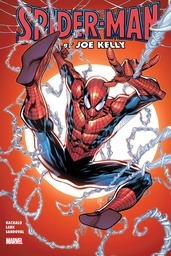
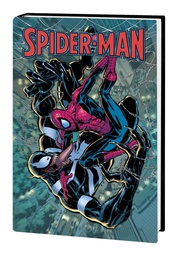
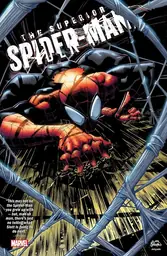
Spider-Man by Joe Kelly Omnibus at 880 pages collects his run, which contains one of the most reprinted single issues in the character's history: a nearly wordless story of Peter Parker on a rooftop after a death he could not prevent.
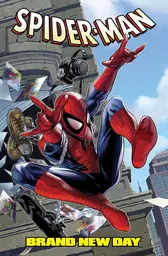
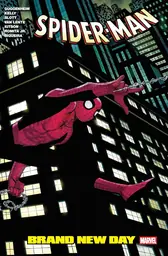
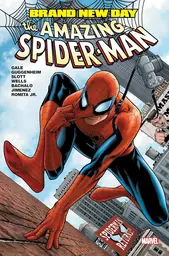
Spider-Man Brand New Day Omnibus Vol. 2 at 1,240 pages and Vol. 3 at 1,392 pages carry his contributions to the rotating-writer era described in our Zeb Wells guide.
The DC side
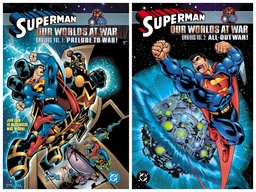
Superman: Our Worlds at War Omnibus Vol. 1 at 512 pages and Vol. 2 at 496 pages collect the war crossover he helped write, a multi-title event with a substantial casualty list.
The whole shelf is on the Joe Kelly page.
Where to start
One recommendation: Deadpool by Joe Kelly Omnibus. It is the run that made the character, it works without any X-Men reading, and it is far more emotionally serious than the films will have led you to expect.
If Spider-Man is your character, the Joe Kelly Omnibus is a short, strong run with at least one issue people still talk about twenty years later.
Who should skip this shelf
The Deadpool comedy is very much of the late 1990s: fourth-wall breaking, pop-culture references that have dated, and a joke density that some readers find exhausting rather than funny. If the film version's humour is what appeals to you, be aware this is the source but not the same tone.
The DC material is also a line-wide crossover with many writers, so buying it for him specifically means accepting a small share of the pages.





Comments
No comments yet. Be the first to share your thoughts.