Fabian Nicieza co-created Deadpool in 1991 as a minor mercenary in a book about a paramilitary mutant squad. Thirty years and two films later, that character is one of the most searched names in this catalogue, and the volumes that actually contain his beginnings are the most confusing shelf we stock.
Sorting that out is most of what this guide does.
What defines his writing
Ensemble management. He is unusually good at running large casts where everyone gets a reason to be in the scene. The 1990s X-books were an enormous interconnected machine, and he was the person who kept it coherent.
Dialogue that undercuts the moment. The Deadpool voice starts here: a character who deflates the drama around him with a joke, then reveals that the joke was the damage. It is a much subtler version than the one the films made famous.
Plot as a load-bearing structure. His books move. Subplots resolve, crossovers connect properly, and events set up in one title pay off in another without collapsing.
Craft over signature. He does not have a showy voice, and that is why he was trusted with the connective tissue. It also means his name is less famous than his work.
The Deadpool shelf, and which volume is which
This is the part worth reading carefully, because several volumes have similar names and cover different periods.
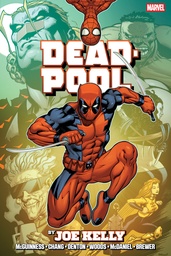
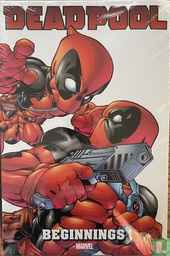
Deadpool: Beginnings Omnibus is the origin material: the first appearances inside the mutant books, before the character had a solo title. This is the one to buy if you want to see where he came from.
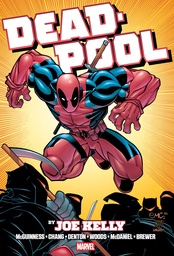
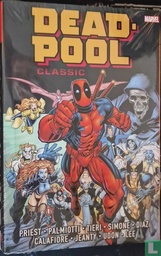
Deadpool Classic Omnibus Vol. 1 collects the early solo material where the voice settles into what people recognise.
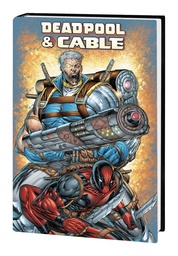
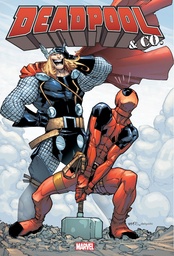
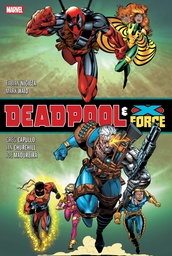
Deadpool & X-Force Omnibus at 872 pages and Deadpool & Cable Omnibus and Deadpool & Co. Omnibus gather the crossover material with the characters he shares most history with.
If a listing is ambiguous, check the issue range rather than the title. The names on these spines are marketing rather than description.
X-Force and the 1990s X-line
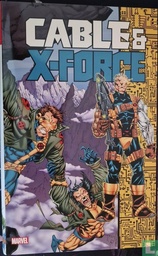
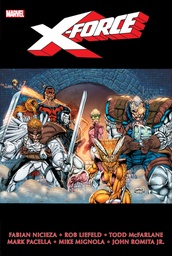
X-Force Omnibus Vol. 1 at 848 pages is where the squad, and Deadpool, first appear. Cable & X-Force Omnibus at 864 pages continues it.
X-Men: Age of Apocalypse Omnibus at 1,072 pages is the famous one: the entire X-line replaced for months by an alternate timeline where the villain won. It is the most ambitious thing 1990s Marvel attempted and it works because the whole line committed to it at once.
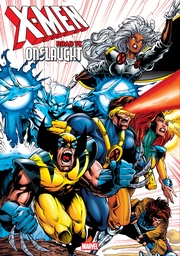
X-Men/Avengers: Onslaught Omnibus at 1,296 pages and the two Road to Onslaught volumes cover the crossover that followed. These are multi-writer event books: buy them for the era, not for one name.
The whole shelf is on the Fabian Nicieza page.
Where to start
One recommendation: Deadpool: Beginnings Omnibus, if the character is why you are here. It is the actual origin and it explains a version of him that the films simplified considerably.
If you want the best book rather than the most searched character, X-Men: Age of Apocalypse Omnibus is the stronger purchase: a complete, self-contained alternate-world story that needs surprisingly little X-Men background.
Who should skip this shelf
This is 1990s Marvel at its most 1990s: pouches, shoulder pads, crossovers that require a chart, and art that has aged unevenly. The storytelling is competent throughout, but the visual language is very much of its decade and readers who bounced off that era will not be converted here.
The Deadpool material also comes with a specific warning: the character in these books is meaningfully different from the film version. He is a mercenary in a mutant war comic, not a comedian. Buying these expecting the tone of the films is the most common disappointment on this shelf.




Comments
No comments yet. Be the first to share your thoughts.