Zeb Wells came to comics from television comedy, which is not what most people expect from the writer of the bleakest sustained Spider-Man run in years. The shelf is almost entirely Spider-Man, and it spans two very different eras of the character.
It is also the shelf where knowing the argument in advance matters most, because his current run is the most contested thing Marvel is publishing.
What defines his writing
Comedy timing used for cruelty. His scenes are constructed like sketches: setup, turn, punchline. He then uses that structure to land things that are not funny at all, and the whiplash is deliberate.
Peter Parker as a man who deserves consequences. His Spider-Man is not unlucky. He makes decisions, they are bad, and the book holds him responsible in a way that a lot of readers find unpleasant to sit with.
Withheld information as structure. The current run spends a very long time refusing to explain what happened, and the reading experience depends on tolerating that. It is a soap-opera device used at a scale that tests patience.
Written to be collected. The arcs are long and the beats are slow, which reads better in one volume than it did month to month. This shelf genuinely improves in omnibus form.
The current run
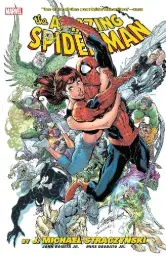
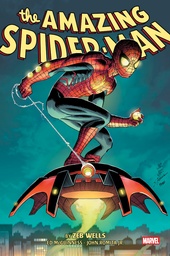
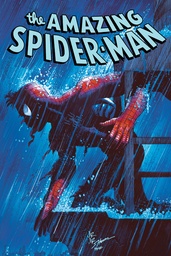
Amazing Spider-Man by Zeb Wells Omnibus Vol. 1 at 896 pages is the book people are arguing about.
The run opens with Peter's life in ruins and everyone refusing to tell you why, and takes its time before it does. Supporters read it as the most serious treatment of Spider-Man's self-destruction since the 1980s. Detractors read it as a book that damages the character to generate drama and then withholds the reason for too long.
Both readings come from the same pages. What settles it for you is how much patience you have for a story that is deliberately unpleasant to its lead. If you want a Spider-Man who is fundamentally fine, this run is not that, and no amount of subsequent explanation changes it.
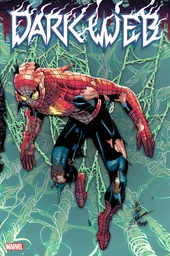
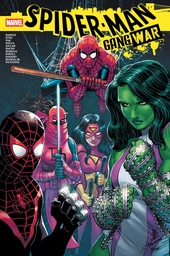
Spider-Man: Gang War Omnibus at 680 pages and Dark Web Omnibus at 792 pages are the crossovers that grew out of it, both with many other writers involved.
The Brand New Day years
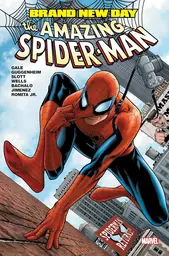
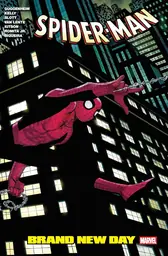
Spider-Man: Brand New Day Omnibus Vol. 1 at 1,280 pages and a second volume at 1,240 pages are the other half of his Spider-Man work, and the tonal opposite.
Brand New Day was a rotating-writer experiment that put Peter back to a single, struggling twenty-something life with a large supporting cast and a new villain every few issues. It is fast, light and generous, and if the current run sounds like something you would resent, this is where to go instead. Wells is one voice among several here, and the art includes the work described in the Chris Bachalo guide.
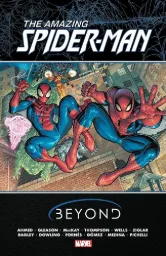
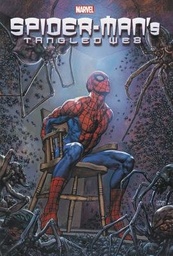
Amazing Spider-Man: Beyond Omnibus at 672 pages and Spider-Man's Tangled Web Omnibus at 560 pages are the other shared-credit collections on the shelf.
Whatever is obtainable at a given moment sits at the top of the Zeb Wells page. If you are building a Marvel collection more broadly, the Marvel omnibus page is the place to browse.
Where to start
One recommendation, depending on what you want. If you want to know what the fuss is about, Amazing Spider-Man by Zeb Wells Vol. 1 is the book, and it needs no homework.
If you want a Spider-Man you will enjoy without reservation, Brand New Day Vol. 1 is the better purchase by a wide margin, and it is the one to hand to someone who has just watched the films.
Who should skip this shelf
The current run is a genuinely divisive object and it would be dishonest to sell it as a safe modern Spider-Man. It is slow to explain itself, it is hard on its protagonist, and a substantial part of the readership dislikes it for reasons that are about craft rather than nostalgia. If your patience for withheld answers is limited, or if you want the character to be enjoying his life, buy the Brand New Day volumes instead and come back to this later, if at all.



Comments
No comments yet. Be the first to share your thoughts.