In 2002, Mark Millar wrote a superhero team book that read like a two-hundred-million-dollar film that did not exist yet. Six years later the films started arriving and they looked a great deal like it.
That is the honest summary of his shelf: it is the place where the modern blockbuster register was worked out in print, by a writer who understood what the wide screen would do to these characters before anyone had built one.
What defines his writing
The high concept comes first. Every book here can be pitched in a sentence, and the sentence is the point. What if superheroes were a government asset. What if Wolverine was brainwashed into killing everyone. What if the villains had already won, fifty years ago.
Widescreen staging. He writes for enormous panels and set pieces, and he pairs with artists who can deliver them. The reading rhythm is closer to film than to prose comics.
Shock as a structural tool. He escalates by transgression: the thing you assumed the book would not do, it does, usually at the end of a chapter. It is extremely effective and it is also the fair basis of most criticism of him.
Politics as texture. His superheroes exist inside states, budgets, press conferences and public opinion. Whatever you make of the conclusions, the instinct to ask who pays for all this is genuinely his.
The one that changed the register
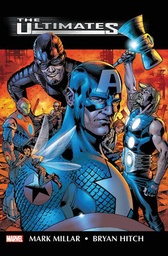
The Ultimates by Mark Millar Omnibus, drawn by Bryan Hitch, is the book to understand first.
It rebuilds the Avengers as a government programme with a press office, a budget and a public relations problem, and it does so at a scale of drawing nobody had sustained before. Almost every tonal decision the Marvel films later made is visible here in advance, including the casting logic. Read it as the source document it is.
The Ultimate X-Men run
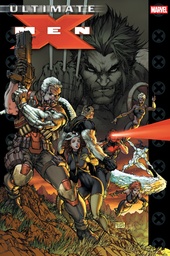
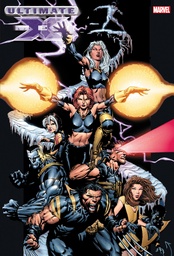
Ultimate X-Men Omnibus Vol. 1 at 1,024 pages opens a run that continues across two further volumes of 1,160 and 1,088 pages.
This is the more conventional half of his Ultimate work and the better demonstration of him as a serial writer rather than a pitchman: a restart of the X-Men with the politics pushed forward and the soap opera pushed back. It sits alongside the Ultimate Spider-Man run covered in the Brian Michael Bendis guide, and the two together are most of what made that line work.
The Wolverine books
Wolverine: Old Man Logan Omnibus at 944 pages is his most influential single story: a western set in an America the villains conquered decades ago, with an old man who will not use his claws. It has been adapted, imitated and continued by other writers ever since.
Wolverine by Mark Millar Omnibus collects Enemy of the State, the high-concept counterpart: Logan is brainwashed and turned on everyone he knows, and the book is essentially one long action sequence executed with total commitment.
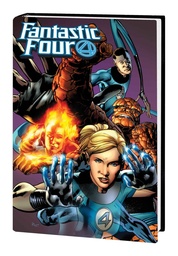
Fantastic Four by Millar & Hitch Omnibus reunites him with Hitch on Marvel's first family, at the same scale as their Ultimates work.
Whatever is obtainable at a given moment sits at the top of the Mark Millar page. If you are building a Marvel collection more broadly, the Marvel omnibus page is the place to browse.
Where to start
One recommendation: The Ultimates by Mark Millar Omnibus. It is self-contained, it is the most historically important thing on the shelf, and it will tell you within fifty pages whether the register works for you.
If you would rather start with a story than with a milestone, take Old Man Logan, which is the better standalone book and needs nothing at all from you.
Who should skip this shelf
The shock instinct is the real objection, and it is not a small one. Transgression is doing a lot of the structural work here, characters are frequently degraded to raise stakes, and the emotional register is thin compared with the writers who sit either side of him on these shelves. If what you want is interiority, ambiguity or characters treated with care, this shelf will read as loud and cheap. If what you want is momentum and scale, nothing else here does it better.












Comments
No comments yet. Be the first to share your thoughts.