Brian Michael Bendis came to Marvel from black-and-white crime comics, and he never really stopped writing them. What changed is that the criminals started wearing costumes.
His is the largest writer shelf we carry, and the one where buyers most often end up with a book that is not what they thought. Some of these omnibus are a single sustained run by one author. Others are company-wide events where he is the architect but a dozen other people are writing the pages. Telling those apart is most of what this guide is for.
What defines his writing
Dialogue as the main event. His characters interrupt each other, repeat themselves, change the subject and talk around what they mean. It reads like recorded speech rather than exposition, and it is the reason people either find his comics unusually alive or unusually slow.
Decompression. A scene that another writer resolves in four panels takes Bendis four pages. He was the writer who made that standard at Marvel in the 2000s. The trade-off is real: the moment-to-moment reading is richer, the plot-per-page is thinner.
Crime-fiction structure under the cape. Investigations, informants, interrogation scenes, people leveraging each other. His best superhero work is built on procedural bones, which is why the street-level material outperforms the cosmic.
Casting instinct. He is unusually good at deciding who should be in a room together. Half his lasting contribution to Marvel is roster decisions that outlived his runs.
The centre of the shelf: Ultimate Spider-Man
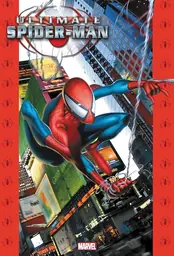
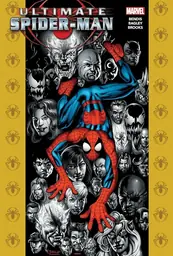
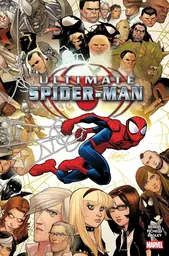
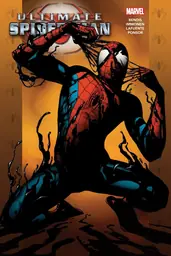
Ultimate Spider-Man Omnibus Vol. 1 opens at 898 pages, and the run continues across four further volumes of comparable size. It is one of the longest uninterrupted writer-artist collaborations in mainstream comics.
This is the single most recommendable thing on the shelf, and the reason is structural rather than sentimental: it restarts Peter Parker from scratch in a continuity with no back issues attached, so nothing you have not read is required. The decompression that frustrates people elsewhere works here, because the book is about a teenager's life and the slow pace is the point.
The art is Mark Bagley for the bulk of the run, and the partnership is the reason it holds together.
The best-written thing he has done
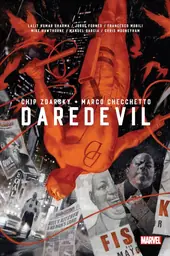
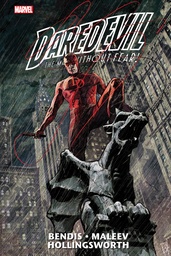
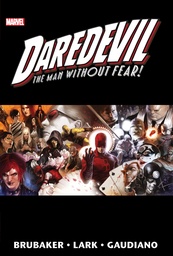
Daredevil by Bendis & Maleev Omnibus Vol. 1 at 848 pages, followed by a second volume of 656.
This is the crime writer working without a safety net: Matt Murdock is publicly outed as Daredevil and the run becomes a slow legal and criminal siege rather than a series of fights. Alex Maleev draws it in photo-referenced shadow, and the whole thing reads like a cable drama a decade before that comparison became a cliché. If you only take one Bendis book seriously, take this one.
The Avengers decade
New Avengers by Bendis Omnibus Vol. 1 at 1,208 pages and its 1,224-page sequel cover the era where he rebuilt the team around characters nobody expected, Spider-Man and Wolverine included, and where the modern idea of the Avengers as Marvel's flagship was established.
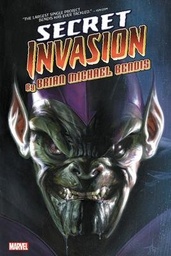
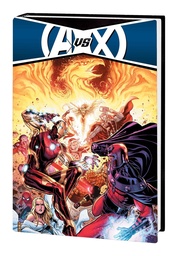
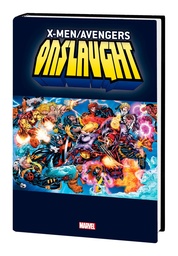
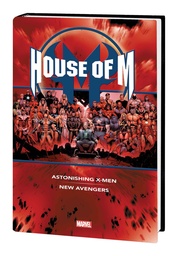
Around it sit the event books: House of M, Secret Invasion, Avengers vs. X-Men at 1,680 pages, and the X-Men crossover omnibus. Buy these knowing what they are. They are line-wide events with rotating writers and artists, so the pages-per-Bendis ratio is far lower than on his own runs, and they assume you know the surrounding continuity.
The later runs
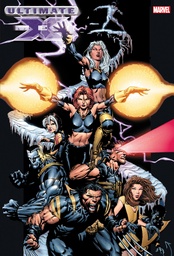
All-New X-Men by Brian Michael Bendis Omnibus at 1,048 pages and the companion Uncanny X-Men volume cover his mutant period, built on the premise of the original teenage X-Men displaced into the present and horrified by what they become.
Guardians of the Galaxy by Brian Michael Bendis Omnibus Vol. 1 at 1,152 pages is the cosmic outlier, written alongside the films and aimed squarely at the audience they created.
Availability moves constantly on a single-copy catalogue, so the Brian Michael Bendis page is the reliable place to check. Everything else we carry from Marvel is on the Marvel omnibus page.
Where to start
One recommendation: Ultimate Spider-Man Omnibus Vol. 1. It needs nothing from you, it is his most sustained work, and it is the fairest test of whether his dialogue is a pleasure or an obstacle.
If you already know you like crime fiction more than superheroes, start with Daredevil by Bendis & Maleev Vol. 1 instead. It is the better book. It is simply less forgiving as an entry point.
Who should skip this shelf
Decompression is the honest objection. If you measure a comic by how much happens per page, Bendis will feel padded, and no amount of good dialogue will fix that for you. His plots also resolve less tidily than his set-ups promise, particularly on the event books. Readers who want dense plotting and firm endings are better served elsewhere on these shelves.





Comments
No comments yet. Be the first to share your thoughts.