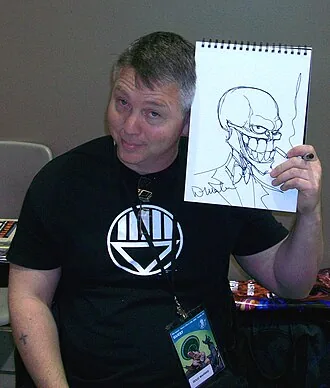
There is a specific job in superhero comics that very few artists can do: draw something genuinely horrible without breaking the tone of a book that is otherwise about heroism. Doug Mahnke has spent twenty years being the person DC calls for it.
His shelf here is unusual because most of it consists of the biggest books DC published in that period. He is not a cult artist with a small run to discover. He drew the events.
How to recognise a Mahnke page
Faces that go wrong. His heroes are handsome in a slightly hard way and his monsters are genuinely unpleasant, with anatomy that reads as damaged rather than designed. When a DC comic needs a corpse to be upsetting, this is the line that does it.
Detail that survives the page count. He renders densely, and unlike most artists working at event scale he does not simplify as the deadlines compress. That reliability is why he gets the assignments.
Scale by construction, not by splash. He builds enormity out of layered panels and background depth rather than one big drawing. His crowd and fleet scenes have things happening in the third plane.
Weight in the bodies. His figures are heavy. Punches land as impacts rather than poses, and characters look like they are carrying their own mass.
The Green Lantern decade
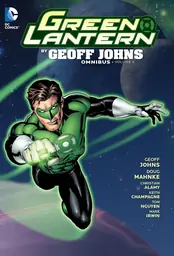
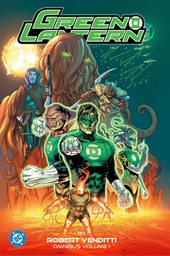
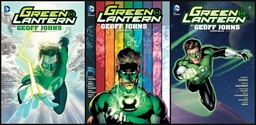
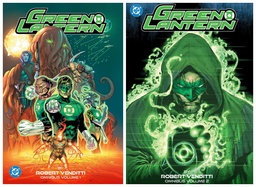
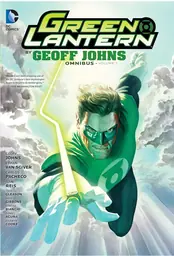
Green Lantern by Geoff Johns Omnibus Vol. 1-3 at 3,376 pages, exactly the sum of the three individual volumes, contains the bulk of his most important work, concentrated in the later stretch.
This is where the horror instinct met a franchise built on coloured light and fear as a literal force. The material covered in the Geoff Johns guide asked for terrifying imagery on a cosmic scale, and Mahnke is most of the reason it works visually rather than reading as decoration.
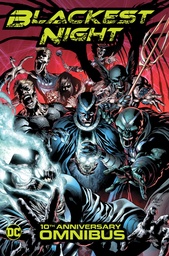
Blackest Night Omnibus at 1,664 pages is the event that came out of it, and the natural companion.
The event shelf
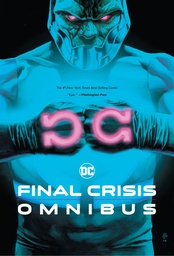
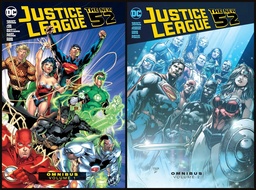
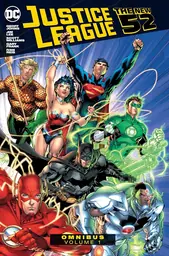
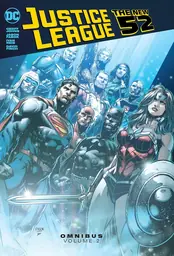
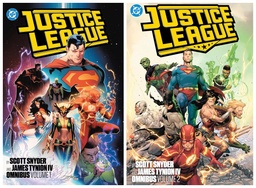
Final Crisis Omnibus at 1,512 pages and Justice League: The New 52 / Geoff Johns Omnibus Vol. 1-2 at 2,504 pages are the other two large collections carrying substantial Mahnke pages.
Both are shared-credit books with rotating artists. That is worth stating plainly: you are buying the era, and his contribution is a significant share rather than the whole. If what you want is a book that is his from cover to cover, these are not it.
The Batman and Superman work
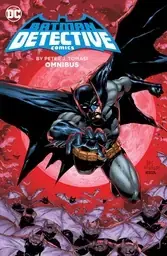
Batman: Detective Comics by Peter J. Tomasi Omnibus at 648 pages is the most concentrated dose of him on this shelf, and the one where the horror register serves a detective book rather than a cosmic one. The writing side is covered in the Peter J. Tomasi guide.
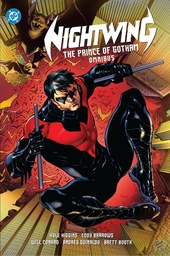
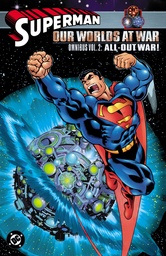
Superman: Our Worlds at War Omnibus in two volumes of 512 and 496 pages is the earlier material, a war story with a casualty list, and Nightwing: The Prince of Gotham Omnibus at 760 pages rounds out the Gotham side.
This article does not track stock. The Doug Mahnke page does, and it puts the obtainable titles at the top. The whole DC side of the catalogue is on the DC omnibus page.
Where to start
One recommendation: Batman: Detective Comics by Peter J. Tomasi Omnibus. It is the shortest way to see what he does, it is a complete story, and the horror instinct is easier to appreciate at detective scale than buried inside a line-wide event.
If you want the work he is actually known for, Green Lantern by Geoff Johns Vol. 1-3 is the real destination, with the caveat that it is 3,376 pages and the early volumes are drawn by other people.
Who should skip this shelf
Two honest limits. His art is not beautiful and is not trying to be: it is effective, heavy and often ugly on purpose, and readers who want elegance will find it graceless. And the shelf is dominated by event books, which means a large share of these pages assume you know a great deal of surrounding DC continuity. Coming to him cold through Final Crisis is a genuinely bad idea.




Comments
No comments yet. Be the first to share your thoughts.