Peter J. Tomasi spent years as a DC editor before he wrote much of anything, which shows in a specific way: he knows exactly how much room a monthly comic has, and he never wastes it on being clever.
What he does instead is write about families. Almost everything on this shelf is a father and a son failing to say something to each other, and it works because he refuses to treat that as a small subject.
What defines his writing
Fathers and sons, without irony. Bruce and Damian. Clark and Jon. Hal Jordan's Corps as a surrogate family. He returns to the same relationship repeatedly and finds new things in it, which is the definition of a theme rather than a habit.
Plain construction. Set-up, escalation, consequence. No structural games, no unreliable narration. In a line that spent the 2010s raising stakes, his books are the ones where a single death actually lands, because he wrote it as a death rather than as an event.
Grief as the engine. His best-known run is built around a child dying and a father who cannot accept it. He writes mourning as something that makes people stupid and cruel, which is more honest than most superhero comics manage.
Long partnership with one artist. Most of the shelf is drawn by Patrick Gleason, and the collaboration is the reason the emotional material carries.
The essential book
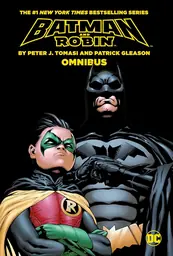
Batman & Robin By Tomasi and Gleason Omnibus at 1,248 pages is the one to own.
It is the run where Damian Wayne stops being a plot device and becomes a character, and then it is the run about what happens to Bruce afterwards. The middle stretch, with Batman refusing to accept his son's death and going to genuinely unreasonable lengths about it, is the best writing anyone has done about that character's grief.
It needs almost nothing from you: Damian's origin is elsewhere, but the run explains itself.
The Superman years
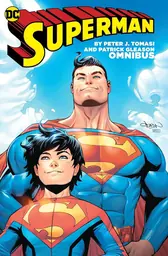
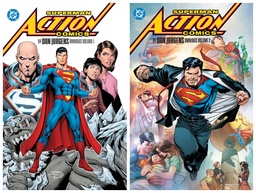
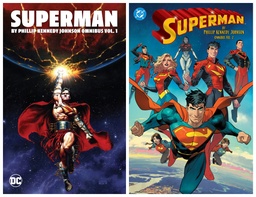
Superman by Peter J. Tomasi and Patrick Gleason Omnibus at 1,128 pages is the other half of the thesis, and the inverse: instead of a father who lost a son, a father who has one and has no idea how to raise him on a farm while also being Superman.
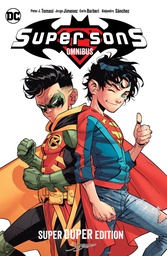
It is the warmest Superman run of the modern era and the strongest argument that the character works better with a family than alone. Super Sons Omnibus at 600 pages continues it from the children's side, pairing Jon Kent with Damian, and is the most purely enjoyable book on the shelf.
The Green Lantern shelf
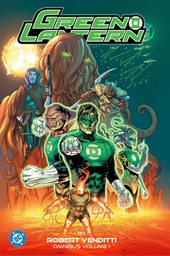
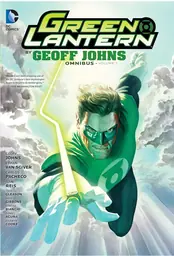
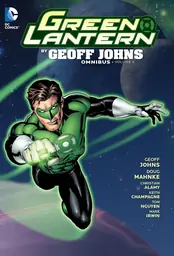
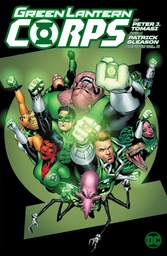
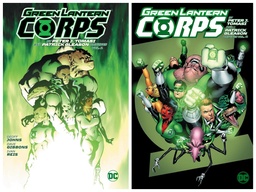
Green Lantern Corps by Peter J. Tomasi and Patrick Gleason Omnibus Vol. 1 at 1,272 pages and a second volume at 1,384 pages run alongside the Geoff Johns material covered in the Geoff Johns guide.
Be clear about the relationship: Johns wrote the main title and the architecture, Tomasi wrote the Corps as a workplace with casualties. His volumes are the ones about the people who do the job rather than the people who reshape the mythology, and they are better read after or alongside Johns rather than first.
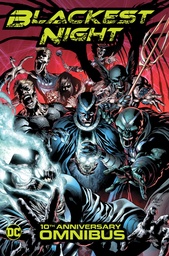
Blackest Night Omnibus at 1,664 pages is the crossover both were writing into, with the usual caveat: it is a line-wide event with many hands.
Detective Comics
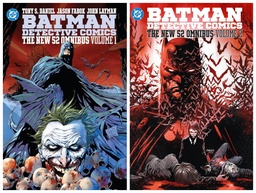
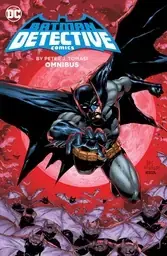
Batman: Detective Comics by Peter J. Tomasi Omnibus at 648 pages is his later, more traditional Batman: cases, deductions, and a Gotham that behaves. It is the least ambitious thing here and a genuinely comfortable read.
Availability moves constantly on a single-copy catalogue, so the Peter J. Tomasi page is the reliable place to check. Everything else we carry from DC is on the DC omnibus page.
Where to start
One recommendation: Batman & Robin By Tomasi and Gleason Omnibus. It is self-contained, it is the best thing he has written, and it will tell you immediately whether sincerity without irony is something you want from a superhero comic.
If you would rather start somewhere lighter, Super Sons is short, funny and needs nothing at all.
Who should skip this shelf
He is not a stylist and he is not trying to be. The prose is functional, the plots go where you expect, and the emotional beats are played straight and sometimes hard. Readers who want formal ambition, moral ambiguity or a writer arguing with the genre will find this shelf plain. Its virtue is that it means what it says, which is a smaller virtue than invention and a rarer one.






Comments
No comments yet. Be the first to share your thoughts.