Fantastic Four is the Marvel omnibus line where the idea of authorship matters most. It is not just a superhero team book. It is family, exploration, science fiction, celebrity, failure, parenthood, cosmic danger and the strange feeling that the Marvel Universe begins at the Baxter Building and then expands outward.
The best Fantastic Four reading order is therefore not only chronological. The Lee and Kirby run is the foundation, John Byrne is the great restoration, Waid and Wieringo make the family readable again for a modern audience, Hickman turns the whole myth into a long-form design, and the later shelves show how difficult it is to follow that legacy.
For collectors, the question is simple: do you want the source, the best complete author run, the most accessible modern family book or the route that leads into the wider modern Marvel architecture? Each answer points to a different omnibus.
Lee and Kirby: The Marvel Universe Starts Here
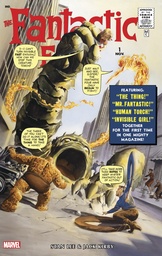
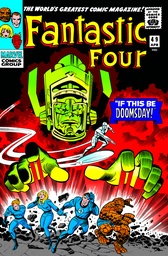
Fantastic Four Omnibus Vol. 1 is one of the most important Marvel omnibuses because it is where so much of the universe begins. The family dynamic and Doctor Doom arrive in this first volume. The Inhumans, Galactus, the Silver Surfer, the Negative Zone and Black Panther all land in the second. Between the two shelves sits the origin of most of what Marvel built afterwards.
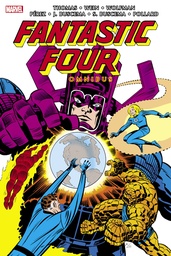
The foundation continues through Fantastic Four Omnibus Vol. 2, Vol. 3, Vol. 4, Vol. 5 and Vol. 6. One caveat on that list: Kirby leaves with issue #102, so Vol. 5 and Vol. 6 are a different book, with Roy Thomas, Len Wein and George Pérez picking up the family after its architects had gone. The important thing is not only the first appearances. It is the rhythm: adventure as family pressure, science as wonder, and Reed Richards as both genius and problem.
This is the essential historical shelf. It is older in tone, but it is less optional than many other Silver Age lines because Fantastic Four is where Marvel learns how big its universe can be.
John Byrne: The Great Restoration
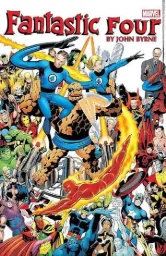
Fantastic Four by John Byrne Omnibus Vol. 1 is the first major answer to the question “what does Fantastic Four look like after Lee and Kirby?” Byrne understands the family, the celebrity, the cosmic scale and the importance of Doctor Doom without turning the book into nostalgia.
Fantastic Four by John Byrne Omnibus Vol. 2 continues that restoration with more confidence and more range. If Lee/Kirby is the source, Byrne is the first great modernising shelf. It is a strong route for readers who want classic Fantastic Four energy with a cleaner later rhythm.
Waid and Wieringo: The Family Book That Still Feels Fresh
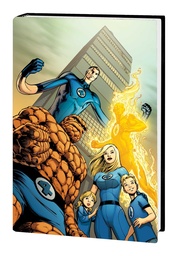
Fantastic Four by Waid & Wieringo Omnibus is one of the easiest Fantastic Four recommendations because it understands the emotional shape of the team. It is bright, clever, funny and serious when it needs to be, with a version of Reed, Sue, Johnny and Ben that feels immediately readable.
This is not the most historically important shelf, but it may be the cleanest modern first read. Waid and Wieringo make the team feel like a family before making them feel like icons, which is exactly why the big cosmic and Doom material lands.
Millar and Hitch: Widescreen Fantastic Four
Fantastic Four by Millar & Hitch Omnibus is a more cinematic, high-concept shelf. It is not the central Fantastic Four recommendation, but it belongs in the map because it shows the team through a blockbuster lens: bigger set pieces, sharper concepts and a more external sense of spectacle.
Treat this as a side route. It can be fun and visually strong, but it is not the first place to learn why the Fantastic Four matter. For that, Lee/Kirby, Byrne, Waid/Wieringo or Hickman are stronger answers.
Jonathan Hickman: The Modern Architecture
Fantastic Four by Jonathan Hickman Omnibus Vol. 1 turns the family into a long-form system: Future Foundation, children, alternate Reeds, cosmic problem-solving and the idea that imagination can be both salvation and danger.
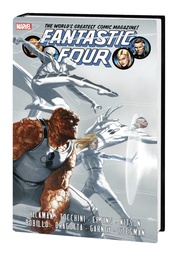
Fantastic Four by Jonathan Hickman Omnibus Vol. 2 completes that design and connects strongly to Hickman's later Marvel architecture. This is the best route if you want Fantastic Four as the emotional and intellectual engine behind a larger modern Marvel vision.
Hickman is less breezy than Waid and less foundational than Lee/Kirby, but it may be the most satisfying modern long read. It rewards attention, and it understands that the Fantastic Four are at their best when family drama and impossible science are the same thing.
Dan Slott and the Later Modern Shelf
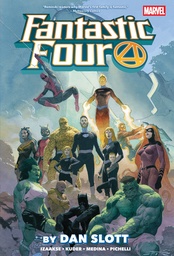
Fantastic Four by Dan Slott Omnibus Vol. 1 belongs to the later modern shelf. It works best after you already know the family and want to see how the team returns to a more direct Marvel publishing role after Hickman and Secret Wars changed the scale of the franchise.
This is not the strongest first omnibus, but it is useful for readers who want recent continuity and a more contemporary status quo. Think of it as a continuation shelf rather than the definitive explanation of the team.
Ultimate Fantastic Four: The Alternate Universe Route
Ultimate Fantastic Four Omnibus Vol. 1 is a separate continuity route. It is useful if you collect the Ultimate Universe or want a 2000s reimagining of the concept, but it should not replace the main Marvel Universe shelf.
Read it as an alternate experiment. The main Fantastic Four identity is still built through Lee/Kirby, Byrne, Waid/Wieringo and Hickman.
Recommendations by Reader Type
A quick way to choose the right Fantastic Four shelf depending on whether you want the Marvel source, a modern first read, a family-focused run or Hickman architecture.
Where Marvel expandsFantastic Four Vol. 1
Where it all starts: the family dynamic and Doctor Doom. Galactus, the Silver Surfer, Black Panther and the Inhumans arrive in Vol. 2.
After Lee and KirbyJohn Byrne Vol. 1
The strongest classic-modern shelf, ideal if you want the family, Doom and cosmic adventure with a later rhythm.
Family first, icons secondWaid & Wieringo
Probably the cleanest first read for many modern readers because it is warm, smart and emotionally direct.
The Future Foundation routeHickman Vol. 1
The best choice if you want the team as part of a larger modern Marvel design leading toward bigger ideas.
Recent Marvel status quoDan Slott Vol. 1
Useful after the main runs if you want a more recent Fantastic Four shelf.
Ultimate reimaginingUltimate Fantastic Four Vol. 1
A separate 2000s continuity, best for Ultimate Universe collectors rather than as the main FF route.
Start with Fantastic Four Vol. 1 if you want the Marvel source. Choose John Byrne Vol. 1 for the classic restoration, Waid & Wieringo for the easiest modern first read, and Hickman Vol. 1 for the most ambitious modern architecture. Add Slott or Ultimate later depending on the shelf you collect.
Quick collector answer
Fantastic Four Omnibus Reading Guide: Lee/Kirby, Byrne, Waid and Hickman is built as a structured answer for building a Fantastic Four in omnibus format collection without buying at random. The guide helps clarify reading order, major eras and the purchases that make the most sense for a European reader.
Frequently asked questions
Is Fantastic Four Omnibus Reading Guide: Lee/Kirby, Byrne, Waid and Hickman a good starting point?
Yes if the subject matches your reading priority. The most important choice is an omnibus you genuinely want to read and keep, not only a popular or hard-to-find volume.
Do you need to know all continuity before reading this kind of omnibus?
Not necessarily. Major US omnibuses mainly ask you to understand the era and tone of the run. A guide or review helps clarify whether the volume is standalone, modern, classic or more connected to other events.
Does reading the original English edition change the experience?
For many collectors, yes. The original English edition preserves dialogue, arc titles and the US format, which keeps the shelf more consistent when comparing multiple Marvel or DC runs.
Why compare European stock with US imports?
Because an omnibus is heavy, expensive to ship and vulnerable to damaged corners. For buyers in France or Europe, delivered price, packing, tracking and returns matter as much as the listed price.
What should you read after this post?
The best next step is usually inside the same reading cluster: a character guide, a related run review or a buying comparison. That builds a logical shelf instead of stacking volumes with no clear order.


Comments
No comments yet. Be the first to share your thoughts.