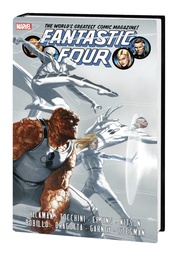
Fantastic Four by Jonathan Hickman Omnibus Vol. 2 is not a casual sequel. It is the volume where the machinery becomes emotional. Vol. 1 places the pieces; Vol. 2 makes the family live with the consequences.
The verdict: buy it if you own or plan to read Vol. 1. Do not treat it as an isolated Fantastic Four starting point. This is the payoff shelf: Future Foundation, Richards family pressure and Hickman's long game becoming readable as feeling, not only structure.
The Payoff Volume
The useful buying lens is payoff. This is the volume where Hickman's Fantastic Four architecture closes around the Richards family: big ideas, future-facing institutions and consequences that feel cosmic and intimate at once.
That is the key buyer warning and the key recommendation. This is not the book you buy to sample Hickman casually. It is the book you buy because you want the first volume's architecture to close around the characters.
Why It Works
Vol. 2 works because Hickman finally cashes the checks he has been writing. The big ideas are still big, but the emotional readability improves because the family cost becomes harder to ignore. Future, children, death, inheritance, responsibility and invention all stop feeling abstract.
The Future Foundation, founded at the end of Vol. 1, is central to that shift. It lets the Fantastic Four become more than a four-person team without losing the family idea. The circle expands, but the question stays intimate: what does Reed's desire to fix tomorrow do to the people living with him today?
That is why the volume matters as a purchase. A second volume can sometimes feel like shelf completion. Here, it is structurally necessary. Without it, Hickman's Fantastic Four is mostly promise. With it, the promise becomes a story.
It also changes how Vol. 1 reads in hindsight. Setups that can feel abstract early on become warmer once the second volume makes clear who pays for them. That is the reason this is a poor isolated buy but a very strong completion buy: the value is cumulative.
The Weak Points
The obvious weakness is that Vol. 2 is a poor first step. If you start here, you are walking into payoff without the setup. The emotional and conceptual weight depends on knowing what Hickman has already arranged.
It is also not the Fantastic Four at their most casual. The run asks you to care about systems, alternate futures and family consequences at the same time. If that sounds exhausting, Waid is a gentler route.
Who Should Buy This
Buy it if Vol. 1 worked for you. If the Council of Reeds, Reed's moral pressure and the Future Foundation setup grabbed you, Vol. 2 is not optional decoration. It is the reason the first volume's architecture matters.
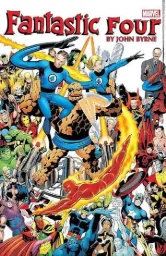
Start with our Vol. 1 review if you are new to Hickman's Fantastic Four. Read our Hickman Fantastic Four era guide if you want the wider route before buying both volumes.
Should You Buy Hickman FF Vol. 2?
Buy it as payoff to Vol. 1, not as a cold starting point.
The payoff volumeThe machine turns emotional
The ideas from Vol. 1 become family consequences here.
Vol. 1 worked for youThis completes the shape
It is the natural second half of Hickman's FF architecture.
You have not read Vol. 1Setup matters
Starting here weakens the emotional and structural payoff.
The necessary second halfFuture Foundation and family cost
It belongs beside Vol. 1, not floating alone.
Our Verdict
Fantastic Four by Jonathan Hickman Omnibus Vol. 2 is worth buying if you are serious about Hickman's Fantastic Four. It should not be your first FF purchase and it should not be read before Vol. 1. But as the volume where the Future Foundation and the Richards family give the architecture emotional weight, it is the essential half of the run.
Buy Hickman Fantastic Four Vol. 2 after Vol. 1. It is the payoff volume, not a casual starting point. The Future Foundation and Richards family make Hickman's architecture emotional.


Comments
No comments yet. Be the first to share your thoughts.