A great many omnibus in this catalogue carry Stan Lee's name. It is one of the largest writer shelves we stock, and by some distance the most misleading, because those books do not all represent the same thing. Some are the 1960s comics he built Marvel with. Others carry his credit because they reprint a few early pages inside a much later story.
Buying this shelf well is mostly about telling those apart, so that is what this guide does.
What his writing actually sounds like
Lee's voice is the most imitated in American comics and the easiest to identify. He talks directly to the reader, in captions that sell you the next page like a fairground barker. He alliterates compulsively, to the point that half of Marvel's cast has matching initials. And he runs superhero plots on soap-opera fuel: money troubles, sick relatives, romantic humiliation, characters who are miserable in ordinary ways between the fights.
That last habit is the one that mattered commercially. Before it, heroes had problems that were about the plot. After it, they had problems that were about their lives, and readers came back monthly to follow those rather than the villains.
Why the credit question matters when you are spending money
Marvel in the sixties worked on what became known as the Marvel Method: the artist was given a premise, plotted and drew the whole issue from it, and the dialogue was written afterwards over the finished pages. On the books that matter most here, that artist was Jack Kirby or Steve Ditko. Kirby's side of it, including the books where he wrote as well as drew, is in the Jack Kirby guide.
What that means for a buyer is practical, not political. If you buy these books expecting to read a writer's authored work in the way you read Claremont or Ennis, you will find something different: a collaboration where the storytelling and the pacing are largely coming from the artist, and where Lee's contribution is the voice, the characterisation in dialogue and the editorial identity of the whole line. That is a real and enormous contribution. It is just not the same job, and the shelf makes more sense once you know that.
The genuine 1960s shelf
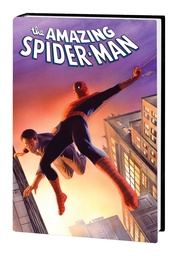
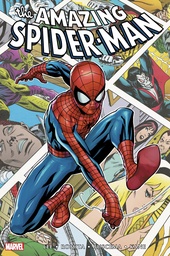
This is the part worth collecting. Amazing Spider-Man Omnibus Vol. 1 is the canonical starting point at 1,152 pages, and the run continues across three further volumes. Doctor Strange: Master of the Mystic Arts Omnibus Vol. 1 collects the Ditko material where Marvel is at its strangest, 776 pages of psychedelic architecture that looks like nothing else of its decade.
Around them sit the other foundations: Fantastic Four, Thor, Daredevil, The Incredible Hulk, The Avengers, Captain America, Iron Man, Namor and the Silver Surfer. Availability on a single-copy catalogue changes daily, so the honest place to look is the Stan Lee page, which lists whatever can actually be bought first.
The books where his name is a credit, not an authorship
Several omnibus on this shelf carry his name for archival reasons. Avengers: The Crossing and Avengers: The Gathering are nineties storylines. Silver Surfer: The Infinity Gauntlet Omnibus is built around a nineties event. Spider-Woman Omnibus collects a character created after his day-to-day writing years.
None of these are bad books, and we are not warning you off them. But if you are buying because you want to read Stan Lee, they will not give you that, and it is better to know before a 110-euro decision than after it.
Where to start
One recommendation: Amazing Spider-Man Omnibus Vol. 1. It is the clearest demonstration of what he actually changed — a teenager with money problems and a sick aunt, written with more interiority than anything else on the newsstand in 1963 — and it is self-contained enough that you need no other volume to judge whether the shelf is for you.
If you already know the Spider-Man material and want the strangest thing here instead, go to Doctor Strange.
Who should skip this shelf
These are sixties comics and they read like it: exposition in every panel, villains who announce their plans, plots resolved in two issues. Readers who came to comics through modern decompressed storytelling often find them exhausting rather than charming, and there is no version of these books that fixes that. Buy them for what they are historically and for the artwork, not because you expect them to read like a modern graphic novel.







Comments
No comments yet. Be the first to share your thoughts.