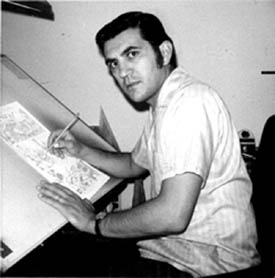
Some artists are collected because a single image made them famous. Sal Buscema is collected for the opposite reason: he is the person Marvel handed a book to when it absolutely had to come out, month after month, for decades, and the work held up every time.
He is also John Buscema's younger brother, which for most of his career meant being described as somebody else's relative while quietly drawing more pages than almost anyone in the building.
How to recognise a Sal Buscema page
Storytelling you do not notice. His staging is so clean that the mechanics disappear. You are never confused about geography, who threw a punch, or where a room is. That invisibility is the skill, and it is why editors trusted him with anything.
Grief drawn better than action. His fights are solid; his quiet scenes are extraordinary. He draws exhaustion, shame and loss in faces and shoulders, and he holds on those beats instead of rushing to the next panel.
Bold, unfussy inking. Heavy confident line, minimal rendering, strong blacks. Nothing decorative. It is a style built to reproduce well on cheap paper at speed, and it reads beautifully enlarged to omnibus size.
Body language over faces alone. Characters slump, brace, turn away. A lot of his emotional information arrives before you read the dialogue.
The run that matters most
Spectacular Spider-Man by DeMatteis & Buscema Omnibus is the reason to take him seriously as more than a reliable pair of hands. Paired with a writer working at the darkest end of his range, Buscema spends this run drawing psychological collapse rather than spectacle, and he is devastating at it. If you only ever buy one Sal Buscema book, this is the one, and it is not a comfortable read.
His other Spider-Man material sits alongside it, including Peter Parker, The Spectacular Spider-Man Omnibus Vol. 1 and the later Spider-Man: Clone Saga Omnibus Vol. 2, where he is one of several artists on a very long story.
The rest of the shelf
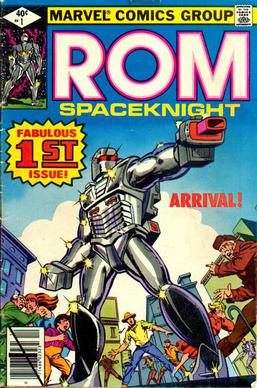
He drew the whole of Rom, which is the other pillar of his career and one of the strangest licensed comics Marvel ever published — we go into that shelf in the Bill Mantlo guide, since the two are inseparable.
Beyond that: The Avengers across several volumes and Fantastic Four Omnibus Vol. 6, both from the stretch when he was the safe pair of hands on Marvel's biggest titles.
Which of these can be bought at any given moment changes constantly on a single-copy catalogue, so the Sal Buscema page is the place to check — it shows what is available first.
Where to start
One recommendation: Spectacular Spider-Man by DeMatteis & Buscema. It is self-contained enough to read cold, it is the best work of his career, and it will tell you immediately whether the plain, unshowy drawing style is something you value or something you find dull.
If you would rather start somewhere lighter, take Rom instead and read it as science fiction rather than superheroics.
Who should skip this shelf
If you buy comics for the art as spectacle — big rendering, poster panels, a style you can spot across a shop — Buscema will look ordinary to you, and that is a fair reaction. His virtues are legibility, emotional honesty and the ability to deliver, none of which photograph well. Collect him if you care about how a comic reads. Collect somebody else if you care about how a page looks framed.






Comments
No comments yet. Be the first to share your thoughts.