Louise Simonson edited comics before she wrote them, and her shelf is what that produces: books that are constantly aware of the other books around them. She writes the characters who do not fit the superhero frame comfortably — teenagers, children, the original X-Men pretending to be something they are not — and she writes them inside a line where everything connects.
That is the appeal of this shelf, and it is also the one thing you need to know before buying into it.
What defines her writing
Emotional bookkeeping across an ensemble. She keeps track of everyone. In a team book of eight characters, all eight are carrying something specific, and she returns to each of them rather than letting the loudest three take over.
Consequence that sticks. People die and stay meaningfully dead; survivors are changed in ways the next arc has to deal with. She is not interested in the reset button.
Young characters treated seriously. Her teenagers are frightened, petty, brave and grieving rather than comic relief, and it is why the books she wrote about kids outlasted most of the adult titles beside them.
Structural thinking. The editor's instinct: she writes with an eye on how her book fits the wider line, which makes her crossover chapters some of the few that actually function as story rather than obligation.
The spine: X-Factor
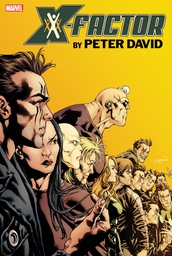
X-Factor: The Original X-Men Omnibus Vol. 1 at 1,248 pages opens the run, continued in Vol. 2 at 1,136 and Vol. 3 at 1,240.
The premise is her best: the original five X-Men, now adults, posing as mutant hunters in order to rescue mutants — a lie that corrodes everyone involved. It is the most thematically loaded idea anyone got out of the mutant line, and it is hers.
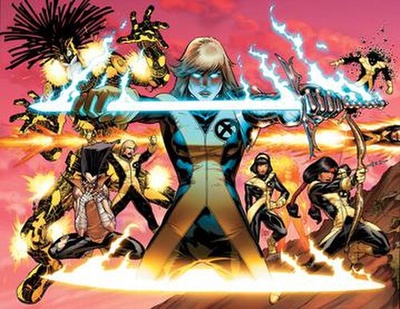
Her New Mutants volumes sit alongside it, taking over a book started inside the long Claremont era we map in the Chris Claremont guide, and pushing it somewhere considerably darker.
The trap, stated plainly
Hers is the least standalone shelf of any creator we carry. X-Factor and New Mutants run straight through the mutant crossovers of the period, and the story genuinely continues in them: X-Men: Mutant Massacre Omnibus at 952 pages, X-Men: Fall of the Mutants at 864, X-Men: Inferno at 1,240 and X-Men: X-Tinction Agenda at 984.
If you buy her run and nothing else, you will hit chapters that resolve elsewhere. That is not a flaw in the writing — it is how the line worked — but it is a real cost, and it is the reason to plan this shelf as a project rather than a purchase.
The Superman half
She was one of the writers of the nineties Superman, collected as the Triangle Era volumes and as a three-volume set whose page count is exactly the sum of its parts.
Be clear about what you are buying: that era was written by a rotating team across four monthly titles, so these volumes are not a Louise Simonson run in the way X-Factor is. They are an era she helped build, and if you want her specifically, the mutant shelf gives you far more of her per page.
Which of these can be bought at any given moment changes constantly, so the Louise Simonson page is where to check availability rather than this article.
Where to start
One recommendation: X-Factor: The Original X-Men Omnibus Vol. 1. It is the purest expression of what she does, the premise carries itself without homework, and it is the volume that will tell you whether you want to commit to the crossover-heavy era around it.
If you would rather read her at her most emotionally direct, take the New Mutants material instead.
Who should skip this shelf
If you want self-contained books, this is the wrong shelf and no amount of enthusiasm from us changes that. Her work is woven into a line, and reading it properly means buying the crossovers too. And if you dislike eighties team-book density — large casts, subplots stacked several deep, captions doing real work — the thing she is best at will read to you as clutter.









Comments
No comments yet. Be the first to share your thoughts.