Bob Kane signed Batman for decades. Bill Finger wrote him. The cape, the cowl, the name Gotham City, the dead parents, the detective work, Robin, the Joker, Catwoman and Commissioner Gordon all came from a writer whose name did not appear on a Batman comic until 2015, twenty-one years after he died.
His shelf here is twelve volumes deep and none of them carry his name on the spine. This guide explains what is in them and which one to buy.
What he actually contributed
The look. Kane's first drawings had a red suit and rigid wings. Finger proposed the cowl with ears, the scalloped cape and the black-and-grey palette, and the character has not meaningfully changed since.
The city. He named Gotham City after finding the name in a phone directory, and wrote it as a place with its own weather and corruption rather than as a generic backdrop.
The detective. The early stories are pulp mysteries with clues and deduction, which is the reason the character has stayed a detective through eighty years of adaptation.
The supporting cast. Robin, Commissioner Gordon, the Joker, Catwoman, the Penguin and the Riddler are all his or co-his. Very few writers have created that much that lasted.
The Golden Age volumes
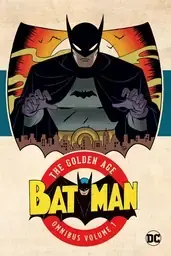
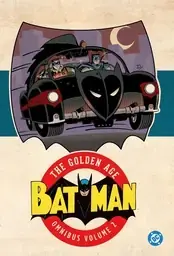
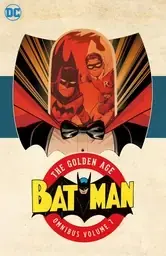
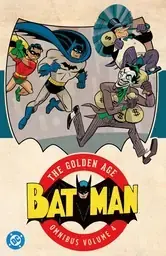
Batman: The Golden Age Omnibus Vol. 1 at 824 pages is where it starts, and the line runs to ten volumes of between roughly 500 and 800 pages each.
What you are buying is the character being invented in real time. The first volume contains the origin, the first Joker and Catwoman stories, and a Batman who carries a gun before the editorial decision that removed it. It is genuinely strange to read, because none of the conventions are settled yet.
Be clear about the length of this shelf: ten volumes is a very long commitment, and the material becomes lighter as the 1940s go on and the line is aimed at younger readers. Most collectors take the first two or three and stop, which is a reasonable decision rather than a failure.
The Silver Age volumes
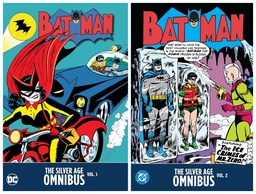
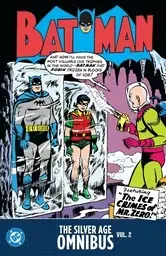
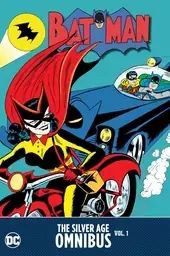
Batman: The Silver Age Omnibus Vol. 1 at 544 pages and Vol. 2 at 560 pages collect the 1950s and 1960s material.
This is the era of alien Batmen, colour-changing costumes and interplanetary policemen, and it is the period the television series drew on. It is also the material that our Dennis O'Neil guide describes as the thing the Bronze Age had to undo.
Read as camp it is enormous fun. Read expecting the detective, it will bewilder you.
Where to start
One recommendation: Batman: The Golden Age Omnibus Vol. 1. It is the origin of everything, it contains the first appearances that matter, and it stands alone perfectly well if you never buy volume two.
Do not start with the Silver Age volumes unless the camp era is specifically what you want. They are the strangest Batman in print.
Who should skip this shelf
This is eighty-year-old material and it reads like it. Stories are six to twelve pages, dialogue is functional, art is primitive by any modern standard, and the plotting is pulp. Nobody should buy these expecting a modern reading experience.
There is also content of its period: racial caricature appears in some Golden Age stories, presented without alteration. The volumes are historical documents and are packaged as such, but it is worth knowing before ordering rather than after.
Buy this shelf for the history and for the object. If you want to read Batman, our ranked Batman list points at better starting points.



Comments
No comments yet. Be the first to share your thoughts.