The X-Men shelf punishes guessing more than any other in comics. Sixty years of relaunches, line-wide crossovers and eras that quietly assume you were reading the other four titles means a wrong first purchase is not just disappointing — it is confusing, which is worse.
So this ranks by what you want from it. Seven picks, each with the reason it wins its category and the honest reason it might not suit you.
1. Best entry point
X-Men by Claremont & Lee Omnibus Vol. 1 — 777 pages of Uncanny X-Men #244-269: Jim Lee's arrival, Jubilee's debut and the Outback era, the strange stretch immediately before the 1991 relaunch.
For a clean starting line, the pick further down this list is the better one: Blue & Gold – Mutant Genesis is built around the 1991 relaunch itself — a new number one, a new roster, and no prior reading required.
The tradeoff: chronologically it sits at the end of the classic era, so you are meeting characters at a summary of themselves rather than watching them built. And the run's plotting famously came apart behind the scenes.
2. Best classic run
Uncanny X-Men by Claremont Omnibus Vol. 1 at 826 pages opens the sixteen-year run that invented what an X-Men comic is, continued in Vol. 2 at 912 and onward through the numbered volumes.
Nothing else here is as important, and the full route is mapped in our Chris Claremont guide.
The tradeoff: the complete spine is roughly six thousand pages of one continuous story, written in a dense, caption-heavy style. It is a project, not a purchase, and dipping into the middle is the most common mistake made with this shelf.
3. Best modern era
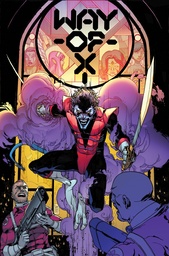
X-Men: Age of Krakoa – Dawn of X Omnibus Vol. 1 — 1,400 pages of the era that moved the mutants onto their own island nation and turned the premise from persecution into statecraft. One warning: the founding story, House of X / Powers of X, is not in this volume — these are the launch titles that follow it. One warning: the founding story, House of X / Powers of X, is not in this volume — these are the launch titles that follow it. One warning: the founding story, House of X / Powers of X, is not in this volume — these are the launch titles that follow it.
It is the most genuinely new idea the franchise has had in decades, and the reason a lot of lapsed readers came back.
The tradeoff: it is an ensemble era built across many simultaneous titles, so a single volume gives you threads rather than a closed story. And it rewards knowing what the old status quo was, because the whole point is the break from it.
4. Best crossover
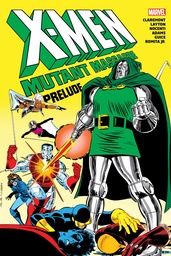
X-Men: Mutant Massacre Omnibus — 952 pages of the crossover that set the template for every mutant event afterwards, and the one where the tonal shift into genuine horror actually lands.
The tradeoff: crossovers are written by rotating teams across several books, so voice and quality move from chapter to chapter. Buy it for the scale of the event, not for a single authorial vision. Its place in the wider era is covered in our Louise Simonson guide.
5. Best for the animated-series generation
X-Men: Blue & Gold – Mutant Genesis Omnibus — 1,360 pages built around the 1991 relaunch: a new number one, a new roster, and the exact costumes and visual language the cartoon used, drawn by the artist who defined the look. It is the closest thing the franchise has to a clean starting line. We cover him in the Jim Lee guide.
The tradeoff: you are buying it for recognition and for the art. The stories are of their moment, and readers who come for narrative rather than nostalgia often find them thin.
6. Best recent creator-driven run
X-Men by Gerry Duggan Omnibus — 1,312 pages of a single writer given the flagship title during the island era, writing a team book with a clear voice inside a very crowded line.
The tradeoff: it sits in the middle of a larger era. Read on its own it works; read expecting the whole Krakoa story, it will feel like one instrument from an orchestra.
7. Best sideways pick
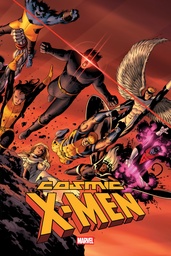
Cosmic X-Men Omnibus — 1,200 pages of mutants in space, which is the corner of the franchise that people either love immediately or never touch.
The tradeoff: it is peripheral by definition. Nobody's understanding of the X-Men depends on it, which is exactly why it is a good third or fourth purchase and a poor first one.
If you only buy one
Claremont & Lee Vol. 1 if you are new. Uncanny by Claremont Vol. 1 if you already know you want the real thing and are prepared for the length. Those two answer almost every version of this question.
For the full route through every era rather than a shortlist, use our X-Men omnibus reading guide. Which of these can be bought at any given moment changes constantly, so the X-Men page is the place to check availability.
Who should ignore this list
If you are collecting the numbered Uncanny X-Men omnibus line in order, the ranking logic here does not apply: those are bought sequentially and completely, and picking by category will leave you with gaps. And if what you want is a single self-contained X-Men story with a beginning and an end, be warned that this franchise offers fewer of those than almost any other in comics.

Comments
No comments yet. Be the first to share your thoughts.