X-Men is Marvel's hardest major line to collect because it is not one straight road. It is a family of roads: Uncanny X-Men, New Mutants, X-Factor, Excalibur, Wolverine, event omnibuses, modern relaunches and alternate starting points. This guide is built for collectors, not for trivia completion. The goal is to explain which X-Men omnibus eras matter, where a new reader should start, and which shelves are better left until later.
Before You Start: X-Men Is Built Around Eras, Not Just Volumes
The mistake with X-Men is treating every omnibus as equally essential. Some volumes form the spine of the franchise. Others are important side roads. A good X-Men shelf usually starts with Chris Claremont, then branches into 1990s events, Morrison, Whedon, Messiah Complex, Bendis or Krakoa depending on taste.
If you are completely new, do not start with a newer-looking omnibus just because it looks modern. The X-Men are unusually dependent on emotional continuity: Cyclops, Jean, Storm, Wolverine, Magneto, Xavier and the school all gain weight through accumulation. That does not mean you need everything, but it does mean your first shelf matters.
The Original Lee and Kirby Foundation (1963-1970)
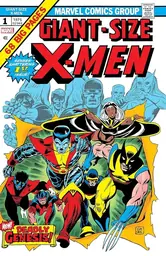
The first X-Men comics introduce the basic idea: mutant teenagers trained by Professor Xavier, feared by the world, and opposed by Magneto. Historically, this is essential. As a first reading experience, it is more complicated. The early series is important because it plants the mythology, but it is not where the X-Men become Marvel's emotional and political powerhouse.
For most collectors, the original era is useful context rather than the best first purchase. The team is still finding its identity, and the themes that later define the franchise are present but not yet fully alive.
Collector verdict: important as history, but not the best starting point unless you specifically want Silver Age Marvel. The core X-Men shelf truly begins with the relaunch into the Claremont era.
Claremont Begins: The New X-Men Become the Real X-Men (1975-1981)
Chris Claremont turns a cancelled-looking Marvel team into the company's most powerful long-form saga. The new international team changes everything: Storm, Nightcrawler, Colossus and Wolverine join Cyclops, Jean Grey and Professor X, and the book starts to feel like a serial novel about identity, trauma, found family and persecution.
The Claremont/Byrne peak is still the central argument for why X-Men matters. The Dark Phoenix Saga and Days of Future Past are not just famous arcs. They define the franchise's emotional grammar: love, fear, extinction, sacrifice, and the terrible cost of power.
Start with Uncanny X-Men by Claremont Omnibus Vol. 1, then continue into Vol. 2. Collector verdict: this is the safest classic starting point and the real foundation of an X-Men omnibus shelf.
The Expanding Mutant World: New Mutants, X-Factor and Excalibur (1982-1988)
Once Claremont's X-Men becomes a phenomenon, the mutant line expands. New Mutants gives the school a new generation. X-Factor brings the original five X-Men back into a different configuration. Excalibur pushes the franchise toward British weirdness, alternate realities and offbeat adventure.
These books are not side noise. They explain why X-Men becomes a universe rather than a team. But they are not all equally urgent for a new reader. New Mutants is the most organic extension of the school concept. X-Factor becomes more important as the line moves toward major crossover events. Excalibur is a cult shelf with a very different flavor.
Key shelves include New Mutants Omnibus Vol. 1, X-Factor: The Original X-Men Omnibus Vol. 1 and Excalibur Omnibus Vol. 1. Collector verdict: essential once you love the mutant universe, but not the first purchase before core Claremont.
The Event Spine: Mutant Massacre, Fall of the Mutants and Inferno (1986-1989)
X-Men is where Marvel learns how powerful line-wide events can be. Mutant Massacre, Fall of the Mutants and Inferno are not optional curiosities if you want to understand late-1980s X-Men. They connect Uncanny, New Mutants, X-Factor and the wider mutant world into one shared pressure system.
This is also where the line becomes denser. The reward is huge if you care about the cast, but the reading experience is less clean than a single author run. These omnibuses are best after the early Claremont foundation, when the names and relationships already mean something.
Collected in X-Men: Mutant Massacre Omnibus, X-Men: Fall of the Mutants Omnibus, X-Men: Inferno Prologue Omnibus and X-Men: Inferno Omnibus. Collector verdict: the best event shelf after Claremont Vol. 1 and 2.
The Jim Lee Breakout and the 1990s Machine (1989-1996)
Jim Lee turns X-Men into the dominant visual language of 1990s superhero comics. The relaunch around X-Men #1 is commercially enormous, but the era is also a turning point: Claremont leaves, the line splits between multiple voices, and the mutant franchise becomes a larger editorial machine.
The 1990s are exciting and messy in equal measure. Age of Apocalypse is the cleanest major recommendation because it has a bold alternate-world premise and a strong identity. Onslaught and the surrounding material matter historically, but they are harder to recommend as early purchases.
Read the transition in X-Men by Claremont & Lee Omnibus Vol. 1 and Vol. 2. For the most famous 1990s event shelf, go to X-Men: Age of Apocalypse Omnibus and Companion Omnibus. Collector verdict: visually iconic, but best after the Claremont spine.
Grant Morrison's New X-Men: The Modern Mutation (2001-2004)
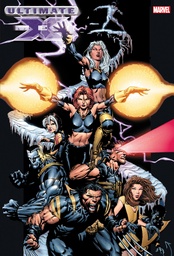
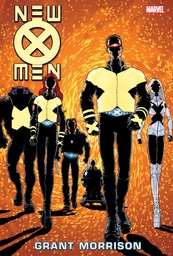
Grant Morrison does not try to imitate Claremont. That is why the run works. New X-Men makes mutants public, strange, fashionable and dangerous again. Xavier comes out as a mutant, the school becomes a visible institution, Cassandra Nova attacks the idea of mutant safety, and the book feels like a genuine 21st-century relaunch.
This is one of the best modern entry points if you already understand the basic X-Men premise. It is sharp, conceptual and sometimes abrasive, but it makes the franchise feel alive rather than nostalgic.
Collected in New X-Men by Grant Morrison Omnibus. Collector verdict: the best modern X-Men starting point if you want reinvention rather than classic continuity comfort.
Astonishing X-Men: The Cinematic Team Book (2004-2008)
Joss Whedon and John Cassaday follow Morrison with a cleaner, more cinematic team book. Astonishing X-Men restores superhero elegance without completely abandoning the emotional weight of the modern era. The cast is tight, the dialogue is accessible, and Cassaday gives the run a polished blockbuster quality.
It is not as radical as Morrison, but that is part of the appeal. For readers who want a modern X-Men run that feels complete, readable and visually coherent, this is one of the easiest recommendations.
Collected in Astonishing X-Men by Joss Whedon & John Cassaday Omnibus. Collector verdict: the cleanest modern team run after Morrison, especially for readers coming from film and animation.
Messiah Complex and the Extinction Years (2005-2012)
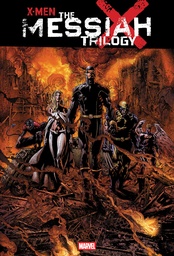
After House of M, the X-Men enter one of their darkest modern periods: mutantkind is nearly extinct, Hope Summers becomes the centre of the future, and Cyclops hardens into a wartime leader. This era is less beginner-friendly than Morrison or Whedon, but it is crucial for understanding modern Cyclops, Utopia and the road to Avengers vs. X-Men.
The appeal here is momentum. The line becomes one long survival story, with major consequences for the whole mutant world. It is not the first shelf to buy, but it is one of the strongest for readers who want X-Men as political crisis and extinction narrative.
The cleanest event collection is X-Men: The Messiah Trilogy Omnibus, with the wider conflict moving into Avengers vs. X-Men Omnibus. Collector verdict: excellent after Morrison and Whedon, not before.
Bendis, Aaron and the Post-AvX School (2012-2015)
After Avengers vs. X-Men, the line splits into different experiments. Brian Michael Bendis brings the original teenage X-Men into the present in All-New X-Men, then writes Cyclops and the mutant revolution in Uncanny X-Men. Jason Aaron's Wolverine and the X-Men turns the school into a chaotic, funny, character-driven setting.
This is not the cleanest era, but it has strong individual shelves. Bendis is better if you care about Cyclops, Jean Grey and time-displaced identity. Aaron is better if you want humor, school energy and character chaos.
Collected in All-New X-Men by Brian Michael Bendis Omnibus, Uncanny X-Men by Brian Michael Bendis Omnibus and Wolverine & the X-Men by Jason Aaron Omnibus. Collector verdict: good after the main modern spine, especially if you enjoy school drama and Cyclops-led conflict.
Hickman and the Krakoa Era (2019 onward)
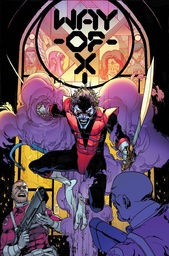
Jonathan Hickman's Krakoa era is the biggest conceptual reset since Morrison, and possibly since Claremont. Mutants build a nation, redefine resurrection, change their relationship with humanity, and become a geopolitical power. It is bold, dense and structurally ambitious.
Krakoa is a tempting modern starting point, but it works better if you already know what the X-Men were before. Its power comes from seeing the franchise stop asking for acceptance and start building a state. That shift means more when you know the long history of fear, extinction and school-based survival.
Start with X-Men by Jonathan Hickman Omnibus, then expand through X-Men: Age of Krakoa - Dawn of X Omnibus Vol. 1, Vol. 2 and X-Men: Age of Krakoa by Kieron Gillen Omnibus. Collector verdict: essential modern X-Men, but richer after Claremont, Morrison and Messiah.
One caveat on where to start: House of X / Powers of X is not part of the omnibus line, but it is where Krakoa begins. The Hickman omnibus collects X-Men (2019) #1-11 and #16-21, which come after those twelve issues, so reading it first means starting the era in the middle.
Recommendations by Reader Type
A quick way to choose the right X-Men shelf, because this line gets messy fast.
The real foundationClaremont Vol. 1
The safest place to understand why X-Men became X-Men: new team, new mythology and the start of the long emotional spine.
Dark Phoenix and Days of Future PastClaremont Vol. 2
The volume most readers mean when they talk about peak classic X-Men.
Mutants become strange againNew X-Men by Grant Morrison
The best modern conceptual reset before Krakoa, sharper and stranger than a normal superhero team book.
The easiest modern team bookAstonishing X-Men
A polished, accessible run with a tight cast and a blockbuster feel.
When the line becomes one machineMutant Massacre to Inferno
Best after the early Claremont volumes, when the cast and spin-offs already matter.
Cyclops under pressureMessiah Trilogy
The strongest bridge into the survival-era X-Men and the road to Avengers vs. X-Men.
Mutants build a nationX-Men by Jonathan Hickman
The core Krakoa shelf, best read after you know what the X-Men were before the nation-state era.
The best classic starting point is Claremont Vol. 1, and the strongest classic peak is Claremont Vol. 2. The best modern reinvention is New X-Men by Grant Morrison. The easiest cinematic run is Astonishing X-Men. The key event shelf runs from Mutant Massacre to Inferno, while the modern political reset belongs to Hickman's Krakoa.
Quick collector answer
X-Men Omnibus Reading Guide: Claremont, Morrison, Krakoa and Beyond is built as a structured answer for building a X-Men in omnibus format collection without buying at random. The guide helps clarify reading order, major eras and the purchases that make the most sense for a European reader.
Frequently asked questions
Is X-Men Omnibus Reading Guide: Claremont, Morrison, Krakoa and Beyond a good starting point?
Yes if the subject matches your reading priority. The most important choice is an omnibus you genuinely want to read and keep, not only a popular or hard-to-find volume.
Do you need to know all continuity before reading this kind of omnibus?
Not necessarily. Major US omnibuses mainly ask you to understand the era and tone of the run. A guide or review helps clarify whether the volume is standalone, modern, classic or more connected to other events.
Does reading the original English edition change the experience?
For many collectors, yes. The original English edition preserves dialogue, arc titles and the US format, which keeps the shelf more consistent when comparing multiple Marvel or DC runs.
Why compare European stock with US imports?
Because an omnibus is heavy, expensive to ship and vulnerable to damaged corners. For buyers in France or Europe, delivered price, packing, tracking and returns matter as much as the listed price.
What should you read after this post?
The best next step is usually inside the same reading cluster: a character guide, a related run review or a buying comparison. That builds a logical shelf instead of stacking volumes with no clear order.

Comments
No comments yet. Be the first to share your thoughts.