Scott Snyder taught creative writing and published literary short stories before he wrote a superhero, and the first thing he did with Batman was treat Gotham as a haunted house: a building with a history that resents its occupant.
The result is the most consistently recommended modern Batman run, and a shelf with one specific trap on it that costs buyers real money if they miss it.
What defines his writing
Horror instincts applied to a detective. He builds dread rather than mystery. The reveal is rarely who did it; it is that the thing was always there, in the architecture, waiting. That is a horror move, not a crime move, and it is why his Batman feels different from everyone else's.
Escalation as a structural engine. Each arc raises the stakes on the last, deliberately and steeply. It makes the run enormously readable and it is also the source of the main criticism: by the end, the ceiling has been raised so often that the top is hard to see.
The city has a memory. He writes Gotham as older than Batman and indifferent to him. The Court of Owls exists to say out loud that Bruce Wayne does not actually know the place he thinks he owns.
Built around one artist. The run is inseparable from Greg Capullo's drawing, which is why the collaboration is credited in the book titles rather than the small print.
The main run, and the trap
The Snyder and Capullo Batman exists here in two forms, and this is the part worth reading carefully.
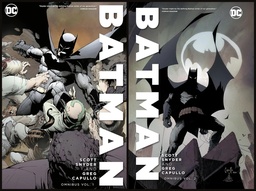
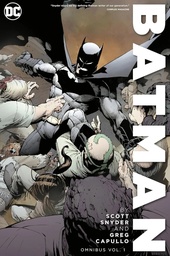
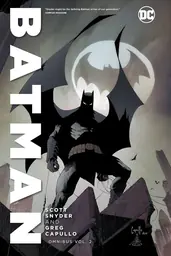
Batman by Scott Snyder and Greg Capullo Omnibus Vol. 1 at 1,152 pages and a second volume at 928 pages sell the run in halves. Batman by Scott Snyder & Greg Capullo Omnibus Vol. 1-2 at 2,080 pages is the same material as a single set, and 2,080 is exactly the sum of the two volumes, so the set is the whole run and not a selection.
The set is the better buy for a reason that has nothing to do with the per-page price. On a single-copy catalogue, assembling two separate volumes over months frequently fails: people get the first and then wait a long time for the second. The run is one continuous story from the Court of Owls through Endgame, and half of it is an unsatisfying object to own.
The rest of the Batman shelf
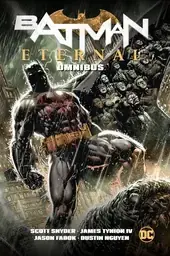
Batman: The Arkham Saga Omnibus at 1,648 pages collects the Arkham material around the run. Batman Eternal Omnibus at 1,344 pages and Batman and Robin Eternal Omnibus at 648 are the weekly series he plotted: those are written by rotating teams working from his outline, so buying them expecting his prose is the second trap on this shelf. James Tynion IV wrote a large share of both, and his own guide covers where that leads.
Away from Batman
Swamp Thing: The New 52 Omnibus at 1,160 pages is the purest horror thing he has written for DC, and the book that most clearly shows what he was doing before the cape work made him famous. If the Batman run works for you because of the dread rather than the punching, this is the one to read next.
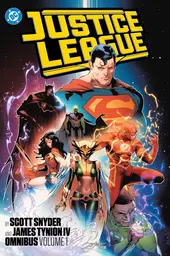
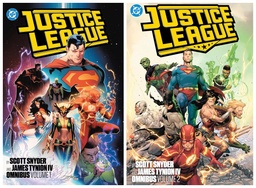
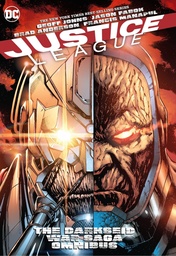
Justice League by Snyder & Tynion Omnibus Vol. 1 at 776 pages and its 896-page sequel are the cosmic swing: the same escalation instinct applied at the scale of the universe rather than a city. It is the most divisive material on the shelf.
For the current state of the shelf rather than this article, look at the Scott Snyder page. For DC beyond this shelf, see the DC omnibus page.
Where to start
One recommendation: Batman by Scott Snyder & Greg Capullo Vol. 1-2, the set rather than the halves. It requires no previous Batman reading, it is self-contained, and it is the single easiest modern superhero run to hand to someone who says they do not read comics.
If the price of the set is the obstacle, take Vol. 1 and know that you will want the second half.
Who should skip this shelf
The escalation that makes the run readable is also the fair objection to it. Threats get bigger, revelations get more foundational, and by the later arcs some readers stop believing the stakes because they have been raised too often. If you prefer a Batman who solves a case in one book and goes home, the Bronze Age material on these shelves will serve you better than this will.






Comments
No comments yet. Be the first to share your thoughts.