James Tynion IV had the job most writers spend a career chasing — the main Batman title — and left it, at the peak, to write horror comics he owns himself. That decision is the key to reading this shelf, because the horror was already there. He was writing it inside Batman the whole time.
What defines his writing
Dread instead of danger. His antagonists are not physical threats to be out-punched; they are people who have already worked out how to hurt you and are taking their time. The tension comes from anticipation, which is a horror technique, not a superhero one.
Found family as the actual subject. He is drawn to the people around the hero — the network, the strays, the ones who stayed. Where other writers use Batman's isolation, he keeps asking what the group owes each other.
New threats over old rogues. He would rather build a villain than reuse one, and that is the single most divisive thing about him. It is also why his run feels different from the twenty that came before it.
Characters who say the thing. His dialogue is emotionally direct to a degree that reads as either refreshing or unsubtle, depending entirely on you. There is no ironic distance anywhere in his work.
The run with his name on it
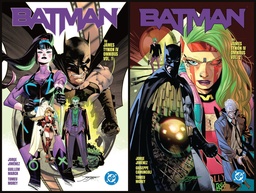
Batman by James Tynion IV Omnibus Vol. 1-2 — 2,040 pages, exactly the sum of the two individual volumes, so the set is the whole run rather than a selection.
This is Gotham written as a city where something is wrong and everyone can feel it. It introduces new figures rather than leaning on the familiar rogues, builds its threat as a slow psychological siege, and treats the Bat-family as people with obligations to each other rather than as backup.
Where it sits against every other Batman option is set out in our ranked guide to the best Batman omnibus.
The Detective Comics years
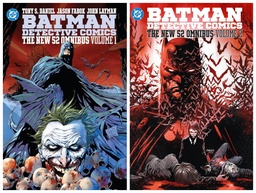
Before the main title he spent a long stretch on Detective Comics, collected as Batman: Rise and Fall of the Batmen Omnibus at 1,232 pages and continued in Batman: Detective Comics Omnibus at 1,048.
For a lot of readers this is the better work. It is explicitly a team book — Batman training and failing the people around him — and the found-family instinct has more room here than in the solo title. If the ensemble is what appeals to you, start here rather than with the run that carries his name.
The weeklies, and an honest caveat
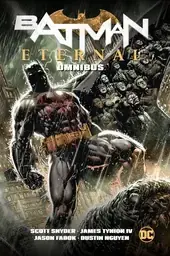
Batman Eternal at 1,344 pages and Batman and Robin Eternal at 648 are weekly series written by rotating teams. He is one voice among several, so buying them for him specifically gives you far less of him per page than the runs above. Batman: Urban Legends Vol. 1 is an anthology with the same caveat.
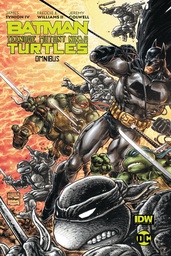
The genuine outlier is Batman / Teenage Mutant Ninja Turtles Omnibus, which is exactly what it sounds like and is far better than it has any right to be.
Which of these can be bought at any given moment changes constantly, so the James Tynion IV page is where to check availability rather than this article.
Where to start
One recommendation: Batman by James Tynion IV Vol. 1-2. It is the run he will be judged on, it needs no prior reading, and it is the clearest sample of the horror instincts he later built a career on.
If you would rather see him with an ensemble, take Rise and Fall of the Batmen instead — and it is the cheaper way in.
Who should skip this shelf
Be honest with yourself about the rogues. If your idea of a great Batman run means the Joker, Two-Face, Penguin and Riddler done well, this writer will frustrate you: he keeps inventing instead, and readers who wanted the classics have said so loudly. And if you dislike dialogue where characters state their feelings plainly, that is his default register and it does not let up.



Comments
No comments yet. Be the first to share your thoughts.