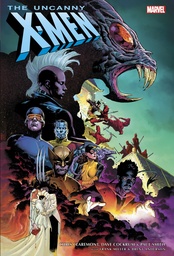
In discussions about American comics, someone will often ask which is the best superhero comic ever written, and the same titles always come up: Watchmen, The Dark Knight Returns, Sandman. And then there’s another name that not everyone puts on that list, but serious readers certainly do: the Dark Phoenix Saga. It’s in Uncanny X-Men by Claremont Omnibus Vol. 2. And it is, probably, the absolute pinnacle of mainstream superhero comics of the 20th century.
What’s the background?
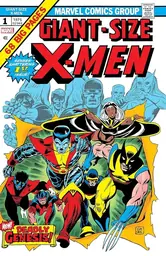
When this volume begins, Chris Claremont has already been writing X-Men on his own for five years. He took the title over with issue #94, after Len Wein and Dave Cockrum relaunched the book in Giant-Size X-Men #1 with a new international team that included Storm, Nightcrawler and Colossus. Claremont then wrote it alongside Cockrum and turned it into a critical success. The first volume of the omnibus covers that initial phase.
By the time this second volume opens, John Byrne has been drawing the title for two years. He joined with issue #108, back in the first omnibus, and the chemistry between him and Claremont produced a run neither ever matched again with anyone else. What this volume holds is where that partnership peaks and then ends.
The Dark Phoenix Saga
The Dark Phoenix Saga spans approximately 10 issues, originally published between 1979 and 1980. It is the culmination of years of laying the groundwork regarding Jean Grey, her powers and the cosmic entity Phoenix that had possessed her in previous story arcs.
The premise is as follows: Jean Grey has absorbed the Phoenix Force and become one of the most powerful entities in the universe. A secret society of the wealthy and powerful, the Hellfire Club — whose Inner Circle is led by the mutants Sebastian Shaw and Emma Frost — attempts to manipulate her emotions to turn her into a weapon. Under psychic pressure, Jean loses control. She becomes the Dark Phoenix, destroys an entire solar system and kills 5 billion aliens.
The Shi’ar, the galactic empire ruling that part of the cosmos, condemn her to death; when Xavier refuses to hand her over he invokes Arin’n Haelar, a Shi’ar duel of honour, and the X-Men must fight the Imperial Guard for her life. The X-Men had to choose: fight to defend their comrade, or accept that Jean is no longer Jean and must be stopped. Jean made the decision for them. At the end of the arc, on the Blue Area of the Moon, she triggers a dormant Kree weapon and takes her own life to protect the universe from herself.
It is one of the most emotionally harrowing scenes in superhero comics. And it is real: Jean Grey remained dead in the official continuity for years (until Marvel resurrected her in the 1980s, undermining the original impact of the sacrifice).
Days of Future Past
The other key arc in the volume is Days of Future Past (2 issues, published in 1981). The premise has been adapted for the cinema: in a dystopian future where mutants are confined to concentration camps, Kitty Pryde sends her consciousness back in time to prevent the assassination of Senator Kelly that triggered the persecution.
The story has incredible narrative impact, but it also has structural impact: it created the dystopian-future template that superhero comics have reused ever since. Time travel was already routine — Rip Hunter arrived in 1959, Kang in 1963 — but Days of Future Past turned it into something different: a warning sent back from a future the heroes still have time to prevent.
Claremont and Byrne resolve an epic story in two issues. Not two volumes, not ten parts: two issues. It is a lesson in narrative economy that few modern writers take to heart.
Kitty Pryde’s first year
Kitty Pryde — a Jewish teenager with the power to phase through solid objects — debuts at the very end of Vol. 1, in issue #129. This is the volume where she actually joins the team and becomes a lead character. Claremont uses her as the reader’s point of view: Kitty is young, insecure, out of place amongst the team’s veteran adults, and her perspective allows the reader to see the X-Men through fresh eyes.
Kitty would go on to become one of the most beloved protagonists in the mutant universe. Her first full year as an X-Man, collected here, is the main reason why.
The art of John Byrne
If Claremont’s writing is the soul of the run, Byrne’s art is the body. His pages from this period are considered the absolute peak of his career. Byrne draws with a compositional clarity that few mainstream comic artists achieve: every panel has a clear narrative purpose, every gesture is legible, every background provides information.
Byrne’s faces in this volume are particularly memorable. Jean Grey, possessed by Phoenix, has an expression that shifts subtly as her mental state deteriorates. Cyclops looks weary in every scene. The moments of silence between characters carry more weight than the fights. It is a masterclass in visual storytelling.
What the omnibus contains
The volume covers the second half of the Claremont-Byrne partnership: the climax of the Dark Phoenix Saga, Days of Future Past, and the end of their collaboration when Byrne left the title for Fantastic Four. Kitty Pryde's debut and the opening chapters of the Phoenix story sit in the first omnibus, not this one.
It comprises 912 pages of historic American comic book material. It includes original covers, publisher’s biographies, pre-production material and historical context.
Honest weaknesses
The volume includes some filler issues from the end of the run, when Byrne had already begun to leave the title. Those issues aren’t on the same level as the peak of the run. But they are in the minority.
And Claremont’s narrative style during this period is dense: lots of internal monologues, lots of explanations of powers, lots of information per panel. Sometimes the speech bubbles take up too much visual space. It is a characteristic of 1980s comics that one has to accept as such.
Buying verdict
It is essential reading. If you consider that superhero comics can be serious literature, this volume is probably the best proof there is. The Dark Phoenix Saga raises real ethical questions (can you blame someone for acts committed under manipulation?), Days of Future Past uses the genre to discuss totalitarianism, and the complete collection marks the moment when the X-Men went from being a minor team to becoming Marvel’s most important franchise.
If you’ve never read this arc, you’re missing out on one of the defining experiences of American comics. And if you’ve already read it in TPB format, the omnibus is the definitive edition: large format, restored artwork, complete content with no omissions.
View product details · Vol. 1 also available
Quick collector answer
Review: Uncanny X-Men by Claremont Omnibus Vol. 2 is most useful if you want to decide whether this volume really belongs in a X-Men in omnibus format collection. The goal is not to replace the review, but to summarize who the omnibus works for, how much continuity it asks from the reader and how to buy it without looking only at the listed price.
Frequently asked questions
Is Review: Uncanny X-Men by Claremont Omnibus Vol. 2 a good buy in original English omnibus format?
Yes if the subject matches your reading priority. The most important choice is an omnibus you genuinely want to read and keep, not only a popular or hard-to-find volume.
Do you need to know all continuity before reading this kind of omnibus?
Not necessarily. Major US omnibuses mainly ask you to understand the era and tone of the run. A guide or review helps clarify whether the volume is standalone, modern, classic or more connected to other events.
Does reading the original English edition change the experience?
For many collectors, yes. The original English edition preserves dialogue, arc titles and the US format, which keeps the shelf more consistent when comparing multiple Marvel or DC runs.
Why compare European stock with US imports?
Because an omnibus is heavy, expensive to ship and vulnerable to damaged corners. For buyers in France or Europe, delivered price, packing, tracking and returns matter as much as the listed price.
What should you read after this post?
The best next step is usually inside the same reading cluster: a character guide, a related run review or a buying comparison. That builds a logical shelf instead of stacking volumes with no clear order.


Comments
No comments yet. Be the first to share your thoughts.