Mark Waid spent the 1990s and 2000s making an unfashionable argument: that superheroes are more interesting when they are competent, decent and enjoying the job. He made it while the rest of the industry was grimacing, and he made it well enough that two of his runs are now the reference versions of their characters.
What defines his writing
Encyclopaedic continuity, used lightly. He knows the history better than almost anyone writing, and he uses it to reward readers rather than to gatekeep. Nothing on this shelf requires homework, and everything rewards it.
Heroism as a craft. His characters are good at their jobs. Plots turn on someone thinking clearly under pressure, which is a far rarer engine than it sounds and the reason his books feel brisk.
Legacy as a subject. His best-known work is about inheriting a role from someone better and deciding what to do with it. That is the whole Flash run and much of everything else.
Structural clarity. Arcs have shapes. Set-ups pay off inside the volume you bought them in, which on these shelves is worth stating plainly.
The main run: the Flash
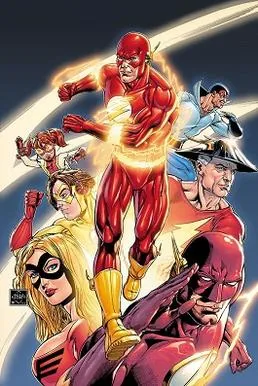
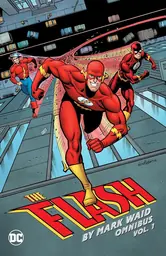
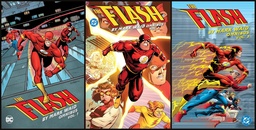
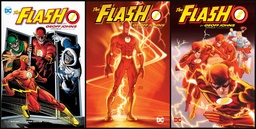
The Flash by Mark Waid Omnibus Vol. 1-3 at 3,560 pages collects it as a set, which is exactly the sum of the three individual volumes at 1,088, 1,216 and 1,256 pages.
This is the definitive Wally West run and the book that made legacy the central idea of DC's identity for a generation. Wally is the sidekick who inherited the name of a dead mentor and spends years failing to feel entitled to it, and the run is about him becoming worthy of it without ever being told he is.
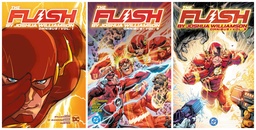
On a single-copy catalogue the set is the safer purchase: three volumes assembled over months frequently stalls at two, and this is one continuous story. The era is also covered from a different angle in our Flash by Mark Waid era guide, and the modern equivalent run is in the Joshua Williamson guide.
Daredevil, against type
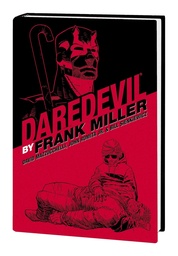
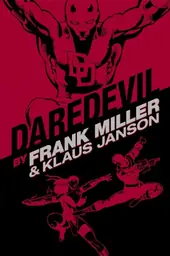
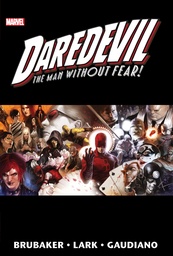
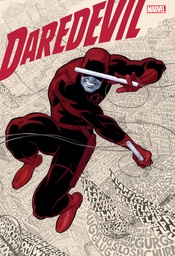
Daredevil by Mark Waid Omnibus Vol. 1 at 720 pages and Vol. 2 with Chris Samnee at 768 pages are the run that most demonstrates the thesis.
He inherited a character defined by decades of misery and made him decide to be cheerful on purpose, as a coping strategy. The run is bright, acrobatic and funny, and then it turns out that the cheerfulness is a symptom rather than a cure. It is the smartest thing anyone has done with that character since the noir versions, precisely because it argues with them.
The rest of the shelf
JLA by Mark Waid Omnibus at 1,320 pages is the big superhero book: the League written as gods who behave decently, drawn partly by the artist covered in the Bryan Hitch guide.
Fantastic Four by Waid & Wieringo Omnibus is the run that treated Marvel's first family as explorers rather than as a soap opera, and it is the most purely likeable book here.
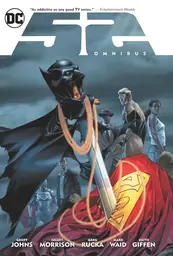
Black Widow & Captain America by Waid & Samnee Omnibus at 536 pages continues the Samnee partnership, and 52 Omnibus at 1,216 pages is the weekly experiment he co-wrote with three other writers — an era purchase rather than an author one.
The whole DC and Marvel span of his work is on the Mark Waid page.
Where to start
One recommendation: Daredevil by Mark Waid Vol. 1. It is short, it needs nothing, and it shows the entire method inside two hundred pages — a character everyone writes one way, written the other way, convincingly.
If you want the major work, the Flash Vol. 1-3 set is the destination, with the caveat that 3,560 pages is a serious commitment to a character you may only know from television.
Who should skip this shelf
The optimism is the honest dividing line. His books believe that people are broadly decent and that problems yield to competence, and readers who want moral ambiguity or a darker register will find them lightweight. The 1990s material also looks its age: bright colouring, conventional layouts and a house style that has dated more than the writing has.
If your taste runs to the bleak end of these shelves, this is the shelf you will most reliably bounce off.



Comments
No comments yet. Be the first to share your thoughts.