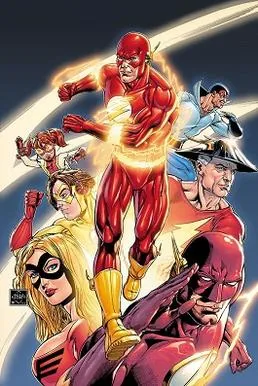
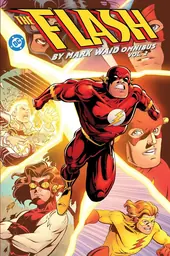
The Flash by Mark Waid is the Wally West run that turns legacy into the engine of the book. It is not just a speedster adventure. It is the run where being the Flash means carrying a name, a family, a history and an impossible standard without becoming trapped by it.
For collectors, that makes the three-volume shelf one of DC's clearest character-evolution reads. The question is not only how fast Wally can run. The question is how a successor becomes the centre of the mythology.
What This Run Adds To The Flash
Waid's great move is to make speed emotional. The Speed Force, the Flash family and the idea of legacy all work because they are tied to Wally's insecurity and growth. The run gives the mythology a language that later Flash stories keep using.
This is why the shelf matters even if you know Barry Allen first. Wally is not a placeholder. He becomes proof that DC legacy can create a richer hero rather than a weaker copy.
Vol. 1: Wally Becomes The Lead
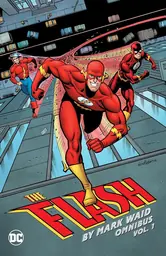
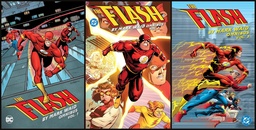
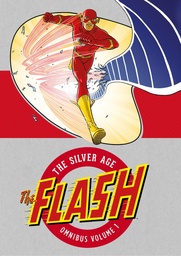
The Flash by Mark Waid Omnibus Vol. 1 is the essential start because it defines Wally's emotional problem: how to honor Barry without living as Barry's shadow.
The first volume is where the run teaches its central pleasure. Wally is funny, flawed, proud, scared and heroic in a way that belongs to him. That is the hook.
Vol. 2 And Vol. 3: Legacy Becomes A World
Vol. 2 and Vol. 3 expand the shelf from personal growth into a wider Flash mythology. The family, the powers and the cosmic language of speed become more important without losing the human core.
That balance is why the run holds up. It can be mythic and intimate at once: a superhero book about running faster, but also about inheritance, fear and earning a name.
Who Should Buy It?
- Buy it if you want Wally West, the Speed Force and DC legacy at their most readable.
- Start with Vol. 1 because the emotional foundation matters.
- Wait if you only want Barry Allen or modern event-driven Flash.
Mistakes To Avoid
- Do not treat Wally as a temporary replacement; the run is about why he matters.
- Do not start only for lore. Start for character growth.
- Do not skip the early emotional setup if you want the mythology to land.
How It Fits On The Shelf
Place Waid after you understand that Flash is not only a power set. The run is about inheritance: what a heroic name does to the person who receives it, and how a successor can become more than a tribute act.
It also gives the Flash shelf a vocabulary. Speed Force, family, legacy and emotional velocity become linked ideas rather than separate pieces of lore. That is why the run remains useful even for readers who eventually move to later Flash eras.
Reader Profile
This is for readers who like optimism with insecurity underneath. Wally can be funny, proud and messy, but the run keeps returning to growth. It is a very different pleasure from dark event comics: the drama is personal before it is cosmic.
Best Place To Start
Start at Vol. 1 because Wally’s insecurity is not optional context. The later mythology has more force when you see the emotional problem first: how to be worthy of a name without disappearing inside it.
Why It Still Matters
Waid’s Flash still matters because it makes legacy feel generous rather than restrictive. The run does not ask Wally to erase Barry. It asks him to grow until the name Flash can hold more than one meaning. That is a very DC idea, and one of the reasons the run remains a core recommendation.
The practical buying rule is simple: if you want Wally West as a fully formed lead, start here. If you only know Flash as a costume and a power, this shelf explains why the person inside the lightning matters.
Collector Verdict
The Mark Waid Flash shelf is one of DC's best arguments for legacy. Vol. 1 builds Wally, Vol. 2 and Vol. 3 turn that growth into a full mythology. It is a character shelf before it is a power-set shelf.

Comments
No comments yet. Be the first to share your thoughts.