Most attempts to make a superhero frightening fail because the character has been familiar for sixty years. The Immortal Hulk succeeded, and it did so by asking a question nobody had asked seriously: if Bruce Banner cannot die, what exactly is bringing him back?
The answer the run gives is theological, and it is the reason this is the most requested modern Hulk book we stock.
What it is
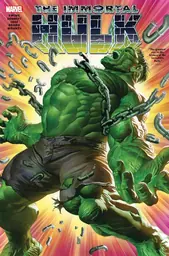
The Immortal Hulk Omnibus at 1,616 pages collects the run in a single volume.
The premise resets the character to horror: Banner dies during the day and the Hulk rises at night, and the book treats that literally rather than as a metaphor. From there it builds a cosmology around gamma radiation, a green door that the dead pass through, and a version of the Hulk that is closer to a vengeful spirit than to a superhero with anger issues.
Al Ewing writes it as a serialised horror novel, structured in chapters with titles and epigraphs. Joe Bennett draws the transformations as body horror in the literal sense: bones moving under skin, limbs at wrong angles, a monster assembled from a man rather than replacing one.
Do you need to have read Hulk before?
No. This is the single most common question and the answer is genuinely no.
The run assumes you know the basic setup — a scientist, an accident, a monster — and explains everything else from scratch. It reaches back into older continuity for specific characters, but it re-establishes each one as it arrives. A reader whose only exposure is the films can start here without difficulty.
What it does assume is a tolerance for horror. This is not a superhero book with dark moments. It is a horror comic that contains superheroes, and the gore is explicit and frequent.
Where it sits on the Hulk shelf
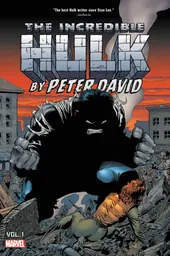
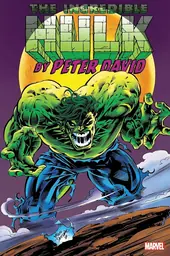
The other long Hulk run worth knowing is Peter David's, collected across several volumes beginning with Incredible Hulk by Peter David Omnibus Vol. 1. That run is a psychological character study across twelve years: the Hulk as a personality disorder, treated with therapy and consequence. It is the opposite approach to the same character and the natural next purchase if Immortal Hulk works for you.
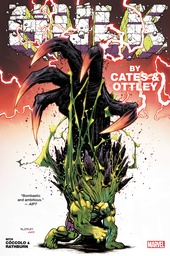
Hulk by Donny Cates & Ryan Ottley Omnibus at 424 pages is what came directly afterwards, and it deliberately swings back to action and spectacle. It is a much lighter book and it is fair to say it lives in the shadow of what preceded it. The approach is covered in the Donny Cates guide.
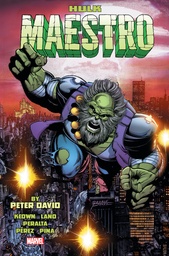
Hulk: Maestro by Peter David Omnibus at 960 pages collects the future-tyrant material, which is the other place the character gets treated as genuinely dangerous.
The shelf itself lives on the Hulk page, ordered so that what can be bought comes first.
Who should not buy it
Two honest warnings. The gore is not decorative: there are sustained sequences of bodies being destroyed and rebuilt, described in detail, and readers who are squeamish will find them hard going rather than atmospheric.
And the theology can be divisive. The final third moves into cosmic and metaphysical territory, with a structure borrowed from religious tradition, and readers who came for a monster comic sometimes feel the run leaves them behind. If you want the Hulk hitting things, the Loeb and McGuinness material or the Cates run are the better purchases.
Questions buyers actually ask
Is the omnibus the complete run?
Yes. At 1,616 pages it collects the whole thing, so there is no second volume to hunt down and no risk of ending mid-story.
Is it suitable if I only know the Hulk from the films?
Yes, with the horror caveat. The film version is a very different tone, but nothing in the book requires previous comics reading.
How does it compare with Peter David's run?
David writes the Hulk as a mind. Ewing writes him as a body and a haunting. David's run is longer and more humane, this one is shorter and far more frightening. Most collectors end up wanting both.
Is the paper and reproduction good enough for the art?
It matters here more than usual, because the horror depends on the rendering of the transformations. The oversized hardcover format is the right way to read this run — the detail in the anatomy is lost at standard trade size.

Comments
No comments yet. Be the first to share your thoughts.