Most writers spend a career being careful with characters they did not create. Gerry Conway, handed Spider-Man at twenty-something, did the opposite: he killed the girlfriend, permanently, and the genre never went back to how it worked before.
That single decision is why his name matters. What his shelf shows is that it was not a fluke — it was the instinct of a writer who consistently chose consequence over comfort, and who then wrote an enormous amount of everything else.
What defines his writing
Damage that does not reset. His stories end with the situation permanently worse. Characters lose people, carry it, and the loss keeps mattering issues later. In the era he was working in, that was close to heresy.
Moral register shifted downward. He introduced the character who kills, in a line built on heroes who do not, and treated the argument between those positions as the plot rather than a slogan.
Working-professional range. He wrote street-level, cosmic, teams and teenagers, at Marvel and at DC, to monthly deadlines, for decades. The range is the achievement, and it is also why plenty of individual volumes on this shelf are solid rather than remarkable.
Melodrama played straight. No irony, no wink. Grief, guilt and family obligation are handled as real weights, which is why the best of his work has aged better than the flashier comics around it.
The volume that changed the genre
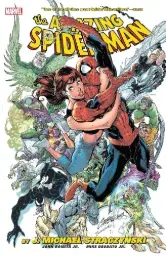
Amazing Spider-Man Omnibus Vol. 4 — 976 pages containing the two issues everybody has heard about even if they have never read a comic, plus the first appearance of the Punisher and the original clone storyline that the nineties would later mine for years.
If you buy one Conway book, buy this one. It is the most consequential single omnibus in the Bronze Age Spider-Man shelf, and it needs no prior reading beyond knowing who Peter Parker is. His Spider-Man work continues through Vol. 5 and Vol. 6, and the wider Spider-Man shelf is ranked in our best Spider-Man omnibus guide.
The Marvel breadth
The Mighty Thor Omnibus Vol. 3 at 982 pages opens his long stretch on the character, continued across Vol. 4 and Vol. 5. Beyond that: Daredevil Omnibus Vol. 3, both Web of Spider-Man volumes, Peter Parker, The Spectacular Spider-Man Omnibus Vol. 1, Marvel Team-Up Omnibus Vol. 1 and the Venom collection.
This is the stretch of his career that gets described as journeyman work, and the description is fair without being an insult: these are well-built comics by someone who could be handed any title and deliver.
The DC half
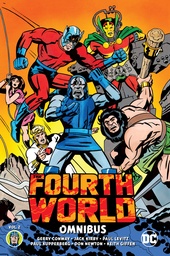
He spent years on Justice League of America during the Bronze Age, collected across three volumes, and he also wrote Robin: The Bronze Age Omnibus and material in Batman: The Bronze Age Omnibus Vol. 1.
Then there is Justice League: The Detroit Era Omnibus — 1,040 pages of the most disliked Justice League run in the character's history, in which the famous members leave and are replaced by teenagers in a Detroit warehouse.
We are not going to pretend it is a lost classic. It is, however, a genuinely interesting failure: a deliberate attempt to make the League smaller and more human that the audience rejected outright. Buy it as a curiosity, with your eyes open.
Which of these can be bought at any given moment changes constantly, so the Gerry Conway page is where to check availability rather than this article.
Where to start
One recommendation: Amazing Spider-Man Omnibus Vol. 4. Nothing else on the shelf is close in importance, and it is the rare case where the historically significant book is also the most readable one.
If you have read it already, go to the Thor volumes, where he gets to write myth at full volume and the melodrama has somewhere to go.
Who should skip this shelf
Outside the Spider-Man peak, a lot of this is Bronze Age house-style work: dense captions, plots resolved in two issues, art of its period. If you are not already comfortable with seventies Marvel and DC, the breadth that makes him historically important will read to you as unremarkable. Buy the one essential volume, and only go wider if the period itself appeals to you.













Comments
No comments yet. Be the first to share your thoughts.