X-Men by Chris Claremont is not one run so much as the language modern X-Men still speaks: soap opera, found family, political fear, cosmic melodrama, trauma, romance and team fracture all moving at once. The question for collectors is not whether Claremont matters. The question is where to enter without turning the shelf into homework.
This guide treats the Claremont X-Men shelf as a sequence of reading zones: early Uncanny foundation, event-era pressure, Claremont & Lee as the visual 1990s handoff, and later return material for readers who already love the voice.
The Claremont Shelf Map
| Zone | Core books | Function |
|---|---|---|
| Foundation | Uncanny X-Men by Claremont Vol. 1, Vol. 2 | The new X-Men, Phoenix, Byrne-era escalation, Days of Future Past and the emotional grammar of the line. |
| Event pressure | Mutant Massacre Prelude, Mutant Massacre, Fall of the Mutants, Inferno Prologue, Inferno | The X-line becomes a connected machine where trauma, team changes and crossovers reshape the characters. |
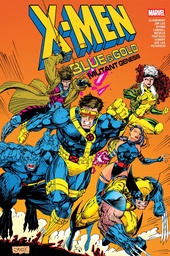
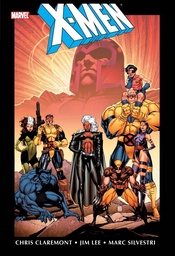
| 1990s handoff | Claremont & Lee Vol. 1, Vol. 2 | Jim Lee's visual definition of the 1990s and Claremont's exit from the main line. |
| Return material | X-Men Revolution, X-Treme X-Men Vol. 1, Vol. 2 | For readers who want Claremont's later voice, Storm-led teams and turn-of-the-century mutant politics. |
Best Place to Start
Start with Uncanny X-Men by Claremont Vol. 1 if you want the actual foundation. Move to Vol. 2 for the Byrne-era peak and the material that makes the X-Men feel permanent rather than merely popular.
If you already know the early classics and want the line at its most interlocked, go to the event path: Mutant Massacre, Fall of the Mutants and Inferno. Those books show why X-Men became a long emotional ecosystem, not just a superhero team.
Buying Priority
- Foundation first: Uncanny Vol. 1 and Vol. 2.
- Then events: Mutant Massacre through Inferno if you want the X-line as a shared pressure cooker.
- Then Claremont & Lee: essential if the 1990s X-Men look is part of what you love.
- Later returns last: Revolution and X-Treme are for committed Claremont readers, not first stops.
What to Read It For
Read Claremont for accumulation. A look, a wound, a romance, a rivalry or a sentence can matter dozens of issues later. That is why the omnibus format fits him so well: the pleasure is not only famous arcs, but the slow feeling that every character has history pressing on them.
Mistakes to Avoid
- Do not begin with later return material because the word Claremont is on the cover.
- Do not treat the events as isolated spectacles; they work because the relationships have already been loaded.
- Do not buy every adjacent book at once. Claremont rewards sequence more than panic buying.
Why Claremont Is Different
Claremont's X-Men is not built like a modern six-issue trade cycle. It is built like a long serial where private emotion and public danger keep feeding each other. Storm becoming a leader, Wolverine becoming more than a dangerous body, Jean Grey becoming myth, Magneto becoming tragedy, Kitty Pryde becoming reader surrogate: these changes matter because they unfold across time.
That is also why the event books work. Mutant Massacre hurts because the world has already been given relationships and places worth damaging. Inferno works because the supernatural eruption grows out of betrayal, identity and family fracture, not because demons randomly arrive in New York.
For Which Reader?
- New Marvel reader: start with Uncanny Vol. 1 and accept that the rhythm is older, denser and more narrated.
- Event-focused collector: begin only after you understand the team dynamics; otherwise the events become loud plot.
- 1990s nostalgia reader: Claremont & Lee gives the look, but the emotional foundation lives earlier.
What Makes It Premium Reading
The premium value of Claremont is not scarcity or size; it is continuity of feeling. Few superhero runs let you watch characters argue, heal, regress, fall in love, lose control and redefine themselves for this long under one authorial voice. If you want the X-Men as a living community rather than a logo, this is the route.
Omnibus by Omnibus Notes
Uncanny Vol. 1 is the emotional doorway: new team, new tone, and the first sense that mutants are a community under pressure. Uncanny Vol. 2 is where the run becomes unavoidable, because Phoenix and Days of Future Past give the line tragedy and future dread.
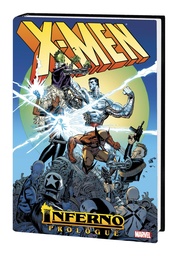
Mutant Massacre Prelude is useful if you want the world before impact. Mutant Massacre is the wound. Fall of the Mutants is the identity crisis. Inferno Prologue is the fuse, and Inferno is the explosion. The point is not to own every event name; the point is to feel how one emotional problem becomes line-wide.
Claremont & Lee should be read as a visual and industrial handoff. It is famous because it looks like the 1990s arriving, but its strongest value is the tension between Claremont's long character memory and Jim Lee's new visual dominance.
Paring It Down
If the whole Claremont shelf feels too large, reduce it to three decisions: start with Uncanny Vol. 1, continue only if the dense serial rhythm works, and then choose either the event path or the Claremont & Lee visual handoff. That keeps the route readable instead of turning it into a collector checklist.
Collector Verdict
The best Claremont X-Men route is foundation, events, then 1990s handoff. If the early Uncanny voice works for you, the event books become richer. If it does not, jumping to Inferno or Claremont & Lee will give you scale without the same emotional charge.
Quick collector answer
X-Men by Chris Claremont Era Guide: Uncanny, Events and the Mutant Soap Opera is built as a structured answer for building a X-Men in omnibus format collection without buying at random. The guide helps clarify reading order, major eras and the purchases that make the most sense for a European reader.
Frequently asked questions
Is X-Men by Chris Claremont Era Guide: Uncanny, Events and the Mutant Soap Opera a good starting point?
Yes if the subject matches your reading priority. The most important choice is an omnibus you genuinely want to read and keep, not only a popular or hard-to-find volume.
Do you need to know all continuity before reading this kind of omnibus?
Not necessarily. Major US omnibuses mainly ask you to understand the era and tone of the run. A guide or review helps clarify whether the volume is standalone, modern, classic or more connected to other events.
Does reading the original English edition change the experience?
For many collectors, yes. The original English edition preserves dialogue, arc titles and the US format, which keeps the shelf more consistent when comparing multiple Marvel or DC runs.
Why compare European stock with US imports?
Because an omnibus is heavy, expensive to ship and vulnerable to damaged corners. For buyers in France or Europe, delivered price, packing, tracking and returns matter as much as the listed price.
What should you read after this post?
The best next step is usually inside the same reading cluster: a character guide, a related run review or a buying comparison. That builds a logical shelf instead of stacking volumes with no clear order.


Comments
No comments yet. Be the first to share your thoughts.