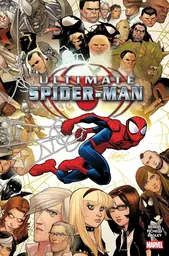
Ultimate Spider-Man by Brian Michael Bendis and Mark Bagley is the cleanest modern Peter Parker entry point because it rebuilds Spider-Man from teenage rhythm rather than continuity weight. The line works because Peter does not become iconic immediately. He becomes tired, funny, scared, stubborn and responsible one mistake at a time.
For collectors, the five-volume omnibus route is easy to understand but emotionally longer than it looks: origin, expansion, confidence, transition and legacy.
The Ultimate Spider-Man Map
| Book | Role | Why it matters |
|---|---|---|
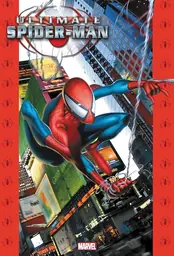
| Vol. 1 | Origin and voice | Bendis and Bagley stretch the origin into a lived-in coming-of-age story. |
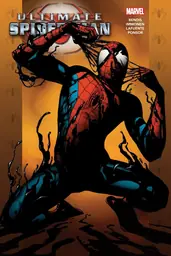
| Vol. 2 | World expansion | Ultimate Venom, Kraven and wider Marvel contact prove the concept can last. |
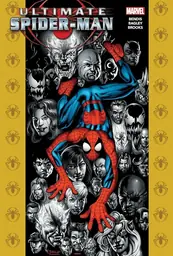
| Vol. 3 | Full confidence | Ultimate Carnage, Mary Jane and longer arcs deepen the damage. |
| Vol. 4 | Transition | Stuart Immonen takes over visually while the line moves toward darker consequences. |
| Vol. 5 | Legacy | The death of Ultimate Peter Parker and the birth of Miles Morales reshape the line. |
Why It Works as a Reading Guide
Ultimate Spider-Man is not important because it simplifies Spider-Man. It is important because it slows him down. Instead of treating the origin as a formality, Bendis and Bagley make adolescence the engine: school, home, money, guilt, jokes, crushes and fear all have room to breathe.
That rhythm is why the omnibus format works. You are not only collecting arcs; you are watching Peter grow in real time until the Ultimate line becomes a complete alternative Spider-Man life.
Buying Priority
- Vol. 1 first: the voice and emotional rules are born here.
- Vol. 2 and Vol. 3 next: the run proves it can expand without losing Peter.
- Vol. 4 if you accept the visual transition: still Bendis, but a different look and darker event pressure.
- Vol. 5 for legacy: essential if you care about Miles Morales and the end of Ultimate Peter.
Who Should Buy It?
- Buy it if you want Spider-Man with modern pacing and strong character continuity.
- Start here if main-universe Spider-Man continuity feels too heavy.
- Wait if you only want classic 1960s or 1980s Marvel texture.
What to Read It For
Read Ultimate Spider-Man for tone control. Bendis writes Peter as a teenager whose jokes are not decoration but survival. Bagley gives the book a consistency that lets years of story feel like one adolescence. By the time the line reaches Miles Morales, the legacy lands because Peter's life has felt complete enough to matter.
Why It Is Not Just a Beginner Version
The lazy description of Ultimate Spider-Man is that it is Spider-Man made easy for new readers. That undersells it. The run is strong because it understands that a modern origin can be longer, not shorter. Peter's first mistakes, first lies and first victories matter because the book refuses to rush him into icon status.
The Ultimate universe also lets familiar ideas arrive with different emotional timing. Venom, Carnage, Gwen, Mary Jane, Aunt May and the wider Marvel world are not just references. They are pressures entering Peter's life while he is still young enough to be overwhelmed by them.
For Which Reader?
- New Spider-Man reader: this is one of the cleanest starts because continuity is contained.
- Classic Spider-Man reader: read it for contrast; it keeps the moral core while changing the tempo.
- Miles Morales reader: Vol. 5 matters because Miles lands better when Ultimate Peter's story has weight.
What Makes It Premium Reading
The premium value is consistency. Bendis and Bagley maintain one voice for so long that the series feels less like a relaunch and more like watching a person grow up. The jokes, pauses and awkward conversations are not filler; they are the reason the superhero moments have emotional scale.
Omnibus by Omnibus Notes
Vol. 1 is the book that decides whether this Spider-Man works for you. If Bendis' dialogue and Bagley's clean teen-drama storytelling click, the rest becomes easy. Vol. 2 matters because the series stops being only an origin and starts becoming a Marvel world.
Vol. 3 is where the stability pays off: Peter, Mary Jane, Ultimate Carnage and the larger cast feel like they have been living together long enough for damage to matter. Vol. 4 is the transition test. The voice remains Bendis, but the visual rhythm changes with Stuart Immonen and the line moves toward darker event gravity.
Vol. 5 is not just “the Miles book.” It is the legacy volume. Miles works because Ultimate Peter has been given enough life, humor and cost for his absence to mean something.
Paring It Down
If five volumes feel too much, treat Vol. 1 as the test and Vol. 5 as the legacy destination. Vol. 2-4 are the long middle where the world grows and Peter pays for that growth. Skipping them is possible for a Miles-only reader, but the emotional force is weaker if Ultimate Peter has not first become a complete person on the page.
Do not mistake accessibility for thinness. Ultimate Spider-Man is easy to enter because the emotional premise is clear, but the reward comes from staying long enough to see consequences accumulate.
That makes the run unusually good for collectors who want a complete modern Spider-Man life rather than a greatest-hits shelf, with the quiet moments carrying as much weight as the famous turns.
Collector Verdict
The best route is simple: buy Vol. 1 first. If that voice works, the rest of the shelf becomes one of Marvel's easiest long modern runs to recommend.
Quick collector answer
Ultimate Spider-Man by Bendis and Bagley: Peter Parker and the Ultimate Line is built as a structured answer for building a Spider-Man in omnibus format collection without buying at random. The guide helps clarify reading order, major eras and the purchases that make the most sense for a European reader.
Frequently asked questions
Is Ultimate Spider-Man by Bendis and Bagley: Peter Parker and the Ultimate Line a good starting point?
Yes if the subject matches your reading priority. The most important choice is an omnibus you genuinely want to read and keep, not only a popular or hard-to-find volume.
Do you need to know all continuity before reading this kind of omnibus?
Not necessarily. Major US omnibuses mainly ask you to understand the era and tone of the run. A guide or review helps clarify whether the volume is standalone, modern, classic or more connected to other events.
Does reading the original English edition change the experience?
For many collectors, yes. The original English edition preserves dialogue, arc titles and the US format, which keeps the shelf more consistent when comparing multiple Marvel or DC runs.
Why compare European stock with US imports?
Because an omnibus is heavy, expensive to ship and vulnerable to damaged corners. For buyers in France or Europe, delivered price, packing, tracking and returns matter as much as the listed price.
What should you read after this post?
The best next step is usually inside the same reading cluster: a character guide, a related run review or a buying comparison. That builds a logical shelf instead of stacking volumes with no clear order.



Comments
No comments yet. Be the first to share your thoughts.