Thor by Jason Aaron is the modern Thor run built around worthiness, gods, violence, Jane Foster and the long road to War of the Realms. It is not only a Thor adventure shelf. It is a sustained argument about what gods are for when belief, power and responsibility start to break.
What This Era Actually Does
Aaron makes Thor mythic and wounded at the same time. The run begins with god-scale horror and keeps asking whether divine power deserves trust. That question follows Thor, Jane and the wider Asgardian world across the shelf.
The strength of the run is continuity of theme. Even when the cast or scale changes, the same problem keeps returning: what makes someone worthy, and what happens when gods fail the people who need them?
Vol. 1: God Butcher Energy And The Worthiness Question
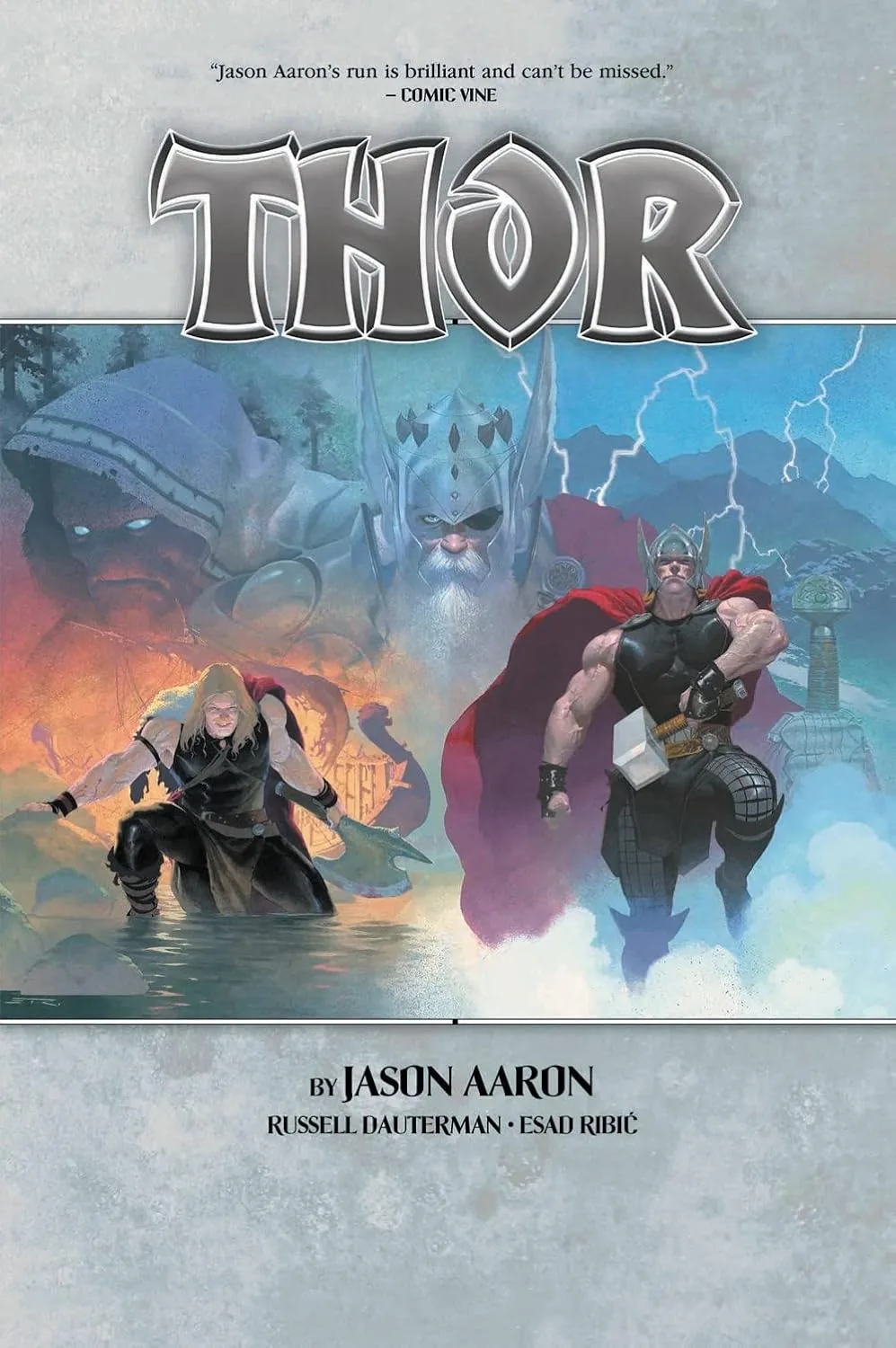
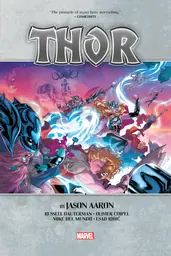
Thor by Jason Aaron Omnibus Vol. 1 is the essential starting point. It establishes the tone: myth, horror, arrogance, doubt and a Thor who is forced to measure himself against more than strength.
This is where the run hooks most readers. If the blend of cosmic scale and personal worthiness works for you, the rest of the shelf has a strong emotional direction.
Vol. 2: Jane Foster And The Road To War
Vol. 2 matters because the run expands the worthiness question beyond Odinson. Jane Foster's role gives the shelf a different emotional centre, while the larger Asgardian conflict pushes the era toward War of the Realms scale.
The two volumes work best together: Vol. 1 establishes the wound; Vol. 2 shows how wide that wound becomes.
The Aaron Thor Shelf by Phase
| Phase | Focus | Why it matters |
|---|---|---|
| The God Butcher | Faith under attack | The run begins by asking whether gods deserve the power people give them. |
| Jane Foster | Worthiness as cost | The hammer becomes a burden carried through illness, sacrifice and public heroism. |
| War of the Realms | Myth at event scale | The long mythological architecture becomes a full invasion story. |
| King Thor | Aftermath and ending | The saga looks at what remains when legend reaches its final form. |
This is the key difference from many Thor shelves: Aaron is not only collecting arcs, he is building a cycle. The early God Butcher material supplies the theological wound. Jane Foster gives the run its human cost. War of the Realms turns the mythology outward. The ending asks what kind of god remains after all that violence and sacrifice.
Buying Priority
Vol. 1 is the best first purchase because it contains the God Butcher foundation and the beginning of the Jane Foster transformation. Vol. 2 matters if you want the emotional and event payoff: Jane's Thor, War of the Realms and the closing stretch of Jason Aaron's seven-year Thor saga. Do not buy Vol. 2 only because it sounds bigger; buy it because Vol. 1 worked for you.
Who Should Buy It?
- Buy it if you want modern Thor as myth, crisis of faith and long-form escalation.
- Start with Vol. 1 because the God Butcher/worthiness foundation matters.
- Wait if you only want classic silver-age Thor or short self-contained arcs.
How It Fits On The Shelf
Place Aaron after at least one classic Thor reference point. The run works because it knows the grandeur of Thor and then questions whether grandeur is enough. It is modern myth under stress, not just a new costume or a new villain cycle.
Reader Profile
This is for readers who like mythic comics with a thesis. Aaron keeps returning to belief, failure and worthiness, so the shelf rewards readers who want a theme carried across years rather than a sequence of disconnected arcs.
Mistakes To Avoid
- Do not buy only for War of the Realms if the worthiness question does not interest you.
- Do not skip Vol. 1; the later Jane and war material needs the early wound.
- Do not expect pure classic Thor comfort. The run is built around doubt.
Best Place To Start
Start with Vol. 1 because it introduces the moral wound of the run. The God Butcher material is not just a famous opening; it frames the question Aaron keeps returning to. If gods can fail, Thor has to become more than a strong man with a hammer.
Vol. 2 is more powerful when read as consequence rather than restart. Jane Foster, the wider Asgardian conflict and the march toward war all land better when the earlier crisis of worthiness is already in your head.
Why It Still Matters
The run still matters because it gave modern Thor a long thematic spine. Many Thor stories can be described as myth plus battle. Aaron adds a persistent doubt: what if gods are powerful but not automatically worthy? That doubt lets the run move from horror to Jane Foster to war without feeling random.
It also gives collectors a clear two-volume shape. You are not buying disconnected highlights. You are buying a question and its consequences.
Collector Verdict
Aaron's Thor is one of Marvel's cleanest modern two-volume character shelves. Vol. 1 gives the question; Vol. 2 gives the consequence. Buy it for theme, not only for thunder.
What to Read It For
Read Aaron's Thor for scale, but stay for the way the scale keeps becoming personal. The God Butcher opens as a cosmic horror story about gods who may not deserve worship. The Jane Foster era turns worthiness into a cost, not a slogan. War of the Realms then pays off the long architecture by making myth feel like invasion, inheritance and exhaustion at once. It is not the quietest Thor run, but it is one of the clearest modern examples of how an omnibus shelf can turn a character into a complete myth cycle.
Quick collector answer
Thor by Jason Aaron Era Guide: God Butcher, Jane Foster and War of the Realms is built as a structured answer for building a Thor in omnibus format collection without buying at random. The guide helps clarify reading order, major eras and the purchases that make the most sense for a European reader.
Frequently asked questions
Is Thor by Jason Aaron Era Guide: God Butcher, Jane Foster and War of the Realms a good starting point?
Yes if the subject matches your reading priority. The most important choice is an omnibus you genuinely want to read and keep, not only a popular or hard-to-find volume.
Do you need to know all continuity before reading this kind of omnibus?
Not necessarily. Major US omnibuses mainly ask you to understand the era and tone of the run. A guide or review helps clarify whether the volume is standalone, modern, classic or more connected to other events.
Does reading the original English edition change the experience?
For many collectors, yes. The original English edition preserves dialogue, arc titles and the US format, which keeps the shelf more consistent when comparing multiple Marvel or DC runs.
Why compare European stock with US imports?
Because an omnibus is heavy, expensive to ship and vulnerable to damaged corners. For buyers in France or Europe, delivered price, packing, tracking and returns matter as much as the listed price.
What should you read after this post?
The best next step is usually inside the same reading cluster: a character guide, a related run review or a buying comparison. That builds a logical shelf instead of stacking volumes with no clear order.


Comments
No comments yet. Be the first to share your thoughts.