There is a specific problem in taking over a book from George Pérez: the person before you drew the most detailed pages in the industry, and readers will measure you against them from the first panel. Phil Jimenez took that job on Wonder Woman, and the reason it worked is that he did not try to be less detailed.
He then did something the artist he succeeded never did on that title: he wrote it himself.
How to recognise a Jimenez page
Density inherited and then extended. Fine linework, enormous casts, backgrounds that keep going. He is one of the few artists who can hold twenty figures in a panel and keep every one of them legible, and it is a direct continuation of the tradition covered in the George Pérez guide.
Ornament that means something. Armour, jewellery, architecture and mythological detail are drawn as cultural artefacts rather than decoration. On Wonder Myth material that matters: the design work is doing worldbuilding.
Faces that hold still. His acting is restrained compared with the density around it. Characters register emotion in small movements, which stops the pages becoming noise.
Composition built for the double page. He plans across the spread rather than the page, so the big moments read as single images even when they are full of panels.
The essential book
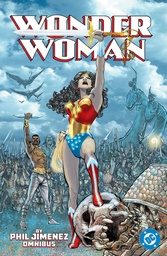
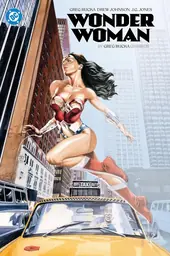
Wonder Woman by Phil Jimenez Omnibus at 856 pages is the one to own, and it is the most searched-for book on this shelf by a wide margin.
He took over the title as artist and became its writer, which gives the run something rare: a single person deciding both what Diana does and how she looks doing it. The result treats her as a diplomat and a mythological figure at the same time, with the Amazon material given real cultural weight rather than used as a costume.
It sits directly after the Pérez reconstruction, and reading them in order is genuinely rewarding: the same project, continued by someone who understood it from the inside.
The rest of the shelf
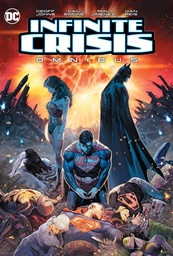
Infinite Crisis Omnibus at 1,424 pages is the large DC event carrying his pages, and it is where the crowd-drawing skill gets its most extreme test. The usual caveat applies: it is a line-wide crossover with many artists and it assumes a working knowledge of DC continuity.
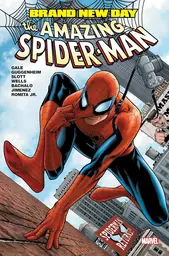
The Flash: The Road to Rebirth Omnibus at 904 pages and Spider-Man: Brand New Day Omnibus Vol. 1 at 1,280 pages are the other shared-credit collections holding his work.
For the current state of the shelf rather than this article, look at the Phil Jimenez page. For DC beyond this shelf, see the DC omnibus page.
Where to start
One recommendation, and it is not close: Wonder Woman by Phil Jimenez Omnibus. It is the only book on the shelf that is substantially his from cover to cover, it is both written and drawn by him, and it needs nothing from you beyond a general idea of who Wonder Woman is.
If you want the fuller picture, read the Pérez omnibus first and this one directly after. They are the same argument about the character, made twenty years apart.
How to approach this shelf
Two honest limits. The density is not for everyone: pages this full ask to be read slowly, and if you prefer open, cinematic staging his work will feel cluttered. And the shelf is thin — outside the Wonder Woman omnibus, everything here is a shared-credit event book where his contribution is a share rather than the whole, so there is not much to follow if you like him and want more.


Comments
No comments yet. Be the first to share your thoughts.