Hulk is one of Marvel's strongest concepts and one of its strangest omnibus shelves. The character can be tragic monster story, superhero adventure, psychological horror, satire, cosmic rage or body-horror theology depending on the era. That makes Hulk rewarding to collect, but it also means there is no single perfect “read everything in order” answer.
This guide explains the main Hulk omnibus routes in original English oversized hardcover format: the classic Lee/Kirby foundation, the long Peter David transformation, the loud Loeb/McGuinness era, the modern masterpiece of Immortal Hulk and the more recent Donny Cates direction. It also points out where the map is incomplete, because Hulk collectors need honesty about gaps.
Before You Start: Hulk Changes Genre More Than Most Marvel Characters
Spider-Man is usually Spider-Man even when the tone changes. Hulk is different. A classic Hulk volume can feel like monster melodrama. Peter David can feel like tragicomic psychology. Immortal Hulk can feel like horror theology. That variety is the character's strength, but it makes buying order important.
The safest first purchase for most readers is not the Silver Age. It is either Immortal Hulk, if you want the most complete modern statement, or Peter David Vol. 1, if you want the long definitive character study. The classic volumes matter, but they are historical foundations rather than the easiest modern door.
The Lee and Kirby Monster Foundation (1962 onward)
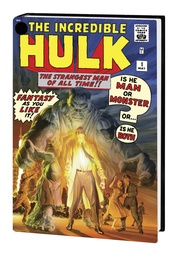
The earliest Hulk stories are raw Marvel invention. Bruce Banner is not yet the stable psychological landscape later writers will build; he is a Cold War accident, a monster, a fugitive and a superhero concept still finding its shape. The appeal is seeing Marvel work out one of its great metaphors in public: anger as transformation, power as curse, the body as something that betrays the mind.
The early material can be uneven, because Hulk's formula takes time to settle. But historically it is essential. Thunderbolt Ross, Betty Ross, Rick Jones, the military pursuit and the tragedy of Banner all begin here, and later eras keep returning to these foundations.
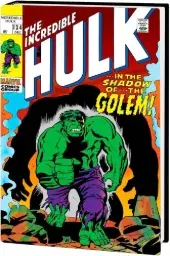
Collected in The Incredible Hulk Omnibus Vol. 1, Vol. 2 and Vol. 3. Collector verdict: important history, but best if you already enjoy classic Marvel pacing.
The Peter David Definitive Character Study (1987-1998)
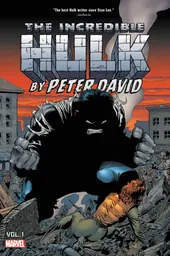
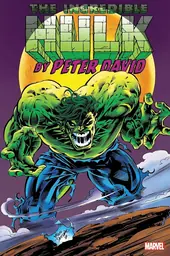
Peter David's Hulk is the central long-form shelf for the character. It takes the question “who is Hulk?” seriously for years, not as a gimmick but as the engine of the comic. Banner, the savage Hulk, the grey Hulk/Joe Fixit and later merged identities make the book a study of trauma, performance, anger and survival.
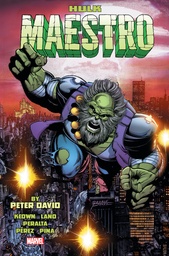
The run also has range. It can be funny, dark, absurd, painful and surprisingly elegant. Artists such as Todd McFarlane, Dale Keown, Gary Frank and Liam Sharp give different bodies to the monster, and that matters: Hulk is always a psychological state made visible. For many collectors, this is the real heart of the shelf.
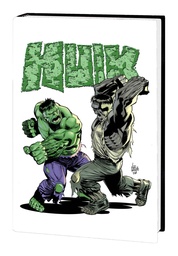
Collected across Incredible Hulk by Peter David Omnibus Vol. 1, Vol. 2, Vol. 3, Vol. 4 and Vol. 5. Collector verdict: the definitive long Hulk run and the best classic-modern route.
Gap: Planet Hulk and World War Hulk Are Essential Context, But Not on This Shelf
Any honest Hulk roadmap has to mention the giant gap around Planet Hulk and World War Hulk. Those stories are crucial to modern Hulk mythology: exile, Sakaar, rage turned political, and Hulk returning to Earth as a disaster everyone helped create. If you are reading the character broadly, they matter.
In this omnibus-focused roadmap, the key point is practical: do not assume the available shelf gives you every major modern transition. Peter David and Immortal Hulk are both coherent in oversized form, but the road between them has important missing landmarks.
The Loeb and McGuinness Blockbuster Era (2008-2010)
Jeph Loeb and Ed McGuinness deliver Hulk as loud superhero spectacle. Red Hulk, huge fights, mystery-box energy and exaggerated physicality define the period. This is not the introspective Peter David path and it is not the horror intelligence of Immortal Hulk. It is Hulk as a maximal Marvel event machine.
That makes the volume divisive, but easy to place. If you want heavyweight action, bright superhero excess and Red Hulk's introduction, it has a clear purpose. If you want psychological Banner material, it should wait.
Collected in Incredible Hulk by Loeb & McGuinness Omnibus. Collector verdict: buy for spectacle and Red Hulk, not as the first serious Hulk reading experience.
Immortal Hulk: The Modern Horror Masterpiece (2018-2021)
Al Ewing and Joe Bennett's Immortal Hulk is the strongest modern Hulk omnibus and one of Marvel's best modern runs. It understands that Hulk is not just anger. Hulk is death, rebirth, shame, abuse, faith, body horror and cosmic judgment. The series takes old continuity seriously but reshapes it into something that feels complete and frighteningly new.
The reason it works as a first modern purchase is that it has a powerful internal identity. You do not need to have read every Hulk comic to feel its force, although long-time readers will see how much it is reactivating. It is horror, superhero mythology and character autopsy in one coherent shelf.
Collected in The Immortal Hulk Omnibus. Collector verdict: the best single Hulk omnibus for most modern readers and a legitimate first purchase.
The Donny Cates and Ryan Ottley Modern Monster Ride
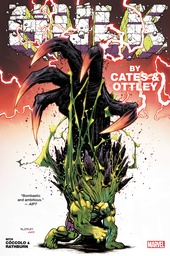
Donny Cates and Ryan Ottley move away from Immortal Hulk's slow horror and into a louder, high-concept engine. The run treats Hulk as a machine, a weapon and a cosmic-scale disaster with Ottley's kinetic violence driving the book forward. It is deliberately different from Ewing's approach.
That difference is important. This is not the emotional or theological peak of the character. It is a post-Immortal detour into speed, impact and excess. For collectors, it belongs after Immortal Hulk, not before it.
Collected in Hulk by Donny Cates & Ryan Ottley Omnibus. Collector verdict: a later modern shelf for readers who want the character pushed into blockbuster mode.
Adjacent Shelf: She-Hulk Is Related, Not the Same Reading Path
She-Hulk omnibuses are excellent, but they should not be treated as required Hulk reading order. She-Hulk by John Byrne Omnibus, She-Hulk by Dan Slott Omnibus and She-Hulk by Rainbow Rowell Omnibus build Jennifer Walters' own shelf, with a different tone and purpose. They are great adjacent purchases once you know whether you want the broader Hulk family.
Recommendations by Reader Type
A quick way to choose the right Hulk shelf depending on whether you want horror, psychology, history or spectacle.
The complete horror statementThe Immortal Hulk Omnibus
The strongest single Hulk omnibus: modern, coherent, scary and emotionally loaded.
The psychology of the monsterPeter David Vol. 1
The best start if you want the long character study that defines Banner and Hulk across years.
The original Marvel monsterThe Incredible Hulk Vol. 1
Best for collectors who want the source and are comfortable with early Marvel rhythm.
Red Hulk and big impactLoeb & McGuinness
The choice for loud superhero spectacle rather than introspection.
The monster as machineCates & Ottley
A later purchase if you want speed, violence and high-concept modern Hulk after Ewing.
The best first Hulk omnibus for most modern readers is The Immortal Hulk. The definitive long character run begins with Peter David Vol. 1. The classic foundation is The Incredible Hulk Vol. 1, but it is more historical than smooth. Loeb & McGuinness is for spectacle, while Cates & Ottley is a later post-Immortal detour.
Quick collector answer
Hulk Omnibus Reading Guide: Peter David, Immortal Hulk and the Monster Shelf is built as a structured answer for building a Hulk in omnibus format collection without buying at random. The guide helps clarify reading order, major eras and the purchases that make the most sense for a European reader.
Frequently asked questions
Is Hulk Omnibus Reading Guide: Peter David, Immortal Hulk and the Monster Shelf a good starting point?
Yes if the subject matches your reading priority. The most important choice is an omnibus you genuinely want to read and keep, not only a popular or hard-to-find volume.
Do you need to know all continuity before reading this kind of omnibus?
Not necessarily. Major US omnibuses mainly ask you to understand the era and tone of the run. A guide or review helps clarify whether the volume is standalone, modern, classic or more connected to other events.
Does reading the original English edition change the experience?
For many collectors, yes. The original English edition preserves dialogue, arc titles and the US format, which keeps the shelf more consistent when comparing multiple Marvel or DC runs.
Why compare European stock with US imports?
Because an omnibus is heavy, expensive to ship and vulnerable to damaged corners. For buyers in France or Europe, delivered price, packing, tracking and returns matter as much as the listed price.
What should you read after this post?
The best next step is usually inside the same reading cluster: a character guide, a related run review or a buying comparison. That builds a logical shelf instead of stacking volumes with no clear order.


Comments
No comments yet. Be the first to share your thoughts.