House of M ends with three words that changed the X-Men line for the next decade: no more mutants. It is one of the few Marvel events whose consequences actually stuck, and it is also one where the shelf is genuinely confusing, because there are two different books with almost the same name.
The two volumes, and which is which
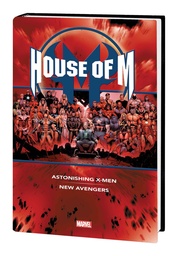
House of M Omnibus is the main book: the core miniseries plus the material that sets it up and pays it off. This is the one to buy if you are buying one.
House of M Omnibus Companion at 792 pages collects the tie-in issues from across the line during the event: the other titles showing what the altered world looked like from their corner of it.
The companion is not a sequel and it is not a second half. It is supplementary by design, and buying it alone leaves you with the reactions to a story you have not read. If a listing is ambiguous, check whether the volume contains the core miniseries.
What the story is
Wanda Maximoff, whose powers alter reality and whose mental state has collapsed, rewrites the world into one where mutants rule and everyone she loves gets what they always wanted. The book is about the moment those characters realise the life they are living is a gift they did not ask for, and about what it costs to undo it.
The undoing is the part that mattered: the mutant population goes from millions to a few hundred, and the X-Men line spent years dealing with the consequences.
The writing is Brian Michael Bendis at the height of his event-architect period, covered in more detail in the Brian Michael Bendis guide.
Do you need X-Men continuity first?
Less than you would expect, but some. The book assumes you know who the main X-Men and Avengers are and that Wanda has a history of instability. It does not assume you have read the storyline that established it.
What genuinely helps is knowing that this event was designed as a consequence machine rather than a self-contained story. It ends by breaking something on purpose, and the satisfaction is in what follows rather than in the resolution itself.
What to read after
X-Men: Decimation Omnibus at 1,072 pages is the direct aftermath: the line dealing with a mutant population that has been reduced to almost nothing. If House of M lands for you, this is the next purchase and it is where the consequences actually play out.
The wider Marvel catalogue lives on the Marvel omnibus page.
Who should skip it
This is a line-wide event with the usual costs: a large cast, rotating artists across the tie-in material, and a plot that exists partly to reposition the publisher's characters. Readers who dislike company-wide crossovers on principle will find nothing here to change their minds.
It is also a book whose reputation rests heavily on its ending. The journey is solid superhero storytelling; the reason people still talk about it is the last page.
Frequently asked questions
Is the Companion necessary?
No. It is for readers who want the full picture of how the altered world looked across the whole line. Buy the main volume first and decide afterwards.
Do I need to read Avengers Disassembled first?
It helps but it is not required. House of M restates what happened to Wanda early enough for the story to work without it.
Is this where the mutants get wiped out?
Yes. The depowering happens at the end of this book, and Decimation is the collection that deals with the aftermath.
Is it a good first Marvel event?
It is one of the better ones for a newcomer, because the premise explains itself: an altered world that the characters gradually realise is wrong. No prior event reading is needed.

Comments
No comments yet. Be the first to share your thoughts.