Excalibur is the X-shelf that refuses to behave like a normal X-Men shelf. It has Nightcrawler, Kitty Pryde, Rachel Summers and Captain Britain, but the promise is not simply “another mutant team.” It is British superhero tradition, alternate realities, comedy, grief, Captain Britain mythology and Alan Davis visual elegance all colliding inside Marvel's mutant orbit.
That makes Excalibur easier to buy than to explain. The omnibus line is numbered clearly, but the reading decision is tonal. Do you want the strange foundation, the Alan Davis expansion, the later X-line connections, or the full eccentric shelf?
This guide treats Excalibur as a route through a weird branch, not a standard team checklist. The goal is to help you decide how far into that branch your shelf should go.
Start with Excalibur Omnibus Vol. 1. Continue in order if you like the mixture of British superhero myth, X-Men aftermath, comedy and alternate-world chaos. Excalibur is not the central X-Men route; it is the weird branch that becomes rewarding when you accept its rhythm.
The Excalibur Promise
The first thing to understand is that Excalibur is not trying to replace Uncanny X-Men. It works because it moves sideways. The cast carries X-Men emotional baggage, but the book is interested in stranger textures: Captain Britain mythology, cross-time absurdity, team comedy, grief after loss and the feeling that the Marvel universe is wider and odder than the main mutant books can show every month.
That sideways movement is the selling point. A reader looking for clean school-to-mission superhero rhythm may bounce off Excalibur. A reader who likes X-Men characters when they are thrown into an unstable British/multiversal machine will understand why the line has its own cult shelf.
The collection route is mostly chronological. The decision is not “which volume secretly comes first?” It is “how much Excalibur do you want?” Vol. 1 is the essential test. Vol. 2 proves the book can keep its identity. Vol. 3 and Vol. 4 are for the collector who wants the long experiment, including later X-line entanglements.
Route 1: The Foundation
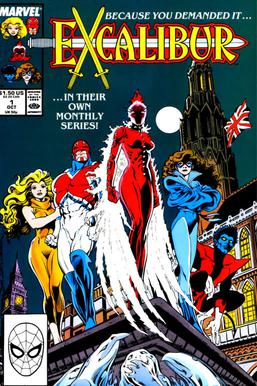
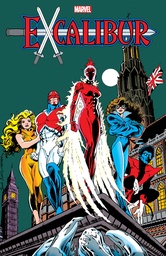
Excalibur Omnibus Vol. 1 is the mandatory starting point. Odoo production data lists Excalibur Special Edition #1, Excalibur #1-49, Mojo Mayhem, Weird War III and the Claremont/Alan Davis foundation with Captain Britain, Nightcrawler, Kitty Pryde, Rachel Summers and Meggan. That is not just a contents list. It tells you what the book is: X-Men aftermath filtered through Captain Britain strangeness and Davis's clean, expressive storytelling.
This is the volume that explains why Excalibur exists. Nightcrawler and Kitty bring familiar X-Men warmth. Rachel brings continuity weight. Captain Britain and Meggan pull the shelf toward British superhero myth. Alan Davis makes the book feel graceful even when the plot goes wonderfully strange. If Vol. 1 does not work for you, later volumes probably will not suddenly turn Excalibur into a conventional X-Men book.
For a collector, Vol. 1 has another advantage: it is enough to understand the line's identity. You do not need to buy four volumes blind. Start here, read the tone honestly, then decide whether you want Excalibur as a full branch or as a single distinctive shelf piece.
Route 2: The Alan Davis Expansion
Excalibur Omnibus Vol. 2 is the second route point, not an optional random continuation. Product data ties it to Excalibur #35-67, Weird War III, The Possession, Air Apparent, XX Crossing, Sensational She-Hulk #26 and the Alan Davis writer/artist identity. It is where the book becomes more comfortable being itself.
The reason to buy Vol. 2 is not only “because it comes after Vol. 1.” It is because Excalibur's pleasure grows from repetition of tone: the team's weird domestic chemistry, the elastic boundary between comedy and danger, and the sense that Captain Britain mythology can make the X-corner feel less American, less linear and less predictable.
If Vol. 1 is the proof of concept, Vol. 2 is the volume that tells you whether Excalibur belongs as a real shelf in your collection. Readers who only want the historical launch can stop after Vol. 1. Readers who like the book's strange rhythm should treat Vol. 2 as the natural continuation.
Route 3: The Long X-Branch
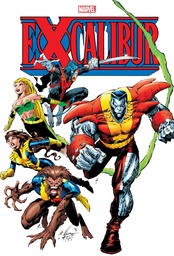
Excalibur Omnibus Vol. 3 and Excalibur Omnibus Vol. 4 are the deep shelf. Odoo source data for Vol. 3 includes Excalibur #68-103, Annual #1-2, Pryde and Wisdom #1-3 and crossover tie-ins around Fatal Attractions, Phalanx Covenant and Age of Apocalypse, with Pete Wisdom, Colossus after Illyana's death and Kitty leadership as important ingredients. Vol. 4 continues through Excalibur #104-125 and related material, including Colossus, New Mutants: Truth or Death, Kitty Pryde Agent of S.H.I.E.L.D., X-Men Unlimited and X-Men: True Friends.
These volumes are not the cleanest first taste. They are the answer to a different question: what happens when Excalibur keeps going long enough to become part of the broader X-line's weather? The shelf becomes more connected to events, later character shifts and the changing 1990s mutant landscape.
That makes Vol. 3 and Vol. 4 valuable for completionists and X-line readers, but not necessary for someone who only wants to understand the original charm. Buy them when you already know you want the branch, not when you are still asking whether Excalibur is your kind of book.
Common Buying Mistakes
The first mistake is expecting Excalibur to be Uncanny X-Men with a different roster. It is not. The better comparison is a side corridor: still connected to mutant history, but full of British mythology, absurdity and emotional oddness.
The second mistake is buying later volumes because they connect to X-events and assuming that will make them better entry points. Later connections matter more after the Excalibur tone has already clicked. If you start with event gravity instead of Vol. 1's foundation, you miss why the branch exists.
The third mistake is underestimating tone. Excalibur can be funny, strange and emotionally sincere in close proximity. If you need every page to feel like a central franchise chapter, the book may feel loose. If you like superhero comics that can be graceful and bizarre in the same breath, that looseness becomes the charm.
Recommended Reading Order
The standard route is simple: Vol. 1, Vol. 2, Vol. 3, Vol. 4. This is one of the cleaner shelves in the X-family because the numbered sequence genuinely helps. You do not need a secret alternate order for normal collecting.
The practical route is slightly different: buy Vol. 1 first, then decide. If you love the tone, buy Vol. 2. If you still want the full branch after that, move to Vol. 3 and Vol. 4. Excalibur rewards commitment, but it should earn that commitment with the foundation volume.
The completionist route is all four volumes as one eccentric line. That is the route for readers who want Kitty Pryde, Nightcrawler, Captain Britain, Rachel Summers and the larger X-line all filtered through a stranger Marvel lens.
Choose Your Excalibur Shelf
Excalibur is a tonal commitment before it is a completionist project.
The weird foundationExcalibur Vol. 1
Start here for Claremont, Alan Davis, Captain Britain mythology and the book's original sideways X-Men identity.
The identity settlesExcalibur Vol. 2
Buy this when Vol. 1's British weirdness, team comedy and Davis rhythm have already won you over.
X-line weather arrivesExcalibur Vol. 3
This is where the branch becomes more entangled with later mutant events and character shifts.
The full numbered lineExcalibur Vol. 4
The final purchase if you want Excalibur as a complete X-family branch rather than one essential taste.
Final Route
Excalibur is easiest to collect in order and hardest to describe in ordinary X-Men language. Start with Vol. 1. If the mixture of comedy, grief, Captain Britain myth and alternate-world chaos feels alive, continue to Vol. 2 and then the deeper line. If it does not, stop without guilt. Excalibur is not a universal first X-Men recommendation. It is better than that: a branch with a personality strong enough to deserve its own shelf.



Comments
No comments yet. Be the first to share your thoughts.