Scott Snyder and Greg Capullo's Batman is the New 52 Batman era that made Gotham feel dangerous again for a new generation of readers. It is accessible without being thin: a modern blockbuster run built around secret history, horror rhythm, enormous set pieces and the idea that Bruce Wayne may know Batman better than he knows Gotham.
This era guide focuses on the two omnibus volumes that collect the core Snyder/Capullo Batman shelf. The run begins with the Court of Owls, escalates through Joker horror and Zero Year, and then closes with Endgame, Superheavy and Last Knight on Earth as wider statements about what Batman can survive.
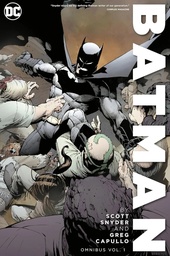
Batman by Scott Snyder and Greg Capullo Omnibus Vol. 1
Batman by Scott Snyder and Greg Capullo Omnibus Vol. 1 collects Batman #0-33, Batman #23.2 and Batman Annual #1-2. This is the essential first volume because it contains the run's cleanest and most influential stretch: The Court of Owls, Death of the Family and Zero Year.
The Court of Owls is the reason this era became the default modern Batman recommendation for so many readers. Snyder takes a simple Batman assumption — Bruce knows Gotham better than anyone — and turns it into a weakness. The Court is not just another criminal organisation. It is a claim that Gotham has an older, wealthier and more predatory memory than Batman can control.
Capullo is just as important to the success of the volume as Snyder. The run works because Gotham becomes physical: maze corridors, brutal movement, distorted faces, hidden architecture and horror pacing. The oversized format helps because the pages often rely on impact, scale and body language rather than quiet panel mechanics.
Vol. 1 also contains Death of the Family, where Joker returns as a grotesque test of Batman's emotional boundaries, and Zero Year, Snyder and Capullo's neon-disaster version of Batman's early myth. The result is not a small crime run. It is Batman treated as urban horror, family pressure and survival ritual.
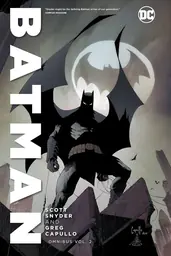
Batman by Scott Snyder and Greg Capullo Omnibus Vol. 2
Batman by Scott Snyder and Greg Capullo Omnibus Vol. 2 collects Batman #34-52, Batman Annual #3-4, Batman: Futures End #1, DC Sneak Peek: Batman #1, Batman: Last Knight on Earth #1-3, and stories from Detective Comics #27 and Detective Comics #1000.
This second volume is less tidy as a first purchase, but it is what turns the shelf into a complete era. Endgame pushes the Joker material into mythic escalation: Joker becomes less like a criminal rival and more like a toxic idea Gotham cannot fully expel. Superheavy then changes the question by removing Bruce from the traditional role and testing whether Batman can function as an institution, a suit, a public project and a symbol detached from the man who created it.
The inclusion of Batman: Last Knight on Earth gives the volume a final Snyder/Capullo afterimage: a nightmare road story about Batman after the end of the familiar world. It is not simply the next New 52 arc, but it belongs on this shelf because it lets the creative team push their Batman language to its most apocalyptic form.
How the Two-Volume Shelf Works
The useful distinction is simple: Vol. 1 is the must-buy starting point, while Vol. 2 completes the creative statement. If you only want the most iconic material, Vol. 1 gives you Court of Owls and Zero Year. If you want the full Snyder/Capullo argument about Gotham, Joker, replacement and the endurance of the symbol, you need both.
This is also not the same kind of shelf as Grant Morrison's Batman. Morrison turns Batman's entire publication history into mythology. Snyder and Capullo build a cleaner modern horror-blockbuster machine: Gotham has secrets, Batman breaks himself against them, and every victory reveals a deeper layer of the city.
Who This Era Is For
- If you want a modern Batman starting point: this is one of the easiest choices. Vol. 1 gives you a clear entry, a major new villain concept and a strong visual identity.
- If you like Gotham as a character: this run is essential. The city is not just a setting; it is the main pressure system of the story.
- If you prefer grounded detective Batman: the run starts from mystery but grows into horror, mythology and blockbuster escalation.
- If you already own Morrison's Batman: Snyder and Capullo make a strong companion shelf because they do a completely different job.
What Comes Before and After
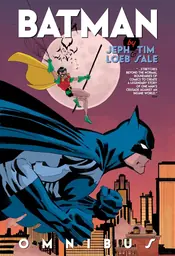
Before this era, the easiest modern Batman foundations are the Loeb/Sale material and Grant Morrison's Batman, depending on what you want. Loeb/Sale gives you the early Gotham mood and classic villain texture. Morrison gives you Batman as legacy, family and meta-mythology.
After Snyder and Capullo, the Batman shelf becomes more fragmented. Tom King turns inward toward Bruce and Selina, James Tynion IV builds modern Gotham machinery through new characters and fear-state escalation, and later runs continue to treat Gotham as an unstable system rather than a solved city.
What This Era Leaves Behind
The Snyder/Capullo era leaves Batman with a new modern default: Gotham as a horror engine. The Court of Owls became one of the rare new Batman villain concepts that felt immediately durable. Zero Year gave the origin a louder, stranger modern shape. Endgame and Superheavy tested how far the symbol could be pushed before Bruce Wayne had to return to the centre.
That is why this run matters as a Key Run. It is not just a popular New 52 sequence. It is the Batman shelf that made modern readers feel Gotham could still hide something from Batman.
Quick collector answer
Batman by Snyder and Capullo Era Guide: Court of Owls, Zero Year and Endgame is built as a structured answer for building a Batman in omnibus format collection without buying at random. The guide helps clarify reading order, major eras and the purchases that make the most sense for a European reader.
Frequently asked questions
Is Batman by Snyder and Capullo Era Guide: Court of Owls, Zero Year and Endgame a good starting point?
Yes if the subject matches your reading priority. The most important choice is an omnibus you genuinely want to read and keep, not only a popular or hard-to-find volume.
Do you need to know all continuity before reading this kind of omnibus?
Not necessarily. Major US omnibuses mainly ask you to understand the era and tone of the run. A guide or review helps clarify whether the volume is standalone, modern, classic or more connected to other events.
Does reading the original English edition change the experience?
For many collectors, yes. The original English edition preserves dialogue, arc titles and the US format, which keeps the shelf more consistent when comparing multiple Marvel or DC runs.
Why compare European stock with US imports?
Because an omnibus is heavy, expensive to ship and vulnerable to damaged corners. For buyers in France or Europe, delivered price, packing, tracking and returns matter as much as the listed price.
What should you read after this post?
The best next step is usually inside the same reading cluster: a character guide, a related run review or a buying comparison. That builds a logical shelf instead of stacking volumes with no clear order.



Comments
No comments yet. Be the first to share your thoughts.