Avengers omnibus collecting is confusing because Avengers is not one clean line. It is a classic team book, a rotating Marvel showcase, a 1990s restoration project, a Bendis-era franchise engine, a Hickman architecture machine and an event shelf all at once. If you try to buy it in strict publication order, you will probably spend too much before discovering which version of the team you actually like.
The better question is not "what is the perfect Avengers reading order?" The better question is: which Avengers do you want first? Classic Marvel formation? Big heroic team energy? Street-level franchise reboot? Secret Wars road map? Event spectacle? This guide is built around that decision.
The short answer: best first Avengers omnibus
For most modern collectors, the best first buy is Avengers by Busiek & Perez Omnibus Vol. 1. It feels like classic Avengers, but it reads with modern confidence. The cast is large, the heroic tone is sincere, George Perez gives the book scale, and Kurt Busiek understands why the Avengers should feel ceremonial without becoming stiff.
If you want the actual beginning, start with The Avengers Omnibus Vol. 1. If you want the Avengers that shaped 2000s Marvel, start with New Avengers by Bendis Omnibus Vol. 1. If you want the road toward Incursions and Secret Wars, start with Avengers by Jonathan Hickman Omnibus Vol. 1.
Route 1: the classic Marvel foundation
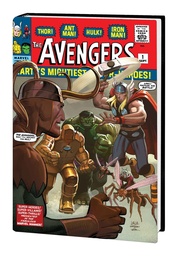
The Avengers Omnibus Vol. 1 collects the first thirty issues of the original 1963 series. That means Loki, the original team shape, Captain America's return, early Kang material and the first version of the Avengers as Marvel's great assembly book.
This route is historically important, but it is not the easiest first purchase for every reader. Silver Age Marvel has rhythm, charm and invention, but it also has a very different pacing from modern comics. Buy this first if you enjoy origin material, early Marvel history and the feeling of watching a shared universe form in real time. Do not buy it first if you need modern decompression, cinematic dialogue or immediate emotional continuity.
The classic volumes are best treated as the roots of the shelf. They explain why the Avengers matter, but they are not automatically the most satisfying first read for someone coming from modern Marvel films or recent comics.
Route 2: Busiek and Perez, the safest premium first buy
Avengers by Busiek & Perez Omnibus Vol. 1 is the cleanest answer when someone asks for "real Avengers" without wanting to start in the 1960s. The official contents include the 1998 relaunch, related crossover issues, annuals and Avengers Forever. In practice, the book works because it restores the Avengers as an institution.
This is the route for readers who want the team to feel grand: rosters, legacy, Kang and Immortus material, Ultron, big threats and heroic language without irony. Perez makes every lineup feel important. Busiek writes like he loves the whole toy box, but also understands that Avengers stories need structure, not just cameos.
Busiek & Perez Vol. 2 is the natural continuation once Vol. 1 works for you. I would not recommend buying Vol. 2 first unless you already know this era. The first volume is the thesis. The second is for people who know they want the full restoration shelf.
Route 3: Bendis and the franchise engine
New Avengers by Bendis Omnibus Vol. 1 is not "classic Avengers" in the Busiek sense. That is the point. Bendis breaks the old shape and turns Avengers into the central engine of 2000s Marvel: Spider-Man, Wolverine, Luke Cage, Sentry, prison break energy, secrets, events and a team that feels less like an institution and more like a pressure cooker.
The verified contents for Vol. 1 include the Avengers Disassembled aftermath, New Avengers (2004) #1-31 and companion material around Civil War. That means this route is perfect if you want the Avengers as the spine of Marvel event-era storytelling. It is also the route most likely to feel messy if you want a clean self-contained superhero epic.
New Avengers by Bendis Omnibus Vol. 2 is for readers who already enjoy that event-era texture. Start with Vol. 1, then decide whether you like the voices, street-level cast choices and Marvel-universe sprawl enough to keep going.
Route 4: Hickman, Incursions and the long game
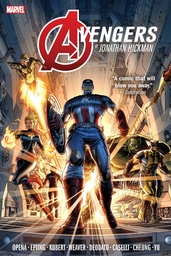
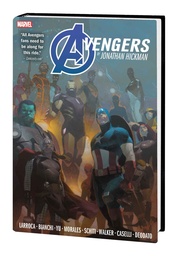
Avengers by Jonathan Hickman Omnibus Vol. 1 is the route for readers who want architecture. The verified contents include Avengers (2012) #1-23, New Avengers (2013) #1-12, Infinity #1-6 and related material. This is not just "the Avengers fight villains." It is the beginning of a collapsing-universe machine.
Hickman expands the roster, splits the book between public Avengers action and the secret Illuminati crisis, and slowly turns team comics into a countdown. It is brilliant if you like large systems, repeated motifs, long payoffs and moral compromise. It is a rough first Avengers omnibus if you simply want the team's classic personality.
Avengers by Jonathan Hickman Omnibus Vol. 2 is the completion route. Do not treat it as a casual second option. If Vol. 1 clicks, Vol. 2 is where the architecture becomes the point. If Vol. 1 feels cold or too abstract, doubling down will not fix that.
Route 5: events and side shelves
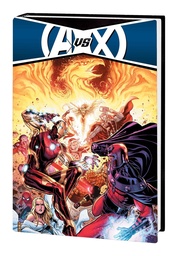
Avengers vs. X-Men Omnibus is for readers who want event spectacle more than a pure Avengers team book. It makes most sense if you already care about the X-Men, the Phoenix and Marvel's 2010s event ecosystem. It is not my first recommendation for a new Avengers collector.
Uncanny Avengers Omnibus sits between Avengers and X-Men shelves. Avengers: No Surrender/No Road Home Omnibus is better as a later modern expansion. Avengers Forever by Jason Aaron Omnibus is for readers already interested in Aaron's late multiverse-heavy Avengers material, not for someone asking where Avengers begins.
These books are not bad shelves. They are just not foundation shelves. A good Avengers collection has to separate "important to the brand" from "best first read."
What not to buy first
Do not start with a late event omnibus just because it has Avengers in the title. Do not start with a Vol. 2 unless you already own or know Vol. 1. Do not start with a crossover if what you really want is team chemistry. And do not assume the biggest page count is the smartest buy.
The Avengers line rewards collectors who know their own taste. If you want clean heroic team comics, Busiek is safer than Bendis. If you want Marvel history, Silver Age is essential. If you want event-era Marvel, Bendis matters more than the classic volumes. If you want Hickman's Secret Wars road, Hickman is the right path but not the warmest first Avengers experience.
Recommended buying order
- Best first buy: Avengers by Busiek & Perez Omnibus Vol. 1.
- Best historical start: The Avengers Omnibus Vol. 1.
- Best 2000s Marvel route: New Avengers by Bendis Omnibus Vol. 1.
- Best long-game route: Avengers by Jonathan Hickman Omnibus Vol. 1.
- Best event add-on: Avengers vs. X-Men Omnibus, but only if you want the event shelf.
Omnibus Store verdict
The Avengers shelf is not about owning everything in order. It is about choosing the version of the team that matches your taste. Busiek and Perez are the best premium first route for most collectors. The classic omnibuses are the roots. Bendis is the franchise-era reinvention. Hickman is the architectural road toward collapse and Secret Wars.
If you are building one tight Avengers shelf, start with Busiek Vol. 1, then choose either Bendis or Hickman depending on whether you want Marvel event texture or cosmic long-form architecture. Add Silver Age when you want the roots, and add event books only when you know why that event belongs on your shelf.
Quick collector answer
Avengers Omnibus Reading Guide: Classic, Busiek, Bendis and Hickman is built as a structured answer for building a Avengers and modern Marvel in omnibus format collection without buying at random. The guide helps clarify reading order, major eras and the purchases that make the most sense for a European reader.
Frequently asked questions
Is Avengers Omnibus Reading Guide: Classic, Busiek, Bendis and Hickman a good starting point?
Yes if the subject matches your reading priority. The most important choice is an omnibus you genuinely want to read and keep, not only a popular or hard-to-find volume.
Do you need to know all continuity before reading this kind of omnibus?
Not necessarily. Major US omnibuses mainly ask you to understand the era and tone of the run. A guide or review helps clarify whether the volume is standalone, modern, classic or more connected to other events.
Does reading the original English edition change the experience?
For many collectors, yes. The original English edition preserves dialogue, arc titles and the US format, which keeps the shelf more consistent when comparing multiple Marvel or DC runs.
Why compare European stock with US imports?
Because an omnibus is heavy, expensive to ship and vulnerable to damaged corners. For buyers in France or Europe, delivered price, packing, tracking and returns matter as much as the listed price.
What should you read after this post?
The best next step is usually inside the same reading cluster: a character guide, a related run review or a buying comparison. That builds a logical shelf instead of stacking volumes with no clear order.

Comments
No comments yet. Be the first to share your thoughts.