Spider-Man is one of Marvel's easiest characters to love and one of the hardest to collect cleanly in omnibus format. The main line stretches from Lee and Ditko's teenage soap opera to oversized modern runs, symbiote events, alternate universes, Clone Saga chaos and Miles Morales. This guide is not a raw publication checklist. It is a collector's map: which Spider-Man omnibus eras matter, what each one gives you, and which volumes make the best first purchases.
Before You Start: Spider-Man Has Several Different Shelves
A strict chronological order looks tempting, but it is not always the best buying order. Classic Amazing Spider-Man, Ultimate Spider-Man, symbiote Spider-Man, Brand New Day and modern Amazing all solve different problems for different readers. Someone who wants the original Marvel DNA should start with Lee/Ditko. Someone who wants the cleanest modern reading experience should probably start with Ultimate Spider-Man.
The key is to decide what kind of Spider-Man you want first: the original Marvel icon, the best self-contained modern run, the 1980s and 1990s Venom/Carnage shelf, the JMS adult Peter era, or the post-One More Day relaunch. Once that is clear, the omnibus line becomes far less intimidating.
The Lee and Ditko Origin Era (1962-1966)
This is where the entire language of Spider-Man is built: Peter Parker's guilt, the responsibility theme, J. Jonah Jameson, Aunt May, Doctor Octopus, Green Goblin, Sandman, Mysterio, Kraven, the Lizard and the feeling that superhero life is always wrecking Peter's ordinary life. Steve Ditko's art gives the early stories a nervous, angular energy that still feels stranger and sharper than many later versions.
It is essential, but it is not invisible to age. The dialogue is loud, the pacing is compact, and the drama belongs completely to 1960s Marvel. For collectors, that is part of the appeal. For new readers, it may be better as a historical foundation than as the first modern page-turner.
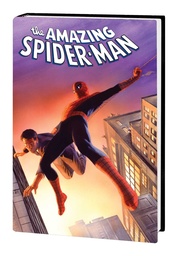
Collected in Amazing Spider-Man Omnibus Vol. 1. Collector verdict: historically mandatory, but only the best first Spider-Man omnibus if you actively want classic Marvel.
The Romita and Conway Classic Marvel Era (1966-1975)
John Romita Sr. turns Spider-Man into a pop icon. The world becomes more glamorous, Peter's supporting cast becomes more romantic and social, and Mary Jane, Gwen Stacy and Harry Osborn become central to the emotional engine of the series. This is the Spider-Man many readers picture when they think of classic Marvel: cleaner, brighter and more melodramatic than Ditko, but still full of pressure.
Gerry Conway then pushes that world into tragedy with the death of Gwen Stacy and the rise of the Punisher. It is one of the great tonal shifts in superhero comics: the early Marvel soap opera does not disappear, but innocence does.
The core classic run continues through Amazing Spider-Man Omnibus Vol. 2, Vol. 3 and Vol. 4. Collector verdict: ideal if you want the iconic 1960s and 1970s Spider-Man rather than a modern reinvention.
The Wider Bronze Age: Spectacular and Roger Stern (1976-1984)
Once Spider-Man expands beyond a single flagship title, the character becomes a broader Marvel engine. Peter Parker, The Spectacular Spider-Man gives more room to street-level plots, supporting cast drama and stories that do not always need to carry the full weight of Amazing Spider-Man history.
Roger Stern's run is the jewel of this period. It is smart, controlled superhero comics with Peter as a young adult rather than a pure teenage archetype. The Hobgoblin mystery gives the era real momentum, but the appeal is broader than one villain: Stern writes Peter as funny, pressured and recognisably human without losing the superhero scale.
Collected in Peter Parker, The Spectacular Spider-Man Omnibus Vol. 1 and Spider-Man by Roger Stern Omnibus. Collector verdict: not always the first shelf, but one of the strongest classic-era upgrades after Lee/Romita.
The Black Costume and Venom Breakthrough (1984-1991)
The black costume era is where Spider-Man's visual identity changes forever. What begins as a sleek alternate suit becomes the foundation for Venom, one of Marvel's most important modern villains. This period matters because it connects classic Peter Parker with the commercial energy of late 1980s and early 1990s Marvel.
David Michelinie and Todd McFarlane make Spider-Man feel bigger, louder and more elastic. McFarlane's webbing, poses and exaggerated anatomy become a visual grammar of their own. This is not quiet character drama. It is Spider-Man as a blockbuster comic, and it created the conditions for Venom to become a franchise.
Start the symbiote thread with Spider-Man: The Complete Black Costume Saga Omnibus, then continue with Amazing Spider-Man by David Michelinie and Todd McFarlane Omnibus, Spider-Man by Todd McFarlane Omnibus and Spider-Man Vs. Venom Omnibus. Collector verdict: essential if Venom, McFarlane or 1990s Marvel energy is part of your Spider-Man shelf.
The Michelinie, Larsen and Bagley 1990s Shelf (1990-1994)
After McFarlane, Erik Larsen and Mark Bagley keep Spider-Man at the centre of Marvel's commercial 1990s. This period is full of big visuals, symbiote escalation, Carnage, crossover energy and a version of Peter Parker that many readers met through comics racks, trading cards and animated-era merchandising.
It is not the cleanest literary Spider-Man, and that is not really the point. This is the shelf for readers who want the mainline 1990s experience: Venom becoming unavoidable, Carnage raising the violence, and Spider-Man pulled into louder continuity machinery.
Collected across Spider-Man by Michelinie & Larsen Omnibus, Spider-Man by Michelinie & Bagley Omnibus Vol. 1 and Vol. 2. Collector verdict: buy after the Black Costume/McFarlane shelf, not before it.
The Clone Saga and Ben Reilly Era (1994-1997)
The Clone Saga is infamous because it is enormous, messy and deeply tied to 1990s editorial pressure. Ben Reilly returns, Peter's identity is questioned, and the series bends itself around the idea that the real Spider-Man may not be who readers thought he was. It is too big to recommend casually, but too important to ignore.
As a reading experience, this is for committed collectors. As a piece of Spider-Man history, it is fascinating: it shows Marvel testing how far the character could be stretched before the centre stopped holding.
Collected in Spider-Man: Clone Saga Omnibus Vol. 1, Vol. 2, Spider-Man: Ben Reilly Omnibus Vol. 1 and Vol. 2. Collector verdict: essential for completists, risky as an early Spider-Man purchase.
Ultimate Spider-Man: The Clean Modern Entry Point (2000-2011)
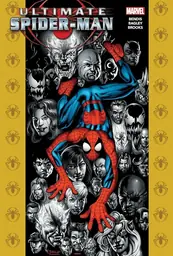
If you want the easiest modern answer to "where do I start with Spider-Man?", this is it. Brian Michael Bendis and Mark Bagley rebuild Peter Parker from the beginning for a new century, without requiring decades of continuity. The emotional beats are familiar, but the rhythm is modern, character-driven and unusually consistent.
The reason Ultimate Spider-Man works so well is not just accessibility. It gives Peter room to breathe. School, friendship, family, romance and superhero life all develop in long form, and Bagley's visual continuity makes the series feel like one coherent story rather than a tour through disconnected eras.
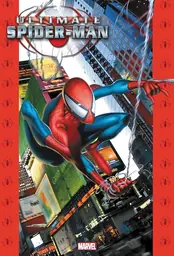
Collected in Ultimate Spider-Man Omnibus Vol. 1, Vol. 2, Vol. 3, Vol. 4 and Vol. 5, with the transition into Miles Morales continued in Ultimate Comics Spider-Man: Death of Spider-Man Omnibus and Miles Morales: Spider-Man Omnibus Vol. 1. Collector verdict: the best first Spider-Man omnibus for most modern readers.
The JMS and John Romita Jr. Era (2001-2007)
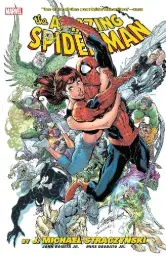
J. Michael Straczynski and John Romita Jr. bring adult Peter Parker back into focus. The run is confident, readable and often excellent at showing Peter as a teacher, husband and older hero. It also introduces the spider-totem mythology, which gives the character a more mystical frame than many readers expected.
The era is not without controversy, but its best material is among the strongest modern Amazing Spider-Man. Aunt May learning Peter's secret identity, Peter's marriage to Mary Jane, and the sense of Peter as a grown man with moral weight make this run feel distinct from both classic Marvel and Ultimate.
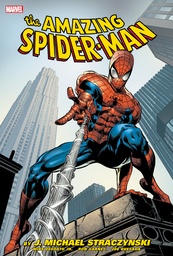
Collected in Amazing Spider-Man by J. Michael Straczynski Omnibus Vol. 1 and Vol. 2. Collector verdict: one of the best modern main-continuity Spider-Man shelves, especially if you want adult Peter.
Brand New Day: The Post-One More Day Reset (2008-2010)
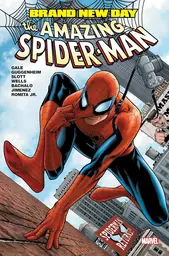
Brand New Day is divisive because of what came before it, but the run itself has a clear purpose: rebuild Amazing Spider-Man as a fast, energetic, rotating-writer comic with new villains, new supporting cast dynamics and a single Peter Parker closer to the classic status quo. It is not trying to be Ultimate Spider-Man. It is trying to make the mainline title feel lively again.
For collectors, the trilogy works best when treated as its own era rather than as a moral referendum on One More Day. Dan Slott, Joe Kelly, Mark Waid, Zeb Wells and others create a busy, sometimes uneven, but very readable version of late-2000s Spider-Man.
Collected in Spider-Man: Brand New Day Omnibus Vol. 1, Vol. 2 and Vol. 3. The same period branches into Spider-Man by Joe Kelly Omnibus. Collector verdict: strong if you want the mainline reset, less ideal if you mainly want the marriage-era Peter Parker.
Big Time, Superior Spider-Man and Spider-Verse (2010-2015)
Dan Slott's long Spider-Man era turns the book into a sequence of big concepts: Peter at Horizon Labs, Spider-Island, Ends of the Earth, Superior Spider-Man and Spider-Verse. It is high-concept, fast-moving and often more interested in the machinery of superhero comics than in quiet street-level drama.
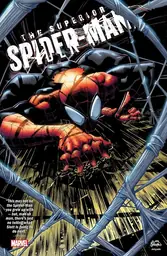
The strongest experiment is Superior Spider-Man, where Otto Octavius takes over Peter Parker's body and tries to prove he can be a better Spider-Man. It should not be anyone's first Spider-Man story, but it is one of the most successful radical premises Marvel has tried with the character.
Collected in Superior Spider-Man Omnibus Vol. 1 and Spider-Verse/Spider-Geddon Omnibus. Collector verdict: read after you know Peter well enough to enjoy seeing the formula twisted.
Modern Amazing: Spencer, Beyond, Wells and Side Runs (2018 onward)
The modern Amazing Spider-Man line is more fragmented than the classic or Ultimate shelves. Nick Spencer tries to reconnect Peter with emotional roots and unresolved continuity. Beyond changes the publishing engine again. Zeb Wells moves into a more current, event-driven mode. Side projects by Chip Zdarsky and Peter David often work better as focused companion shelves than as the main reading path.
This is worth collecting once the foundation is in place. It is not where I would send a new reader first, but it gives current Marvel Spider-Man a clear place after the classic, Ultimate, JMS and Brand New Day shelves.
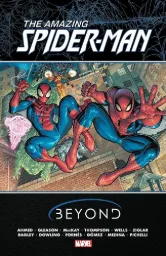
Available examples include Amazing Spider-Man by Nick Spencer Omnibus Vol. 1, Vol. 2, Amazing Spider-Man: Beyond Omnibus, Amazing Spider-Man by Zeb Wells Omnibus Vol. 1, Spider-Man by Chip Zdarsky Omnibus, Symbiote Spider-Man by Peter David Omnibus and Untold Tales of Spider-Man Omnibus. Collector verdict: useful continuation material, not the foundation.
One of those sits outside the modern block: Untold Tales of Spider-Man Omnibus collects Kurt Busiek's 1995-1997 series, which tells new stories slotted into Spider-Man's earliest Lee and Ditko days. It works as a companion to Amazing Spider-Man Omnibus Vol. 1 rather than as modern Amazing.
Recommendations by Reader Type
A quick way to choose the right Spider-Man shelf, without pretending every omnibus has the same purpose.
The cleanest modern startUltimate Spider-Man Omnibus Vol. 1
Modern pacing, one creative identity and no continuity homework. The safest first purchase for most readers.
The historical foundationAmazing Spider-Man Omnibus Vol. 1
Lee and Ditko build the whole machine. Essential for collectors who want the source, not just the easiest read.
Marriage-era modern Spider-ManJMS Vol. 1
The strongest main-continuity modern entry if you want Peter as an adult, teacher, husband and moral centre.
Where Venom becomes inevitableBlack Costume Saga
Start here before McFarlane and Spider-Man Vs. Venom if the black suit and Venom are your priority.
The loudest commercial shelfMichelinie/McFarlane
Dynamic, exaggerated and hugely influential. Buy for Venom, McFarlane and the visual language of 1990s Marvel.
After One More DayBrand New Day Vol. 1
The best doorway into the late-2000s reset if you want fast, busy, mainline Amazing Spider-Man.
Doctor Octopus as Spider-ManSuperior Spider-Man
A brilliant twist once you already know the normal formula. Not a first purchase, but a memorable later one.
The best first Spider-Man omnibus for most modern readers is Ultimate Spider-Man Vol. 1. The most important historical purchase is Amazing Spider-Man Vol. 1. The strongest adult Peter shelf is JMS Vol. 1. The essential symbiote route begins with Black Costume Saga and moves into Michelinie/McFarlane. The deeper collector shelves are Clone Saga, Brand New Day, Superior Spider-Man and the newer Amazing runs.
Quick collector answer
Spider-Man Omnibus Reading Guide: Where to Start and What to Buy is built as a structured answer for building a Spider-Man in omnibus format collection without buying at random. The guide helps clarify reading order, major eras and the purchases that make the most sense for a European reader.
Frequently asked questions
Is Spider-Man Omnibus Reading Guide: Where to Start and What to Buy a good starting point?
Yes if the subject matches your reading priority. The most important choice is an omnibus you genuinely want to read and keep, not only a popular or hard-to-find volume.
Do you need to know all continuity before reading this kind of omnibus?
Not necessarily. Major US omnibuses mainly ask you to understand the era and tone of the run. A guide or review helps clarify whether the volume is standalone, modern, classic or more connected to other events.
Does reading the original English edition change the experience?
For many collectors, yes. The original English edition preserves dialogue, arc titles and the US format, which keeps the shelf more consistent when comparing multiple Marvel or DC runs.
Why compare European stock with US imports?
Because an omnibus is heavy, expensive to ship and vulnerable to damaged corners. For buyers in France or Europe, delivered price, packing, tracking and returns matter as much as the listed price.
What should you read after this post?
The best next step is usually inside the same reading cluster: a character guide, a related run review or a buying comparison. That builds a logical shelf instead of stacking volumes with no clear order.

Comments
No comments yet. Be the first to share your thoughts.