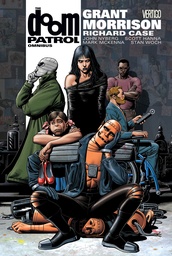
Doom Patrol by Grant Morrison Omnibus is not weird for decoration. Its strangeness has a job: to make broken bodies, impossible identities and damaged people feel like the center of superhero comics rather than the footnote.
The verdict: buy it if you want DC at its most unstable, funny, wounded and intellectually alive. Do not buy it first if what you want is clean team action. Morrison's Doom Patrol is a superhero book, but it behaves more like a therapy session interrupted by pop philosophy and monsters made of ideas.
The Morrison Mutation
The right buying lens is not a normal "which team book should I read?" question. Morrison's Doom Patrol is for readers who want superhero comics to mutate: funny, grotesque, tender, dense and sometimes completely unreasonable in the best possible way.
Robotman, Crazy Jane and the rest of the team work because the strangeness is not decoration. Dream logic, trauma comedy and philosophical body horror all point back to people trying to live inside bodies, histories and identities that will not behave politely.
Why It Works
The key is that Morrison gives the weirdness emotional weight. Crazy Jane is not simply a cool concept. Robotman is not simply the grumpy robot body. The book keeps returning to the question of what a person does when their body, memory or identity stops matching the world around them.
That makes the surreal material feel humane. The threats can be absurd, but the pain underneath them is not. Doom Patrol turns "strange" into a language for trauma, shame, survival and chosen family. It is ridiculous because life can feel ridiculous when you are trying to live inside damage.
The art is essential. Richard Case and the wider visual team avoid making everything glossy. The pages can feel handmade, awkward, unstable and alive. That texture matters because Doom Patrol should not look like a polished franchise machine. It should look like the floor might change shape under you.
The Weak Points
The weakness is also the selling point. The run can be disorienting, dense and deliberately unserious about the rules of normal superhero storytelling. Some readers will love that freedom; others will feel locked outside the joke.
It is also not the most straightforward Doom Patrol purchase. If you want a clean re-entry into the team, another run may be easier. If you want the version that made Doom Patrol feel like the place where DC could be its strangest and still break your heart, Morrison is the one.
Who Should Buy This
Buy it if you like Grant Morrison when the work is personal, playful and wounded at the same time. Buy it if your DC shelf has room for a book that is less about winning fights than surviving impossible versions of yourself.
Skip it as a first purchase if you want predictable superhero momentum. This omnibus rewards readers who enjoy risk, ambiguity and the sense that a comic can be emotionally precise even when the plot is behaving like a dream with teeth.
Should You Buy Morrison Doom Patrol?
Buy it for DC at its strangest and most human.
Weirdness with a heartSurreal therapy as superhero comics
The book turns impossible bodies and identities into emotional language.
You like riskDense, funny, wounded DC
It rewards readers who want comics to feel unstable and alive.
You want clean actionNot a normal team book
The run is intentionally disorienting and concept-heavy.
The strange classicDoom Patrol as identity rupture
It is the DC team book for readers who want beauty inside chaos.
Our Verdict
Doom Patrol by Grant Morrison Omnibus is worth buying if you want one of DC's strangest major team books and you are willing to meet it halfway. It is not universal comfort reading. It is better than that: a surreal, funny and wounded book that uses nonsense to say things ordinary superhero logic cannot.
Buy Morrison Doom Patrol if you want DC at its weirdest and most humane: Crazy Jane, Robotman, body horror, absurdity and a real emotional core.

Comments
No comments yet. Be the first to share your thoughts.