Phoenix is hard to collect casually because it is not only a Jean Grey story and not only a cosmic force. It is both: an X-Men emotional spine and a Marvel-scale mythology that keeps returning in different forms.
The safest reading route is to separate three shelves: the Phoenix mythology, Jean Grey's death-and-return spine, and later X-Men context where Jean or the Phoenix idea becomes useful again.
The Concrete Phoenix Buying Route
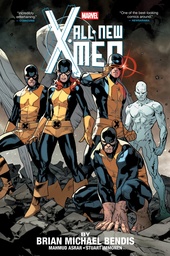
If you want the force itself, start with Phoenix Omnibus Vol. 1 and continue with Phoenix Omnibus Vol. 2. If your focus is Jean Grey's emotional spine, add Phoenix: The Death and Rebirth of Jean Grey Omnibus. If you want later displaced-original-team context, use All-New X-Men by Brian Michael Bendis Omnibus as expansion, not as the first explanation of Phoenix.
That order protects the reading experience. Phoenix Vol. 1 and Vol. 2 build the myth; Death and Rebirth keeps Jean central; All-New X-Men is a modern X-Men branch for readers who already understand why Jean matters.
The Phoenix Mythology Shelf
The Phoenix-focused material is where you go when the force itself is the point. This is the cosmic side of the shelf: power, transformation, destruction, rebirth and the idea that mutant stories can suddenly become metaphysical.
That shelf is important because it explains why Phoenix is bigger than one plot twist. It becomes a symbol Marvel can reuse whenever X-Men emotion needs cosmic scale.
Jean Grey Is the Emotional Spine
Jean keeps the shelf human. Without her, Phoenix can become abstract power. With her, it becomes a story about identity, sacrifice, return and the cost of being treated as both person and symbol.
If your interest is Jean first, do not buy only for cosmic spectacle. Look for the material that keeps her emotional role central, because that is where the Phoenix mythology has the most weight.
Modern Jean and X-Men Context
Later X-Men material can matter, but it should be treated as context rather than the first explanation. Some books use Jean as part of a wider team concept; others use the Phoenix idea as mythology in the background.
That is useful once you know the core, but confusing if you start there. The modern shelf works best as expansion after the Phoenix and Jean foundations are clear.
Reader-Type Route
I want the Phoenix force as mythology: choose Phoenix Omnibus Vol. 1 first, then continue to Vol. 2.
I want Jean Grey as the emotional center: choose Death and Rebirth of Jean Grey after you know the Phoenix foundation.
I want modern X-Men context: use All-New X-Men by Bendis as a later branch, not as the core Phoenix shelf.
Quick Collector Verdict
Phoenix mythology reader: start with the volumes that foreground the force and its cosmic consequences.
Jean Grey reader: prioritize the death, return and identity spine.
X-Men continuity reader: add later team context once the emotional foundation is in place.
Common Mistake
The mistake is assuming Phoenix has one simple reading order. It does not. The concept moves between character drama and cosmic mythology. Decide whether you are collecting Jean, the force, or X-Men context, then build outward.
Collector Verdict
The best Phoenix shelf is built in layers. Start with the mythology, keep Jean Grey as the emotional center, and only then add modern X-Men context. That route keeps the fire from turning into confusion.





Comments
No comments yet. Be the first to share your thoughts.