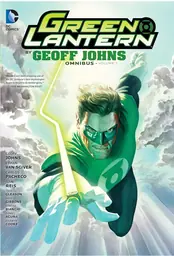
Green Lantern by Geoff Johns is the modern era that turns Green Lantern from a space-cop premise into a full emotional mythology. The run matters because it makes willpower only one color in a larger system: fear, rage, hope, love, greed, compassion and death all become forces that can organize stories, armies and cosmic events.
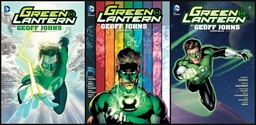
For collectors, the shelf is clean: Vol. 1 rebuilds Hal Jordan and the Corps, Vol. 2 expands the emotional spectrum and event scale, and Vol. 3 closes the long mythic argument.
What This Era Actually Does
Johns does not simply restore Hal Jordan. He rebuilds the rules around him. Green Lantern becomes a universe where emotions have armies, symbols have theology and the Corps can feel like both noble institution and dangerous machine.
That is the reason the run became a gateway for many modern DC readers. It has clean superhero energy, but it also has a strong collection spine: Rebirth, Sinestro Corps, Blackest Night and the aftermath all feel like chapters in one expanding system.
Vol. 1: Rebirth and the Corps Rebuilt
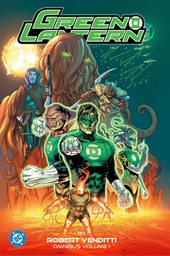
Green Lantern by Geoff Johns Omnibus Vol. 1 is the essential start. It re-centers Hal Jordan, rebuilds the Green Lantern mythology and sets up Sinestro as more than a fallen opposite. The volume is important because it makes the Corps feel usable again for modern event storytelling.
If you only buy one Green Lantern omnibus to test the run, make it this one. It contains the foundation, the tone and the early architecture of the emotional spectrum.
Vol. 2: Event Scale and the Emotional Spectrum
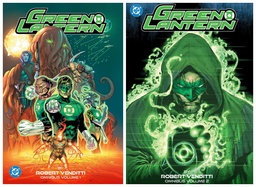
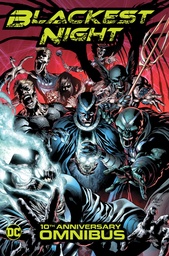
Vol. 2 is where the run becomes bigger and louder. Green Lantern #26-52 and the road through Blackest Night are where Johns turns color, fear and death into a shared DC mythology. The Sinestro Corps War foundation is already mainly in Vol. 1; Vol. 2 is the Blackest Night escalation.
This volume is for readers who want the run at maximum event pressure. It is less intimate than the rebuilding phase, but it is where the concept becomes huge enough to dominate the DC shelf.
Vol. 3: Closure and Consequence
Vol. 3 matters because long cosmic runs need endings, not just escalation. The final stretch has to deal with legacy, leadership and what the Corps means after so many emotional wars.
It is not the best first buy, but it is important if you want Johns' Green Lantern as a complete era rather than a list of famous events.
Best Reading Order
- Start with Vol. 1. The restoration work matters.
- Move to Vol. 2 for Blackest Night pressure and the emotional spectrum at scale, after the Sinestro Corps War foundation in Vol. 1.
- Finish with Vol. 3 if you want the full shelf, not only the peak events.
The Emotional Spectrum as Buying Logic
| Color idea | Story function | Collector value |
|---|---|---|
| Will | The Corps' heroic baseline. | Gives the shelf its classic Green Lantern identity. |
| Fear | Sinestro turns ideology into an army. | Creates the run's strongest mirror conflict. |
| Death | Blackest Night weaponizes loss and memory. | Explains why the middle shelf became a DC event machine. |
| Aftermath | The Corps must survive its own mythology. | Makes Vol. 3 more than a leftover volume. |
The emotional spectrum can sound like simple color lore from the outside, but it is the run's buying logic. Each volume makes the system more visible. Vol. 1 restores the hero and institution. Vol. 2 turns the system into event pressure. Vol. 3 asks what happens after the mythology has become too large to control.
What Each Omnibus Contains
| Book | Core contents | Why it matters |
|---|---|---|
| Vol. 1 | Green Lantern: Rebirth #1-6, Green Lantern Corps: Recharge #1-5, Green Lantern #1-25, Green Lantern Corps #14-18, Sinestro Corps Special #1 and related files/one-shots. | Hal Jordan restored, the Corps rebuilt, and the Sinestro Corps War placed at the end of the first major build. |
| Vol. 2 | Green Lantern #26-52, Blackest Night #0-7, DC Universe #0 and Blackest Night tie-in material. | The emotional spectrum and death mythology explode into Blackest Night. |
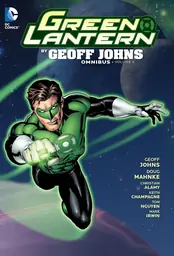
| Vol. 3 | Green Lantern #53-60, Green Lantern (2011) #1-20, Annual #1, plus selected Corps/Emerald Warriors material. | The post-Blackest Night and New 52-era closure, ending the long Johns mythology. |
This correction matters: if you want Sinestro Corps War as part of the Johns omnibus shelf, it belongs primarily with Vol. 1, not Vol. 2. Vol. 2 is the Blackest Night volume. Vol. 3 is the long closing act.
Who Should Buy It?
- Buy it if you want DC cosmic comics with clear mythology and event momentum.
- Start with Vol. 1 even if Blackest Night is the famous hook.
- Wait if you prefer small street-level stories; this shelf is built for scale.
What to Read It For
Read Johns' Green Lantern for the pleasure of watching a superhero concept become a cosmology. The best idea is not simply that different colors exist. It is that emotion can become law, army, prophecy and temptation. That gives the run its energy: every fight is also an argument about what drives people and what power does when it claims to represent a feeling.
Mistakes To Avoid
- Do not jump straight to the most famous event if you have no foundation in the run.
- Do not treat the emotional spectrum as trivia; it is the organizing engine.
- Do not expect every volume to feel the same. The shelf moves from restoration to expansion to closure.
Why It Still Matters
Johns' Green Lantern still matters because it made the franchise legible without making it small. The emotional spectrum is an elegant collector idea because it turns a sprawling space mythology into a shelf with visible logic. You can see why each volume exists: restoration, expansion, culmination. That structure is why the run remains easier to recommend than many cosmic superhero lines.
Fast Buying Route
Buy Vol. 1 first even if Blackest Night is the event you know by name. Johns makes the later scale work by rebuilding Hal, Sinestro and the Corps before the mythology explodes outward. If Vol. 1 feels too cosmic for your taste, stop there. If it clicks, the three-volume shelf is one of the easiest DC cosmic runs to collect coherently.
Collector Verdict
The Geoff Johns shelf is the cleanest modern Green Lantern omnibus route. Buy Vol. 1 first, then continue if the emotional-spectrum mythology works for you. The full three-volume run is one of DC's most coherent modern cosmic collections.
Quick collector answer
Green Lantern by Geoff Johns Era Guide: Rebirth, Sinestro Corps and Blackest Night is built as a structured answer for building a Green Lantern in omnibus format collection without buying at random. The guide helps clarify reading order, major eras and the purchases that make the most sense for a European reader.
Frequently asked questions
Is Green Lantern by Geoff Johns Era Guide: Rebirth, Sinestro Corps and Blackest Night a good starting point?
Yes if the subject matches your reading priority. The most important choice is an omnibus you genuinely want to read and keep, not only a popular or hard-to-find volume.
Do you need to know all continuity before reading this kind of omnibus?
Not necessarily. Major US omnibuses mainly ask you to understand the era and tone of the run. A guide or review helps clarify whether the volume is standalone, modern, classic or more connected to other events.
Does reading the original English edition change the experience?
For many collectors, yes. The original English edition preserves dialogue, arc titles and the US format, which keeps the shelf more consistent when comparing multiple Marvel or DC runs.
Why compare European stock with US imports?
Because an omnibus is heavy, expensive to ship and vulnerable to damaged corners. For buyers in France or Europe, delivered price, packing, tracking and returns matter as much as the listed price.
What should you read after this post?
The best next step is usually inside the same reading cluster: a character guide, a related run review or a buying comparison. That builds a logical shelf instead of stacking volumes with no clear order.


Comments
No comments yet. Be the first to share your thoughts.