Grant Morrison's Batman is one of the defining modern Batman eras because it treats the character's entire publication history as usable mythology. The run is not just about Bruce Wayne fighting stranger villains. It is about whether Batman is a trauma response, a family inheritance, a global symbol or a story powerful enough to survive its original owner.
This era guide focuses on the three omnibus volumes that collect Morrison's Batman work. The point is to understand what this stage of Batman is doing, why Damian Wayne matters so much, and why the run changes shape so dramatically from gothic conspiracy to Dick-and-Damian adventure to Batman Incorporated.
Batman by Grant Morrison Omnibus Vol. 1
Batman by Grant Morrison Omnibus Vol. 1 collects Batman #655-658, #663-683, stories from 52 #30 and #47, and DC Universe #0. This is the foundation of the era: Batman and Son, the arrival of Damian Wayne, the Black Glove conspiracy and Batman R.I.P.
The volume's real subject is Bruce Wayne's identity under attack. Damian turns Batman into a father before Bruce is emotionally prepared for it. The Black Glove turns Batman's own mythology against him, treating his old cases, psychological defenses and forgotten absurdities as weapons. Morrison's famous idea that "everything counts" begins here: the silly, gothic and brutal versions of Batman all become part of one damaged life.
Within the era, Vol. 1 is the destabilising act. It breaks the clean image of Batman as pure control and replaces it with something more vulnerable: a man whose past is too large to stay buried.
Final Crisis as Context, Not the Centre
Final Crisis Omnibus is important because it explains Bruce's disappearance, but it is not the emotional centre of Morrison's Batman. For this era, what matters is the consequence: Bruce Wayne is removed from the board, and the Batman symbol has to continue without him.
That shift lets Morrison test the idea that Batman is bigger than Bruce. The run stops being only a Bruce Wayne psychological story and becomes a question of inheritance: who can carry Batman, what changes when someone else wears the cowl, and whether Damian can become more than the violence that raised him.
Batman by Grant Morrison Omnibus Vol. 2
Batman by Grant Morrison Omnibus Vol. 2 collects Batman #700-702, Batman and Robin #1-16 and Batman: The Return of Bruce Wayne #1-6. This is the era's most readable and emotionally generous phase.
Dick Grayson becomes Batman, and Damian becomes Robin. That reversal is the run's great character engine: the warmer, more human Batman is paired with the colder, more dangerous Robin. Morrison uses the duo to make Batman feel lighter without making it shallow. The book becomes pulpier, faster and more colourful, but the emotional work is serious: Damian is learning that heroism is not just skill, bloodline or dominance.
Vol. 2 matters because it proves Morrison's thesis. Batman can survive Bruce's absence, but he does not remain unchanged. Dick's Batman is not a substitute; he is a different interpretation of the symbol, and the run is better because of that.
Batman by Grant Morrison Omnibus Vol. 3
Batman by Grant Morrison Omnibus Vol. 3 collects Batman: The Return #1, Batman Incorporated #1-8, Batman Incorporated: Leviathan Strikes #1, Batman Incorporated vol. 2 #0-13 and Batman Incorporated Special #1. This is the global and tragic conclusion of the era.
Bruce returns and turns Batman into an organisation. On paper, Batman Incorporated sounds like a corporate expansion of the superhero idea. In practice, Morrison uses it to ask whether Batman can be scaled without being corrupted. The war against Leviathan brings the family drama back to the centre: Bruce, Talia and Damian are not just players in a superhero plot, but competing answers to what legacy means.
Vol. 3 is colder and more severe than Vol. 2. It is less about the joy of replacement and more about the cost of turning a private mission into a worldwide structure.
Who This Era Is For
- If you want a simple Batman adventure: this is not the cleanest choice. Morrison is dense, referential and deliberately strange.
- If you care about Damian Wayne: this is essential. The era is one of the foundations of Damian as a modern DC character.
- If you like Batman as mythology: this is one of the strongest modern treatments of Batman as symbol, trauma and inheritance.
- If you prefer grounded crime Batman: this may be less direct than Loeb/Sale, Brubaker-style crime or early Snyder.
What Comes Before and After
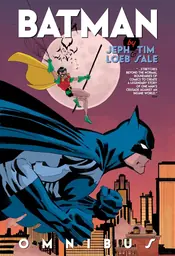
Before Morrison, the easiest modern emotional foundation is the Loeb/Sale Batman material, because it gives you the classic villains and the tragic romantic texture Morrison later mutates. During the middle of the era, Final Crisis supplies the event context, but the Batman omnibus volumes keep the character arc understandable.
After Morrison, the natural next major modern shelf is the New 52 Batman era by Scott Snyder and Greg Capullo. Snyder does not continue Morrison's thesis directly; he resets the surface of Batman into horror, Gotham mythology and modern blockbuster structure.
What This Era Leaves Behind
Morrison's Batman leaves behind four permanent ideas. First, Batman's strangest publication history can be treated as part of the character rather than an embarrassment to hide. Second, Damian Wayne becomes more than a shock reveal: he becomes one of the emotional centres of modern Batman. Third, Dick Grayson proves that Batman can change tone, body language and emotional temperature without losing meaning.
The final legacy is Batman Incorporated itself. Even if later eras do not always use the organisation directly, Morrison expands Batman from a man in Gotham into a reproducible symbol with all the danger that implies. That is why the run matters as an era: it does not simply add stories to Batman's past, it changes the scale of what Batman can mean.

Comments
No comments yet. Be the first to share your thoughts.