Batman is one of the hardest DC characters to collect in omnibus format because the best starting point is not the beginning. The Golden Age material matters historically, but most modern readers will get a better first experience from the noir crime stories, the 1990s event sagas, or the modern author-driven runs. This guide maps the main Batman omnibus eras in reading order, but the real goal is simpler: to help you decide which Batman omnibus actually belongs on your shelf first.
Before You Start: Batman Does Not Have One Perfect Reading Order
Batman is not like a single long novel. DC has rebuilt, reinterpreted and relaunched him many times, so a strict chronological order is less useful than it looks. A collector should think in entry points: classic detective Batman, gothic Batman, event Batman, family-driven Batman, or modern blockbuster Batman.
If you are new to the character, do not start with the oldest material unless you already enjoy Golden Age comics. Start with a self-contained run that shows why Batman works: Jeph Loeb and Tim Sale for noir, Scott Snyder and Greg Capullo for modern DC, or Grant Morrison if you want the most ambitious version of the myth.
The Golden Age and Silver Age Material (1939-1969)
The earliest Batman stories are historically essential, but they are not the best first purchase for most readers. Bob Kane, Bill Finger, Jerry Robinson and the early DC team created the visual language of Gotham, the Joker, Robin and the basic detective framework, but the storytelling rhythm is very different from modern comics.
These volumes are mainly for completists, historians, or collectors who specifically enjoy pre-modern superhero comics. They explain where Batman comes from, but they do not explain why most current readers fall in love with the character.
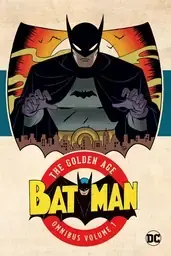
Current archival options include Batman: The Golden Age Omnibus Vol. 1 and Batman: The Silver Age Omnibus Vol. 1. Collector verdict: important, but not a first Batman omnibus unless you already know you want archival DC.
The O'Neil and Neal Adams Era (1969-1980)
Dennis O'Neil and Neal Adams are where Batman starts to feel like Batman again after the brighter camp image of the 1960s. This is the return of the nocturnal detective, the gothic mood, the international threat, and a much sharper sense of danger. Ra's al Ghul comes from this period, and that alone makes it one of the foundational DC eras.
The reason this era matters is tone. It does not read like modern decompressed comics, but it restores the seriousness that later creators, especially Frank Miller and Grant Morrison, would build on. Neal Adams also gives Batman a physical elegance that became one of the default visual references for the character.
Collected in Batman by Neal Adams Omnibus. Best for readers who want classic Batman with real atmosphere, not just historical curiosity.
The Englehart and Rogers Era (1977-1978)
Steve Englehart and Marshall Rogers only had a short run, but it casts a long shadow. Their Detective Comics work is one of the clearest bridges between classic Batman and the elegant noir Batman that later influenced animation and film. It is tight, stylish, and far more influential than its length suggests.
This is not the biggest Batman collection, but it is one of the most important for understanding the character as a detective operating inside a theatrical, corrupt city. It also helps explain why Gotham is not just a backdrop. In the best Batman stories, the city is part of the plot.
Collector verdict: not the first omnibus to hunt down, but essential context once you already know you like classic DC Batman.
The Frank Miller Breakpoint (1986-1987)
Frank Miller did not just write important Batman stories. He created two opposite poles for the modern character. The Dark Knight Returns is the myth pushed to its brutal, old-warrior extreme. Batman: Year One, drawn by David Mazzucchelli, strips everything down to crime, corruption, fear and discipline.
The mistake is treating Miller as just another era in the list. He is more like a fault line. Almost every serious Batman run after him is either responding to Miller, softening Miller, expanding Miller, or trying to escape Miller's shadow.
Collector verdict: essential reading, but not always essential in omnibus format. These stories are often easier to own in deluxe or absolute editions. Buy them for the work itself, not because they complete an omnibus shelf.
Post-Crisis Batman and the Darker One-Shots (Late 1980s)
After Crisis on Infinite Earths, DC had the space to reshape Batman for a darker era. This period includes some of the most famous standalone Batman stories: The Killing Joke, A Death in the Family and Arkham Asylum. They are iconic, but they are not all equally useful as starting points.
The Killing Joke is historically unavoidable because of its influence on the Joker. A Death in the Family is important for Jason Todd and the shape of the Bat-family. Arkham Asylum is more experimental, more symbolic, and less representative of monthly Batman comics.
Collector verdict: read these as key monuments, but do not mistake them for the main road. They are powerful side doors into Batman, not the full map.
Knightfall: The 1990s Event Machine (1993-1994)
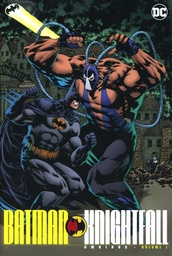
Knightfall is the purest example of 1990s Batman as a massive publishing event. Bane breaks Bruce Wayne, Jean-Paul Valley takes the mantle, and Gotham becomes the stage for a long test of what Batman is supposed to be. It is messy, oversized, sometimes excessive, and completely part of its decade.
That is exactly why collectors care about it. Knightfall is not as elegant as Loeb/Sale or as conceptually rich as Morrison, but it has scale. If you want Batman as a sprawling event with real consequences and a very specific 90s energy, this is the one.
Collected in Batman: Knightfall Omnibus Vol. 1, Vol. 2 and Vol. 3. Best for readers who want event Batman and the original Bane saga, not a clean literary starting point.
The Loeb and Sale Noir Cycle (1996-2004)
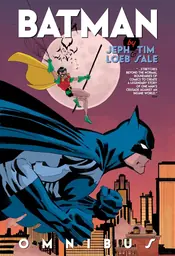
If someone asks for the safest Batman recommendation, this is usually it. Jeph Loeb and Tim Sale understand Batman as crime fiction first: murder mystery, family trauma, mob decline, costumed escalation, and Gotham as a city losing control of itself. The Long Halloween and Dark Victory are not just popular. They are readable, stylish and self-contained in a way many Batman runs are not.
This is also the best bridge between film Batman and comic Batman. If someone comes from The Batman or the Nolan films, Loeb/Sale makes sense immediately. Tim Sale's art is not realistic, but it feels emotionally true to Gotham: long shadows, distorted bodies, and faces that look haunted before the plot even turns.
Collected in Batman by Jeph Loeb and Tim Sale Omnibus. Collector verdict: the best first Batman omnibus for most new readers.
No Man's Land: Gotham Without a Safety Net (1999)
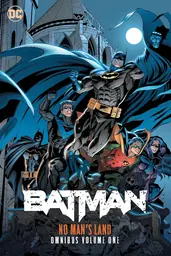
No Man's Land is one of DC's boldest Batman premises: Gotham is destroyed by an earthquake, abandoned by the government, and divided into territories. Batman is no longer just fighting crime. He is trying to hold together the idea of a city.
The strength of No Man's Land is not elegance. It is scope. The Bat-family matters, the villains become territorial powers, and Gotham feels like a political object rather than a gothic set. It is a better read if you already care about the wider Batman cast.
Start with Batman: Road to No Man's Land Omnibus, then continue with Batman: No Man's Land Omnibus Vol. 1 and Vol. 2. Collector verdict: excellent for Bat-family and Gotham readers, less ideal as a first Batman purchase.
Hush: The Modern Showcase Batman (2002-2003)
Hush is not the deepest Batman story, and that is fine. Its real function is different: it is a grand tour of Batman's world with Jim Lee drawing almost every major icon at maximum commercial power. Joker, Catwoman, Superman, Poison Ivy, Riddler, Ra's al Ghul, the Batcave, the rooftops, the dramatic splash pages. Hush is Batman as a prestige visual product.
For some readers, that makes it a perfect entry point. For others, it feels more like a beautifully drawn greatest-hits album than the definitive Batman story. Both reactions are fair.
Collected in Batman: The Hush Saga Omnibus. Collector verdict: buy it if you want Jim Lee's Batman and a broad tour of the mythos. Do not buy it expecting the psychological weight of Miller or the structural ambition of Morrison.
The Grant Morrison Era (2006-2013)
Grant Morrison's Batman is the opposite of a beginner-friendly checklist, and that is why it matters. Morrison treats the entire publishing history of Batman as usable material: Golden Age oddities, Silver Age weirdness, 1970s gothic adventure, post-Crisis trauma and modern superhero scale. The result is one of the most ambitious DC runs ever written.
This run introduces Damian Wayne into the modern myth, pushes Bruce Wayne through disappearance and return, lets Dick Grayson become Batman, and ends by turning Batman into an international idea. It can be confusing if you only want a clean crime story. It is magnificent if you want Batman as mythology.
Read in order: Batman by Grant Morrison Omnibus Vol. 1, Vol. 2 and Vol. 3. Collector verdict: not the easiest first Batman omnibus, but probably the richest complete run.
The Paul Dini Detective Thread (2006-2009)
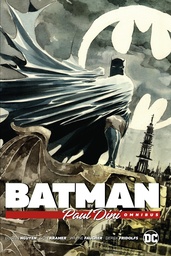
Paul Dini's Batman is often underrated because it does not announce itself as a huge era. It is more episodic, more detective-led, and closer in spirit to the animated Batman many readers grew up with. That makes it extremely useful in a collection: it gives you Batman solving cases instead of constantly surviving massive continuity events.
Collected in Batman by Paul Dini Omnibus. Collector verdict: a very good second or third Batman omnibus, especially if you want detective stories and villain-focused issues.
The Snyder and Capullo Era (2011-2016)
Scott Snyder and Greg Capullo gave New 52 Batman its defining run. The Court of Owls is the rare modern addition that actually feels like it always could have belonged to Gotham. The run then moves through Joker horror, origin remix, endgame spectacle and a temporary replacement Batman concept.
This is the modern blockbuster Batman: accessible, fast, visually confident and built for readers who want a clear contemporary entry point. It is less strange than Morrison and less noir than Loeb/Sale, but it is probably the easiest modern DC run to recommend broadly.
Collected in Batman by Scott Snyder and Greg Capullo Omnibus Vol. 1 and Vol. 2. Collector verdict: the best modern starting point if you want Batman as a current superhero epic.
Tomasi and Gleason: The Father and Son Run (2011-2015)
Peter J. Tomasi and Patrick Gleason's Batman and Robin works because it understands that Damian Wayne changes Bruce. This is not just another side title. It is one of the most emotionally direct Batman runs of the modern era, focused on parenthood, grief, discipline and the difficulty of loving someone trained for violence.
Collected in Batman & Robin by Peter J. Tomasi and Patrick Gleason Omnibus. Collector verdict: essential if Damian is central to your Batman shelf, but not the first Batman omnibus I would put in front of a new reader.
Tom King and Later Rebirth Batman (2016-2019)
Tom King's Batman is polarising for a reason. It is slower, more internal, and more interested in trauma, repetition and romance than in delivering a clean sequence of cases. Some readers find it profound. Others find it mannered and frustrating. Both sides are reacting to the actual nature of the run, not imagining it.
Available in Batman by Tom King Omnibus Vol. 1 and Vol. 2. Collector verdict: do not make this your first Batman omnibus. Read it when you already know the character well enough to enjoy a more literary, divisive take.
Recent Batman: Tynion, Tamaki and Zdarsky
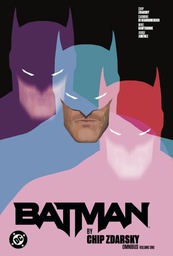
The recent line is more fragmented. James Tynion IV leans into Gotham's new supporting cast and modern event machinery. Mariko Tamaki's Detective Comics has a more urban, character-focused flavor. Chip Zdarsky brings a high-concept superhero engine to the main Batman title.
These runs are worth watching, but they should not replace the core shelf. A collector should usually build Batman around Loeb/Sale, Morrison, Snyder/Capullo, Knightfall or No Man's Land before moving heavily into the newest material.
Available examples include Batman by James Tynion IV Omnibus Vol. 1, Vol. 2, Batman: Detective Comics by Mariko Tamaki Omnibus and Batman by Chip Zdarsky Omnibus Vol. 1. Collector verdict: good continuation material, not the foundation.
Recommendations by Reader Type
A quick way to choose the right Batman shelf, without pretending every omnibus has the same purpose.
The safest first pickBatman by Jeph Loeb and Tim Sale Omnibus
The cleanest bridge between film noir Batman and comic Batman. Self-contained, stylish and readable without needing years of continuity.
The modern gatewaySnyder & Capullo Vol. 1
Accessible, visual and built around the Court of Owls, the rare modern Gotham idea that instantly feels important.
The mythic deep diveGrant Morrison Vol. 1
Start here only if you want Batman as mythology. It is richer after you already know the basics.
When Gotham breaksKnightfall or No Man's Land
Big, messy, very DC. Choose these when you want Gotham-wide consequences rather than a clean standalone noir story.
The Jim Lee shelf-pieceBatman: The Hush Saga Omnibus
The Jim Lee Batman shelf-piece. Not the deepest Batman story, but one of the most iconic visual tours of the mythos.
The Damian routeMorrison first, Tomasi/Gleason after
Damian works best when you see both sides: the mythic introduction and the emotional father-son aftermath.
After the core shelfGolden Age, Neal Adams, Tynion and Zdarsky
Add these after the core shelf is in place. They matter, but they should not be the foundation of a first Batman collection.
The best first Batman omnibus is Loeb/Sale. The best modern starting point is Snyder/Capullo Vol. 1. The richest complete run is Grant Morrison. The best event shelf is Knightfall plus No Man's Land. The most visually iconic modern showcase is Hush.
Quick collector answer
Batman Omnibus Reading Guide: Where to Start and What to Buy is built as a structured answer for building a Batman in omnibus format collection without buying at random. The guide helps clarify reading order, major eras and the purchases that make the most sense for a European reader.
Frequently asked questions
Is Batman Omnibus Reading Guide: Where to Start and What to Buy a good starting point?
Yes if the subject matches your reading priority. The most important choice is an omnibus you genuinely want to read and keep, not only a popular or hard-to-find volume.
Do you need to know all continuity before reading this kind of omnibus?
Not necessarily. Major US omnibuses mainly ask you to understand the era and tone of the run. A guide or review helps clarify whether the volume is standalone, modern, classic or more connected to other events.
Does reading the original English edition change the experience?
For many collectors, yes. The original English edition preserves dialogue, arc titles and the US format, which keeps the shelf more consistent when comparing multiple Marvel or DC runs.
Why compare European stock with US imports?
Because an omnibus is heavy, expensive to ship and vulnerable to damaged corners. For buyers in France or Europe, delivered price, packing, tracking and returns matter as much as the listed price.
What should you read after this post?
The best next step is usually inside the same reading cluster: a character guide, a related run review or a buying comparison. That builds a logical shelf instead of stacking volumes with no clear order.

Comments
No comments yet. Be the first to share your thoughts.